No products in the basket.
Branded Workwear
Wash Printed Uniforms Without Cracking Properly
07
Sep
Sep
A printed logo can look spot-on when a uniform is issued, then start to split across the chest after only a few wash cycles. In most cases, the print has not failed – the wash routine has been too hot, too aggressive or simply unsuitable for that garment. To wash printed uniforms without cracking, staff need clear, practical care instructions that work in a busy workplace, not vague advice that gets ignored.
For employers, uniform care affects more than appearance. Cracked or peeling branding makes an otherwise serviceable polo, hoodie or T-shirt look worn out early. It can also create unnecessary replacement costs and leave customer-facing teams looking inconsistent. A few straightforward handling rules will protect the print, extend garment life and help every issued item stay presentable for longer.
Why printed uniform logos crack
Most garment prints are designed to flex with the fabric, but they are not indestructible. High temperatures can make a print brittle over time, while harsh detergents and repeated tumble drying can weaken the bond between the print and garment. Friction is another common cause. A printed chest logo rubbing against zips, buttons, rough workwear or other garments in a full drum will wear more quickly than one washed with care.
The fabric matters too. A lightweight cotton T-shirt behaves differently from a polyester sports polo, a polycotton sweatshirt or a waterproof softshell. Stretch fabrics need a flexible print and are particularly vulnerable if washed hot. Waterproof outerwear needs separate consideration, as frequent washing and the wrong detergent can affect both the printed design and the garment’s water-repellent finish.
Not every mark on a print is a fault. Fine creasing straight after washing can settle once the garment is worn. Actual cracking usually appears as visible gaps or broken lines in the design, especially across areas that stretch, such as the front of a T-shirt or the back of a hoodie.
Check the garment label before setting the machine
The care label inside the garment is the starting point. It gives the manufacturer’s maximum washing temperature and drying guidance for that particular fabric. Where a printed item and the garment label appear to suggest different treatment, follow the lower temperature and gentler option.
For most printed workwear, a 30°C wash is the safest default. Some healthcare garments, hospitality uniforms and heavily soiled workwear may be specified for higher-temperature laundering, but the decoration method must be suitable for it. If your team requires industrial or high-temperature washing, that needs to be agreed when the uniform is ordered, rather than assumed afterwards.
This is particularly relevant for care providers, cleaning teams and food-service operations. Infection-control requirements may call for a defined wash process, whereas a standard printed cotton polo may be better suited to lower-temperature home laundering. The right answer depends on the role, fabric and print specification.
How to wash printed uniforms without cracking
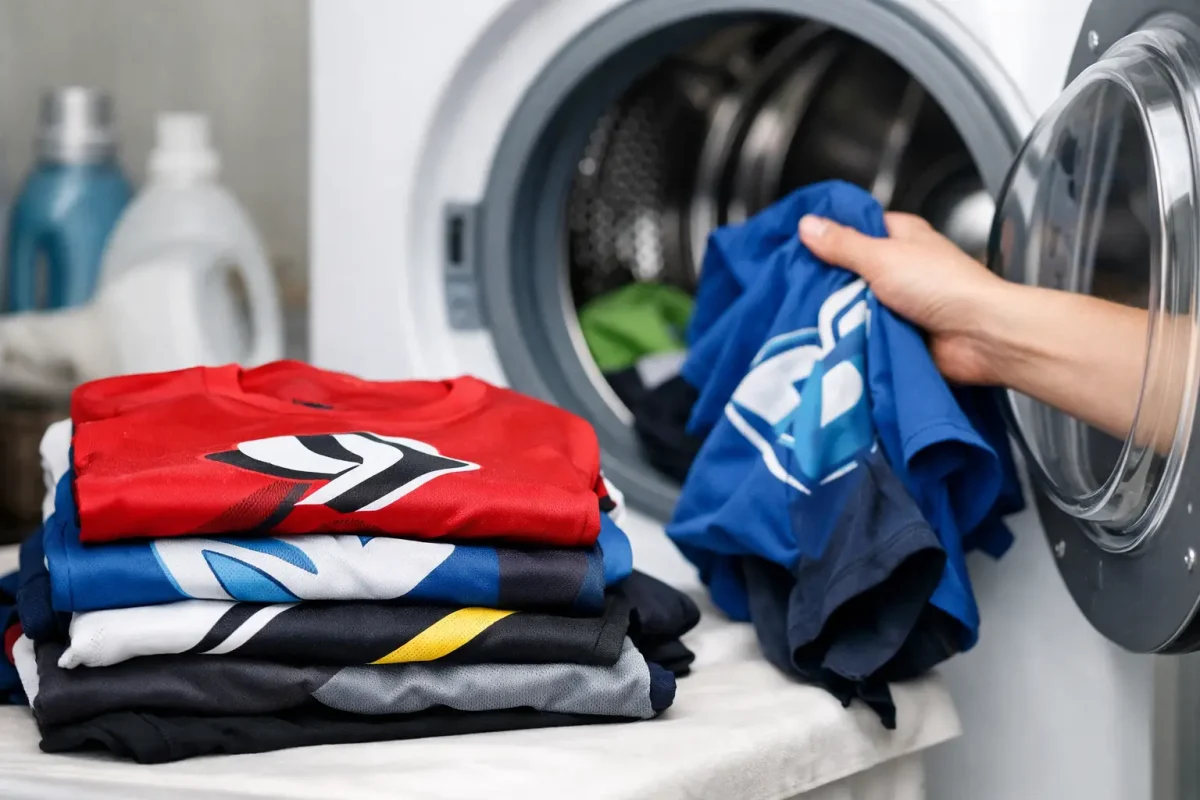
Turn printed garments inside out before washing. This simple step reduces contact between the print and the washing machine drum, other clothing and metal fastenings. It is especially worthwhile for garments with large back prints, event merchandise and leavers’ hoodies, where the decorated area is larger.
Wash similar colours together and avoid overfilling the machine. A packed drum prevents water and detergent from moving freely, increasing friction between garments. Separating heavy items such as work trousers, coveralls and zip-front jackets from lighter printed T-shirts and polos also helps prevent abrasion.
Use a mild liquid detergent at the recommended dose. Powder detergents can sometimes leave residue if the wash is overloaded or run at a low temperature, and too much detergent makes rinsing harder. Fabric conditioner is best avoided unless the garment supplier specifically permits it. Softeners can leave a coating on technical fabrics and may affect moisture-wicking performance on polyester workwear.
Choose a normal or gentle cycle with a low spin where practical. A very high spin speed will not normally crack a good-quality print on its own, but it can create deep creases and add unnecessary stress to older prints. The aim is to clean the uniform effectively without treating it like heavily contaminated site clothing.
Do not use bleach or stain removers directly on the printed area. If a garment has a stubborn mark, treat the surrounding fabric carefully and test any product on an inconspicuous area first. Strong chemicals can change the colour of the print or make its surface uneven.
Drying is where many prints lose their life
Air drying is the most reliable option for printed uniforms. Hang T-shirts, polos, sweatshirts and hoodies inside out or lay them flat where appropriate, keeping them away from strong direct heat. This helps the garment retain its shape as well as protecting the print.
A tumble dryer is convenient, particularly for staff who need uniform ready for the next shift, but high heat is a common cause of cracking, lifting and premature fading. If tumble drying cannot be avoided, use the lowest heat setting allowed by the care label and remove garments as soon as they are dry. Do not leave printed uniforms running through an extended hot cycle.
Avoid placing printed areas directly onto radiators or heaters. The same applies to drying cupboards set at high temperatures. The logo may feel dry to the touch, but concentrated heat can harden certain print finishes and shorten their usable life.
Iron around the print, never straight over it
If uniforms need ironing, turn them inside out and use the fabric-appropriate heat setting on the reverse. Do not iron directly over a printed logo, number or name. Direct heat and pressure can leave a shine mark, distort the design or cause it to stick to the iron.
For a crease close to the print, place a clean pressing cloth between the iron and garment. Keep the iron moving and avoid steam where the care label advises against it. This is particularly useful for front-of-house polos and branded shirts that need to look tidy for customer appointments, exhibitions or events.
Give staff instructions they will actually follow
Uniform care guidance only works if it is easy to find and quick to understand. Include the main rules in your issue pack, induction paperwork or staff handbook: wash inside out at 30°C unless the label says otherwise, use mild detergent, avoid bleach, air dry where possible and never iron the print.
For organisations issuing uniforms in volume, it is worth standardising garments across teams where possible. A mix of cotton tees, technical polos, waterproof jackets and specialist healthcare tunics will naturally need different treatment. Grouping care instructions by garment type makes life easier for staff and cuts down on avoidable replacement requests.
Vivid Promotion can help businesses choose a decoration method that suits the garment and its intended use. Print is often a practical choice for larger logos, detailed designs and waterproof garments where embroidery would create needle holes. The best result still relies on matching the print, fabric and laundering requirements before production begins.
When a cracked print needs replacing
A lightly creased print may recover, but a design that has visibly split, peeled or lifted from the fabric will not repair properly through washing or ironing. Continuing to heat it can make the damage worse. If several garments from the same batch show the same issue, keep a record of how they have been laundered and check whether the garments have been exposed to hot dryers, bleaching products or high-temperature washes.
For single items, replacement is often more cost-effective than trying to rescue a damaged print. For team orders, retaining the original logo artwork, garment specification and print details makes repeat ordering simpler and keeps new issues consistent with existing stock.
Good uniform care is not complicated, but it does need to be built into the way your team works. Issue the right garments, specify the right print method and give people clear wash instructions from day one. That is how branded workwear stays fit for the job rather than becoming a replacement problem after a few months.