No products in the basket.
Branded Workwear
Polycotton Versus Cotton Workwear Compared
27
Oct
Oct
A uniform that looks tired after a few washes, takes too long to dry or feels uncomfortable halfway through a shift soon becomes an operational problem. When choosing polycotton versus cotton workwear, the right answer depends on the job, the wearer and how the garments will be washed, branded and replaced. Fabric choice affects far more than the feel of a polo shirt or sweatshirt – it influences garment life, presentation and the day-to-day effort needed to keep a team looking consistent.
For most organisations, the decision is not about declaring one fabric universally better. It is about matching the fabric to working conditions. A facilities team, care provider, construction firm and event crew may all need different answers, even when they want the same embroidered logo on every garment.
Polycotton versus cotton workwear: the basic difference
Cotton is a natural fibre. It is widely chosen for its soft feel, breathability and ability to absorb moisture. A 100% cotton T-shirt can be a good option where next-to-skin comfort matters, particularly for staff working indoors, in warm conditions or through physically active shifts.
Polycotton combines cotton with polyester. Common blends include 65% polyester and 35% cotton, or a 50/50 mix, although the exact composition varies by garment. Polyester brings strength, improved colour retention and quicker drying, while cotton helps retain a more comfortable, less synthetic feel than an all-polyester fabric.
That blend makes polycotton a regular choice for uniforms that need to work hard and be washed often. It is commonly found in polos, sweatshirts, hoodies, trousers, tunics and work shirts because it balances practical care with wearer comfort.
Fabric content alone should not decide the order. Weight, weave, fit and garment construction all matter. A heavyweight cotton sweatshirt and a lightweight cotton tee will perform very differently, just as two polycotton polos with different weights and finishes will not feel or wear the same.
Comfort, breathability and working conditions
Cotton generally feels cooler and softer against the skin. It absorbs perspiration effectively, which can make it more comfortable for staff doing active work in dry or warm environments. For promotional T-shirts, school leavers’ hoodies and customer-facing teams where casual comfort is a priority, cotton is often a strong choice.
The trade-off is that cotton holds moisture. Once wet, it can feel heavier, take longer to dry and lose warmth. That is less helpful for workers moving between indoor and outdoor tasks, or for teams that need garments ready again quickly after laundering.
Polycotton does not absorb as much moisture as pure cotton and dries faster. It is often the more practical choice for warehouses, hospitality, delivery teams, cleaning staff and tradespeople who need a presentable uniform across a full shift. The polyester content can make the fabric feel less naturally soft, but a well-made polycotton garment still gives reliable everyday comfort.
Where heat exposure, flame risk or electrical arc risk is present, standard cotton and standard polycotton garments should not be treated as protective clothing. Specify certified flame-retardant or arc-rated garments where the risk assessment requires them. Fabric composition is not a substitute for the correct PPE standard.
Durability, shrinkage and washing
Repeated laundering is where polycotton often earns its place on a uniform specification. Polyester fibres help the garment resist creasing, shrinking and abrasion. Polycotton workwear usually keeps its shape well, dries relatively quickly and is easier to maintain when employees wash their own uniforms.
Pure cotton can be durable, particularly in heavier-weight workwear, but it is more likely to crease and may shrink if washed or tumble dried outside the care instructions. It can also fade faster over time, especially in darker colours exposed to frequent washing and sunlight. This does not rule cotton out. It simply means the garment needs suitable care and an allowance for its natural characteristics.
For organisations issuing garments at scale, consistency matters. If uniforms are washed often, polycotton can reduce the number of replacements needed due to faded colour, misshaping or a permanently creased appearance. That can make it better value over the life of the garment, even if the initial unit price is not always the lowest.
Care settings are a good example of where the detail matters. Some roles require industrial laundering or higher-temperature washing, while others need a softer, more comfortable garment for daily wear. Check the care label and laundering requirement before committing to a fabric. A suitable tunic or scrub top must meet the actual wash routine, not just look right on a product page.
Branding and colour retention
A branded uniform has to keep representing the business after the first month, not just on delivery day. Polycotton is often effective for embroidered logos because it offers a stable base fabric with good shape retention. It is also a dependable choice for printed workwear, subject to the print method, garment colour and artwork.
Cotton is an excellent base for many print applications, particularly T-shirts and casual promotional garments. Its natural surface can give printed designs a clean, high-quality finish. For a one-off event, campaign or leavers’ order, cotton can provide the look and feel many wearers prefer.
The right decoration method depends on the garment as well as the logo. Embroidery gives a durable, professional finish for polos, sweatshirts, fleeces and work shirts, but it may not be suitable for every item. Waterproof and highly technical outerwear should usually be printed rather than embroidered, as needle holes can compromise the waterproof membrane.
Colour also needs consideration. Polyester-rich fabrics generally hold colour well, while cotton can develop a more washed appearance over time. Neither is automatically wrong. A faded effect may suit a casual retail or promotional garment, but it is usually not the finish wanted for frontline uniforms, maintenance teams or customer-facing staff.
Choose fabric by job, not by habit
For trades and site teams, polycotton is often a sensible starting point for polos, trousers, coveralls and sweatshirts. It stands up well to frequent wear, handles regular washing and stays presentable when staff are travelling between site, stores and customer premises. Where workers need natural-fibre comfort or a heavyweight feel, cotton alternatives may still be appropriate.
For office-based teams, schools and hospitality staff, the decision is more likely to come down to comfort, fit and the expected wash cycle. A cotton-rich polo or T-shirt can feel more premium for front-of-house staff, while polycotton offers the easier-care option for busy teams with mixed duties.
For event crews and temporary promotional teams, look at the length of the event and whether the garments will be reused. Cotton T-shirts can be ideal for a short campaign where softness and print finish are the priority. For uniforms intended for repeated use across exhibitions, installations and seasonal events, polycotton may give better long-term presentation.
Hi-vis clothing is a separate specification decision. Do not select a garment based on fabric preference alone where visibility compliance applies. Choose the required certified hi-vis class and ensure any logo positioning or decoration does not affect the garment’s compliant fluorescent background or reflective tape.
Questions to settle before ordering
Before placing a uniform order, agree the practical requirements with the people who will issue, wear and wash the garments. The following checks prevent most fabric-selection problems:
- How often will the garment be worn and laundered?
- Will it be washed at home, by a laundry provider or at industrial temperatures?
- Is the work mainly active, warm, outdoor, dirty or customer-facing?
- Does the role require certified hi-vis, flame-retardant or other protective clothing?
- Is embroidery, print or a combination needed for the logo and garment type?
- Will the uniform need to match repeat orders over several months or years?
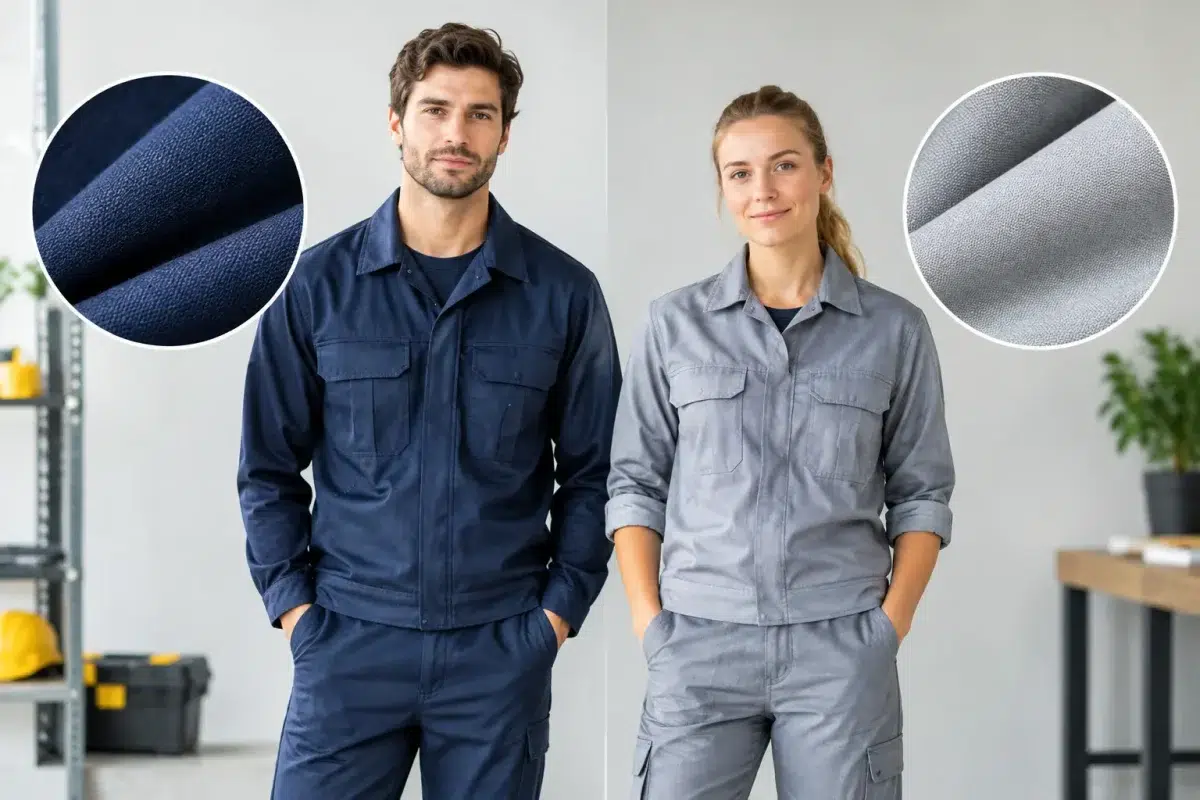
It is also worth ordering samples or checking fabric swatches when the order is substantial. Managers can assess weight and feel, while wearers can comment on fit and comfort before the full rollout. That is especially useful where a team includes a range of roles, from drivers and warehouse staff to reception and field engineers.
Make repeat ordering easier
Once the right fabric and garment range are agreed, record the exact product, colour, fabric composition, logo position and decoration method. This makes future orders more straightforward and helps maintain a consistent appearance as new starters join or seasonal staff are added.
For larger teams, sorted per-employee packaging can also remove unnecessary work from the person managing the rollout. Rather than receiving unsorted cartons to distribute internally, each employee’s uniform can arrive grouped and ready to issue. Vivid Promotion supports this type of fulfilment for organisations that need workwear delivered in a practical, manageable format.
Choose cotton where natural comfort and print-friendly casual wear are the priority. Choose polycotton where easier care, shape retention and repeat uniform use are likely to matter most. The useful next step is to put the garment in the context of a real shift, a real wash cycle and a real logo – that is where the right specification becomes clear.