No products in the basket.
Branded Workwear
Heat Transfer Versus Sublimation Printing
09
Sep
Sep
A printed logo that looks right on a cotton polo can be completely unsuitable for a polyester sports top, a waterproof shell or a high-vis vest. When comparing heat transfer versus sublimation printing, the right answer is not simply which method produces the sharpest result. It is which method suits the garment, the logo, the working environment and the quantity you need to issue.
For uniforms, the decoration method must hold up to repeat washing, daily wear and the practical demands of the job. A good supplier will check the garment composition and logo artwork before recommending print, rather than applying a one-method-fits-all approach.
Heat transfer versus sublimation printing: the main difference
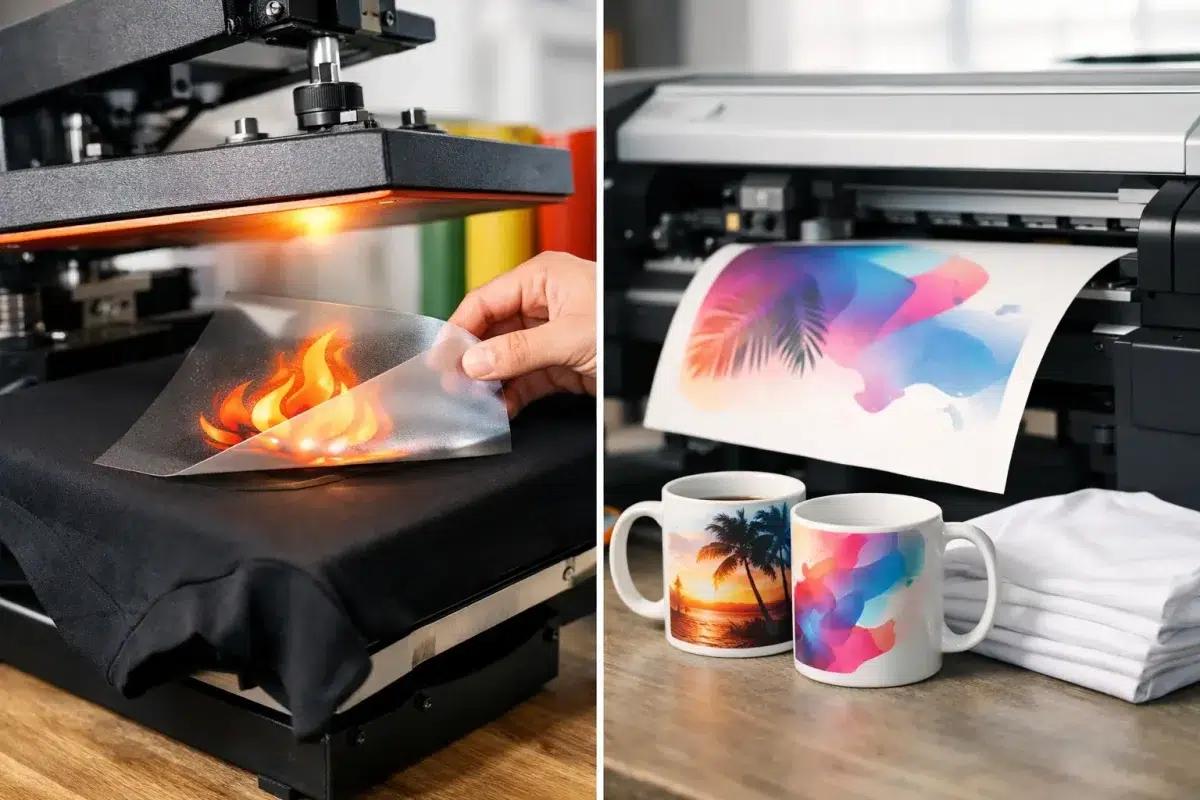
Heat transfer printing applies a prepared design to the garment using heat and pressure. The design sits on, or is bonded to, the fabric surface. This is a broad category that includes vinyl lettering, digitally printed transfers and direct-to-film transfers. It is commonly used for workwear logos, names, numbers and full-colour designs.
Sublimation printing works differently. Special inks are heated until they turn into gas and bond with polyester fibres. The ink becomes part of the material rather than forming a layer on top. This produces a smooth finish with no noticeable printed edge, but it comes with firm fabric and colour restrictions.
The distinction matters because a print process cannot overcome an unsuitable garment. A vivid sublimated design may look excellent on a white polyester team shirt, while a heat transfer is usually the more practical choice for branded cotton T-shirts, hoodies, polos and mixed-fibre workwear.
When heat transfer printing is the practical choice
Heat transfer is one of the most flexible options for workplace clothing. It can be used on cotton, polyester and many polycotton blends, making it suitable for the core garments many organisations buy: T-shirts, polos, sweatshirts, hoodies, fleeces, softshells and selected jackets.
It is particularly useful where the logo contains several colours, fine detail or a colour blend that would be difficult or expensive to reproduce with cut vinyl. Transfers can also produce clean small chest logos and larger back prints without the set-up associated with some traditional print methods. For teams that need individual names, job roles or squad numbers, the artwork can be varied from garment to garment without changing the overall uniform design.
For a trades business, for example, a full-colour logo on a cotton polo and a larger company mark on the back of a sweatshirt are straightforward heat transfer applications. The same approach can work for event crew T-shirts, promotional garments and leavers’ hoodies where names or nicknames differ across the order.
Durability depends on the transfer type, correct application and following the care instructions. A quality transfer applied at the right temperature and pressure should withstand regular laundering. However, it remains a bonded decoration. Abrasion, excessively hot washes, tumble drying and ironing directly over the print can shorten its life.
There are limits. Some coated, textured or highly water-repellent fabrics need specific transfer materials and test applications. Waterproof garments deserve particular care. Print can often be preferable to embroidery because it avoids needle holes in the outer layer, but the heat setting must still be compatible with the fabric and membrane. This is a garment-by-garment decision, not an assumption to make from a product photograph.
Where sublimation printing performs best
Sublimation is at its best on white or very light polyester garments. Because the inks dye the fibres, the result is light, flexible and highly resistant to cracking or peeling. It is ideal for all-over graphics, detailed artwork, photographs, gradients and designs with a large number of colours.
This makes sublimation a strong option for certain sportswear, event garments and promotional products. It is also useful where a large design needs to feel like part of the fabric rather than a separate printed panel. A fully sublimated running top, for instance, can carry complex sponsor artwork without the heavier feel that can come with layered transfers.
The restrictions are significant for standard workwear. Sublimation does not print white ink. It relies on the base garment colour showing through, so it will not produce a bright logo on black, navy, royal blue or other dark clothing. It also needs a high polyester content. Cotton garments and most cotton-rich polo shirts are not suitable for true sublimation printing.
That means sublimation is rarely the default method for an organisation ordering a mixed uniform range. If staff need black hoodies, navy fleece jackets, cotton work polos and hi-vis outerwear, heat transfer or embroidery will usually provide more consistent branding across the collection. Sublimation may still have a place for a separate sports, campaign or event garment, but it is not a substitute for all-purpose workwear decoration.
Fabric, garment colour and logo design decide the method
Start with the garment rather than the artwork. Cotton and polycotton garments generally point towards heat transfer or embroidery. White polyester points towards sublimation when the design is detailed or covers a large area. Dark polyester can accept heat transfers, but not standard sublimation.
Then assess the logo. A simple one-colour company name may be well suited to vinyl transfer, particularly for names and individual issue details. A multi-colour logo with fine lines, shading or small text is often better reproduced as a digitally printed transfer. A large photographic or pattern-led design on white polyester is where sublimation has a clear advantage.
Logo size also changes the decision. A small left-chest print is usually efficient with a transfer, while large full-front and full-back graphics need consideration of breathability, garment stretch and wearer comfort. A large solid transfer can feel warmer on a lightweight performance garment. Sublimation avoids that issue on appropriate polyester items because there is no additional printed layer.
Artwork preparation should not be overlooked. A low-resolution logo may look acceptable on a screen but reproduce poorly when enlarged for a back print. Clean vector artwork is best for sharp logos, while suitable high-resolution files are needed for photographic graphics. Converting a logo correctly at the start avoids blurred edges, missing details and inconsistent repeat orders.
Cost and order quantity: what to expect
Neither process is automatically cheaper. The cost is affected by print size, number of print positions, artwork complexity, garment type and how many items are being ordered.
Heat transfer is often cost-effective for smaller runs and orders with individual variations, such as employee names or department labels. It gives organisations useful flexibility when they need to top up uniforms for new starters without committing to a large production run.
Sublimation is most economical when the garment itself is designed for it, especially for repeatable full-colour designs on polyester. It is not normally a cost-saving route if you first have to change the uniform specification from a preferred cotton or dark-coloured garment to a specialist white polyester product.
For larger uniform orders, consistency matters as much as unit price. Using the same approved garment and decoration specification makes future top-ups simpler. It also avoids a common problem: a logo that is printed differently on each garment type because the original method was chosen without considering the whole uniform range.
Special considerations for hi-vis and protective workwear
High-visibility clothing needs more than a good-looking logo. The position and size of decoration must not compromise fluorescent background material or reflective tape. Where clothing is supplied to meet visibility requirements, additional printing can affect the certified performance of the finished item.
Keep logos clear of reflective bands and choose a suitable print area. For higher-risk roles, discuss the garment’s intended use before ordering rather than treating hi-vis as an ordinary T-shirt. The same principle applies to flame-resistant, waterproof and specialist protective clothing, where decoration must be compatible with the fabric’s performance requirements.
For care and healthcare teams, comfort and wash routine also deserve attention. Polyester-rich tunics may suit a transfer logo, but the required wash temperature and the size of the printed area should be checked first. A smaller, well-positioned logo is often more practical than a large print that receives constant friction during shifts and laundering.
Choosing the right route for your uniform order
Choose heat transfer when you need a versatile logo application across cotton, polycotton and dark garments, particularly for standard branded workwear, variable names or small repeat orders. Choose sublimation when you have white polyester garments and want detailed, full-colour artwork with a lightweight finish.
If the order includes several garment types, do not force every item through the same print process. A sensible uniform specification may use embroidery on fleeces, heat transfer on polos and waterproof jackets, and sublimation only on polyester event tops. The aim is a consistent brand appearance that remains fit for purpose.
Before production, confirm the garment composition, colour, logo position, intended washing routine and whether protective or hi-vis standards apply. Getting those details right before the first order makes issuing uniforms easier, keeps replacement garments consistent and gives your team clothing that works as hard as they do.