No products in the basket.
Branded Workwear
Hospitality Uniform Ordering Guide for UK Teams
05
Sep
Sep
A hotel receptionist cannot look polished in a polo that fades after a few washes. A restaurant runner needs enough stretch and breathability to cover a busy service, while a kitchen team needs garments that stand up to heat, spills and repeated laundering. That is why a hospitality uniform ordering guide should start with the job, not a catalogue page.
Uniform ordering is often left until a new opening, staff turnover or an event puts pressure on the operation. The result can be mismatched colours, unsuitable fabrics and boxes of garments that still need sorting before anyone can wear them. A planned approach gives every department the right kit, protects brand presentation and makes repeat orders far easier.
Start with the roles, not one uniform for everyone
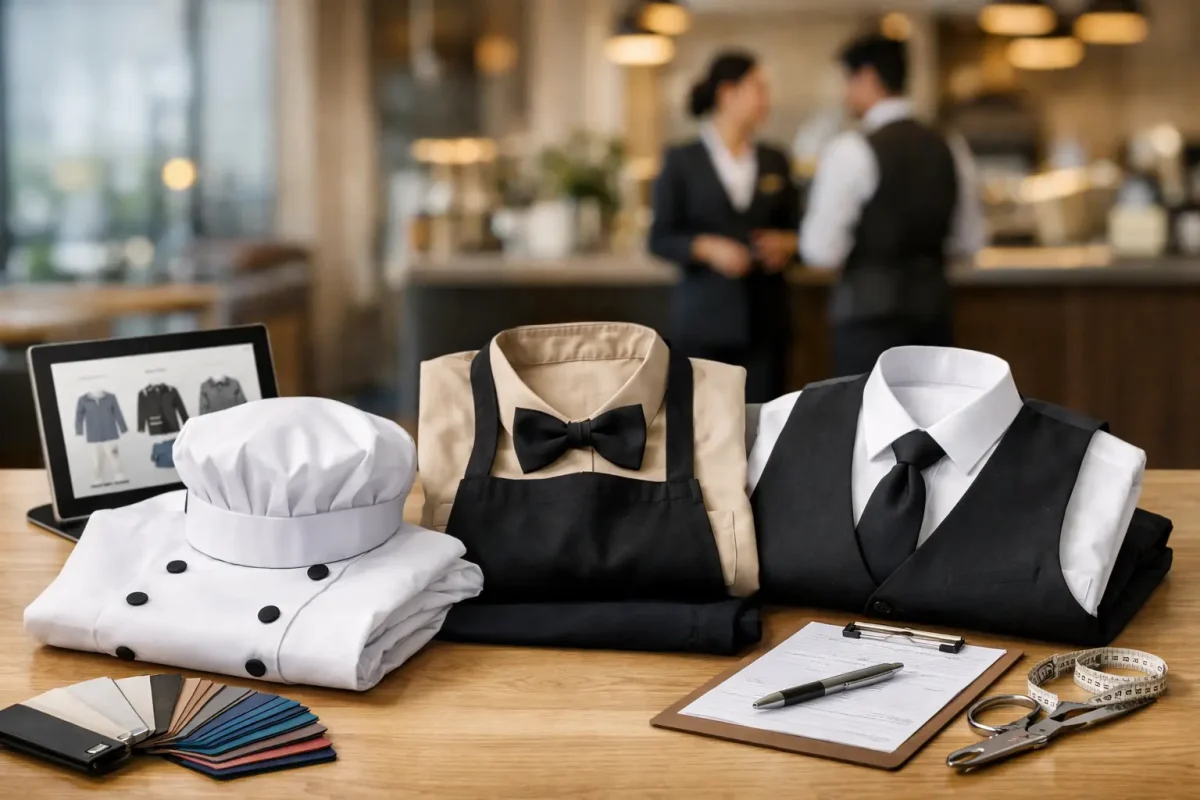
Hospitality teams do not all work under the same conditions. Front-of-house staff represent the venue from the first greeting. Housekeeping teams need practical, hard-wearing layers that allow movement. Kitchen and back-of-house staff need workwear suited to a hotter, more physical environment. Event teams may need branded garments that are visible, quick to issue and appropriate for both indoor and outdoor work.
Begin by mapping each role and shift pattern. Ask where staff work, how active the role is, whether they move between warm and cold areas, and how frequently garments will be washed. A fitted shirt may suit a host team, but it is unlikely to be the best choice for a porter moving linen, stock or equipment all day.
It is also worth separating essential uniform from optional layers. For example, a reception team may have a core polo or blouse, with a sweatshirt, fleece or softshell available for colder entrances and outdoor guest duties. This avoids over-ordering expensive outerwear for every employee while ensuring the people who need it have the correct layer.
Choose garments for daily wear and laundering
Price matters, but the lowest unit cost is not always the lowest operating cost. A garment that loses its shape, shrinks or looks tired after regular laundering needs replacing sooner. It can also make a well-run venue appear inconsistent.
For busy cafés, bars and casual dining sites, polos and branded T-shirts are practical choices. They are comfortable, straightforward to size and available in a wide range of colours. Sweatshirts and hoodies can work well for casual venues, street-food operators and event crews, where a less formal appearance suits the brand.
For hotels, restaurants and customer-facing leisure sites, shirts, blouses, knitwear and smart outer layers may be more appropriate. Consider the full look rather than buying individual garments in isolation. A navy shirt and black trouser may be easy to source, but they can look disjointed under bright lobby or restaurant lighting. Confirm the actual garment shades before committing to a larger run.
Fabric choice should reflect the workload. Cotton-rich garments can feel comfortable and present well, while polyester-rich blends are often better at retaining colour and drying quickly. Stretch fabrics can be useful for housekeeping, maintenance and service roles involving lifting, bending and long periods on foot. There is no single best blend: the right answer depends on the role, washing process and expected lifespan.
Do not overlook sizing and fit
Poor sizing creates waste quickly. Staff should have enough room to move and layer clothing without looking untidy. Use a size range that reflects the whole team, not only the most common sizes, and check each brand’s size guide rather than assuming a medium fits the same across every garment.
Where possible, collect sizes before ordering instead of issuing a standard pack and hoping it fits. For larger teams, keep a controlled buffer of the most commonly required sizes for starters and replacements. This is more efficient than holding large, unplanned stock across every size and style.
Decide how the logo should be applied
Branding method affects appearance, durability and garment suitability. Embroidery gives a premium, long-lasting finish on polos, sweatshirts, fleeces, aprons, caps and many jackets. It is often the right choice for a hotel, restaurant or venue where a smart, consistent look matters.
Printed branding is often better for larger designs, detailed artwork and lightweight garments. It is also the sensible option for waterproof jackets. Embroidering through a waterproof outer layer creates needle holes, which can compromise its water resistance. A properly selected print keeps the garment functional while still displaying the logo clearly.
Before production, make sure the logo is suitable for the chosen method. Fine lines, small lettering and colour gradients may not reproduce exactly the same in embroidery as they do on screen. A logo may need to be converted into an embroidery-ready format, with stitch choices and thread colours agreed before the full order goes into production.
Placement should be practical as well as visible. A left chest logo is a standard choice for most hospitality uniforms because it remains clear without dominating the garment. Sleeve printing can work for event teams or promotional staff, while a larger back print may suit catering crews, delivery staff or outdoor bar teams. Avoid placing branding where aprons, lanyards or outer layers will regularly cover it.
Build a hospitality uniform ordering guide around stock control
The best ordering process makes starters, seasonal recruitment and replacements routine rather than disruptive. Set a clear uniform specification for every role. It should cover garment style, colour, approved brand, logo location, decoration method and any optional layers. This removes guesswork when an administrator or site manager places the next order.
It also prevents gradual brand drift. Without a specification, one site may order a different black polo, another may choose a near-match shade, and a third may use a larger logo. Individually these choices seem minor. Across a group of venues, they quickly become obvious.
For multi-site operations, centralising the uniform range is usually more effective than letting each location source independently. Sites can still order by department and staff requirement, but the garment and branding standards remain controlled. This is particularly useful for hotel groups, care homes with hospitality teams, contract caterers and event operators working across several venues.
Consider how goods will arrive, not only what is being ordered. Bulk cartons may be efficient for a single site with a stores team. However, per-employee packaging can save considerable time when uniforms are being issued to a large intake, a new venue opening or an event crew. Each pack can be prepared by name, department or size, so managers are not spending hours sorting garments in a back office.
Vivid Promotion can support this type of fulfilment, from bulk pallet delivery for larger requirements to individually packed uniform orders ready for issue. For organisations with repeat demand, this reduces the handling work that often sits behind a supposedly simple clothing order.
Plan for seasonality, replacements and new starters
Hospitality staffing levels rarely stay fixed. Summer terraces, Christmas functions, weddings, conferences and student recruitment periods can all create sudden demand. Ordering only when stock has run out leaves little room for size exchanges, artwork approval or production time.
Review likely peaks in advance and decide which items are worth holding as stock. Core polos, T-shirts and aprons are usually easier to forecast than personalised management garments or specialist outerwear. If a venue uses seasonal colours, plan the changeover carefully so that staff do not end up wearing two different versions of the same uniform during a busy period.
Replacement policy matters too. Staff need to know how to report worn or damaged items and who approves a replacement. A clear process protects standards without encouraging unnecessary reorders. It can also reveal recurring issues, such as a fabric not coping with commercial laundering or an apron style that is unsuitable for the task.
Check the order before production
A final check should cover quantities by size, garment colours, logo position, spelling, department names and delivery instructions. This is especially important for orders containing multiple roles or sites. A single approved order sheet gives procurement, managers and the supplier the same reference point.
If the team is trying a new garment or decoration method, sample first. It is a small step compared with correcting hundreds of unsuitable items later. Check the feel, fit, colour, logo clarity and how the garment works with the rest of the uniform, including aprons and outer layers.
A well-chosen uniform should make staff feel equipped for the shift, not distracted by what they are wearing. When the garments fit the role, the branding is correctly applied and the packing method suits the way your team works, issuing uniforms becomes one less operational problem to solve.