No products in the basket.
Branded Workwear
How to Choose Embroidery or Print
11
Jun
Jun
A logo that looks right on a polo can be the wrong choice on a waterproof jacket, and that is usually where buyers lose time and money. If you are working out how to choose embroidery or print, the best place to start is not the logo itself but the job the garment needs to do. Decoration has to suit the fabric, the working environment, the wash cycle and the way the item will be issued across your team.
For most organisations, this is less about design preference and more about practicality. A care provider ordering tunics and fleeces has different requirements from a contractor buying hi-vis outerwear, and both are different again from a school ordering leavers hoodies. The right method is the one that wears well, presents the brand clearly and does not create problems later.
How to choose embroidery or print for workwear
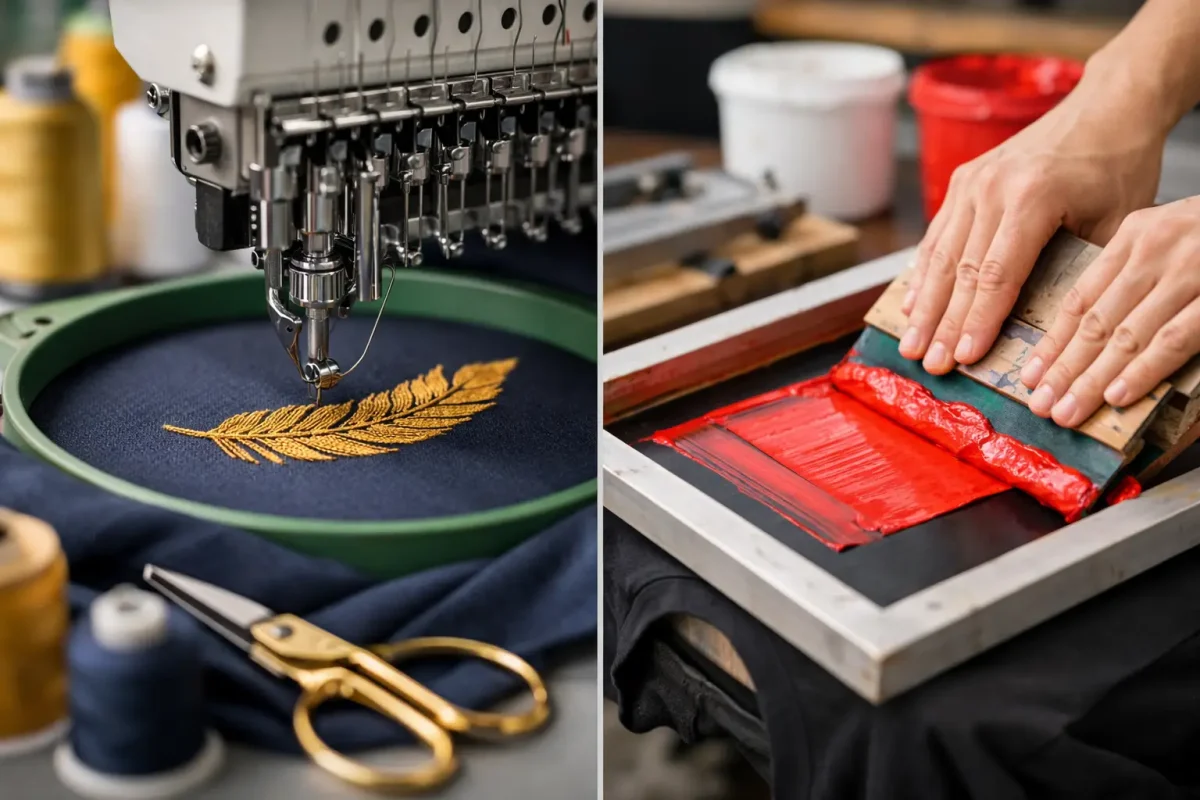
Embroidery is usually the safer choice when you want a professional, durable finish on everyday uniform. It works particularly well on polos, sweatshirts, hoodies, fleeces, softshells, bodywarmers and many jackets. A stitched logo gives structure, holds up well with repeat washing and tends to look established rather than promotional.
Print is often the better option when your logo includes fine detail, tonal changes or larger coverage areas. It is also useful where you need names, department markings, event graphics or bold artwork across the back of a garment. On lighter garments such as T-shirts, printed decoration can keep the finish flatter and more comfortable than stitching.
That said, there is no single rule that fits every order. A front chest logo on a fleece may suit embroidery, while the same brand on the back of a high-volume event T-shirt may be better printed. The garment, placement and purpose all matter.
Start with the garment, not the logo
This is the point many buyers miss. The base garment often decides the decoration method before anyone talks about thread count or print size.
Embroidery works well on stable fabrics with enough weight to support stitching. Think polos, hoodies, sweatshirts, work shirts, caps and fleeces. These garments can carry a stitched logo without puckering or pulling, and the result generally lasts well through regular site, school or workplace use.
Print becomes more useful on garments where stitching is less suitable. Waterproof items are a clear example. If a jacket relies on a waterproof membrane, putting needle holes through it can affect performance. In those cases, print is often the practical answer. The same applies to lightweight performance wear, where embroidery may distort the fabric or feel too heavy.
For hi-vis PPE, you also need to consider where the logo will sit in relation to reflective tape and compliance requirements. Decoration should not interfere with visibility features or make the garment less suitable for its intended use.
Look closely at the logo detail
Not every logo converts well into stitches. Embroidery has limits. Very small text, fine lines, gradients and complex shading can all become harder to read when translated into thread. A logo may look clean on screen but lose definition when reduced to a standard left chest size.
Print handles detail more easily. If your branding includes small lettering, multi-colour elements or sharper graphic edges, printing may keep the design clearer. This is especially relevant for event clothing, promotional garments or school leavers designs where impact matters and the artwork is more decorative.
Embroidery, though, has strengths of its own. Simpler logos, icon marks, block text and traditional branding usually suit stitching very well. It gives a textured, premium finish that many employers prefer for customer-facing roles.
If you are ordering for several departments, it can also be worth separating the logo decision from the garment decision. Your main corporate mark might be embroidered on polos and fleeces, while role-specific text or larger rear branding is printed where needed.
Cost, durability and order volume
Price always matters, but it helps to look at total value rather than unit cost in isolation.
Embroidery often carries a setup process to digitise the logo for stitching, but once that is in place it can be a strong long-term option for repeat uniform orders. It is typically durable and well suited to garments that stay in circulation for months or years. If your team wears branded polos, fleeces and outerwear every day, embroidery often earns its keep.
Print can be more cost-effective for larger graphics, high-volume event orders or short-run campaigns. It is also practical when you need personalisation, role names or varying back prints across a batch. For leavers hoodies, temporary staff uniforms or merchandise tied to a specific event, print can make more commercial sense.
Durability depends on both method and use. Embroidery generally copes well with repeated washing and harder wear. Print can also perform well when correctly matched to the garment and wash requirements, but it is not one single thing. The print process used, the garment fabric and the aftercare all affect how it lasts.
Think about comfort and wearability
This matters more than many buyers expect, especially for teams wearing uniform all day.
Embroidery adds weight and texture. On a heavyweight hoodie or polo that is rarely an issue. On a lightweight T-shirt or healthcare tunic, a heavily stitched area may feel more noticeable. Placement matters too. A small left chest embroidery is straightforward. A large embroidered design across the back is usually neither practical nor comfortable.
Print sits flatter against the fabric, which can make it a better fit for larger graphics or lighter garments. For staff who are moving constantly, layering uniform or working in warmer conditions, keeping decoration light can improve day-to-day wear.
In healthcare, education and service environments where comfort and laundering are both important, it is worth balancing appearance with function rather than defaulting to the method that simply looks most traditional.
Match the method to the job role
Different sectors tend to favour different outcomes, and that is for good reason.
Construction and trade businesses often lean towards embroidery on polos, sweatshirts, fleeces and bodywarmers because it stands up well and gives a solid branded finish. For waterproof outerwear, print may be the better route to protect garment performance.
Healthcare teams usually need garments that wash frequently, feel comfortable and identify staff clearly. Embroidered chest logos can work well on tunics, fleeces and some scrubs, but printed role titles or department markings may be useful where clarity is more important than texture.
Schools and colleges often split decoration by product. Standard staff uniform may suit embroidery, while leavers hoodies usually benefit from print because of the larger artwork, names and year-group designs involved.
Events businesses are another case where print often comes forward. If you need bulk merchandise, campaign branding or garments sorted quickly for a single date, printed decoration can be a practical fit.
How to avoid the common mistakes
Most decoration problems start with the wrong assumption. One is thinking embroidery is always the premium option and therefore always the right option. It is not. On the wrong garment, it can affect comfort, distort the fabric or compromise performance.
Another is choosing print purely on cost without considering lifespan. If the garment is part of your permanent uniform issue, you need decoration that matches the expected wear cycle.
There is also the question of artwork quality. A logo may need converting properly for embroidery and separately prepared for print. Using the same file without adjustment often leads to disappointing results. Clean setup at the start saves correction, rework and delay later.
For larger orders, fulfilment should sit in the same decision process. If uniforms are being issued across teams, sites or departments, consistency matters just as much as the decoration method. The right choice is not only about what looks good on one sample. It is about what works across repeat orders, mixed garments and day-to-day distribution.
A practical way to decide
If you are unsure, ask four direct questions. What fabric is the garment made from? How detailed is the logo? How hard will the item be worn and washed? Is this a long-term uniform or a short-term campaign item?
If the garment is structured, the logo is simple and durability matters most, embroidery is often the right answer. If the fabric is lightweight or waterproof, the design is detailed, or the branding needs to cover a larger area, print usually makes more sense.
For many businesses, the best answer is both. Chest embroidery for a consistent uniform look, printed backs for visibility or role identification, and different methods across different garment types. That is often how a uniform range works best in practice.
Vivid Promotion works with buyers who need those decisions made clearly and correctly the first time, because ordering uniform at scale is already enough of an admin job without redoing logos or replacing unsuitable garments.
The simplest way to choose is to stop treating decoration as a finishing touch. It is part of the garment specification, just like fabric weight, fit and compliance. Get that right, and the uniform does its job properly from day one.