No products in the basket.
Branded Workwear
Softshell Jackets vs Fleeces for UK Workwear
17
Jul
Jul
A warehouse supervisor stepping between loading bays, a landscaping crew working through showers and a care-home maintenance team on early call-outs do not need the same outer layer. The choice between softshell jackets vs fleeces affects how comfortable staff stay, how professional they look and how well the garment performs through a working shift.
For many uniform orders, the right answer is not one or the other. Fleeces and softshells do different jobs, and a well-planned range often uses both. The key is to match the garment to the weather, activity level, working environment and decoration method before placing the order.
Softshell jackets vs fleeces: the practical difference
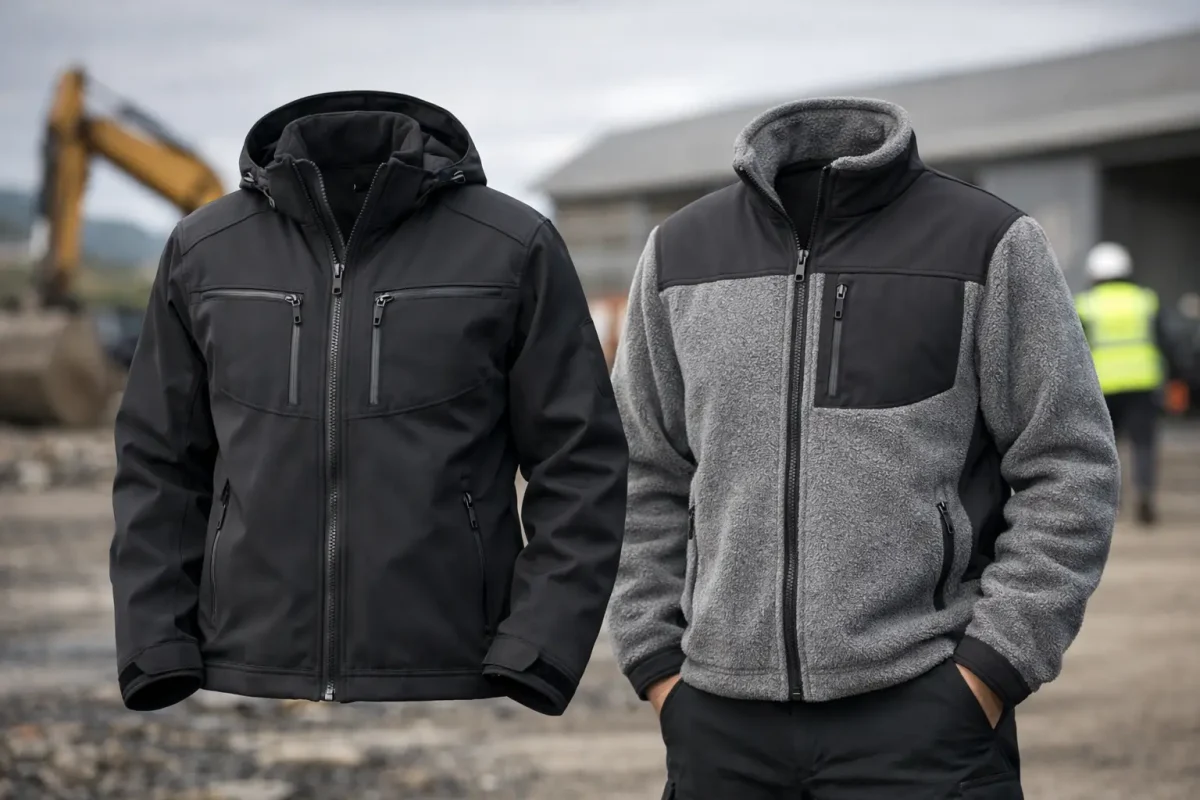
A fleece is primarily an insulating mid-layer. Usually made from polyester, it traps warm air close to the body, feels soft and remains comfortable for long periods. It is a dependable option for indoor-outdoor work, dry cold days and staff who need easy warmth without the bulk of a coat.
A softshell jacket is an outer layer designed to manage changing weather. Its woven outer fabric gives better wind resistance than fleece, while many styles have a showerproof or water-resistant finish. Most also include some stretch, which is useful for active roles such as fitting, delivery, facilities work and site supervision.
Neither garment replaces a fully waterproof jacket in sustained rain. A softshell can deal with a short shower or damp conditions, but it is not the right choice for teams working outside all day in heavy rain. Likewise, a standard fleece provides warmth but offers limited protection from wind and rain.
The decision comes down to the main discomfort your team faces. If cold is the problem, start with fleece. If wind, light rain and exposure are the issue, start with softshell.
When a fleece is the better uniform layer
Fleeces are a straightforward, cost-effective choice where warmth matters more than weather protection. They work particularly well for warehouse teams, school staff, caretakers, stock handlers, delivery drivers moving between vehicle and premises, and tradespeople working mainly indoors or under cover.
A good fleece is easy to put on over a polo shirt or sweatshirt and can be removed without disrupting the rest of the uniform. This makes it useful for staff moving between cold stores, shop floors, offices and outdoor areas. Full-zip fleeces are especially practical where employees need to regulate their temperature during a busy shift.
For organisations ordering uniforms across several departments, fleeces are also a reliable standard issue. They are generally lighter on the budget than technical outerwear, widely available in corporate colours and easy to replace when teams expand. A black, navy, grey or branded-colour fleece provides a consistent appearance without making the uniform overly formal.
Fleece strengths and limitations
The main strength of fleece is warmth for its weight. It is comfortable, breathable enough for moderate activity and dries relatively quickly after washing. Modern anti-pill fleece fabrics also help the garment retain a cleaner finish through repeated wear.
Its limitation is exposure. Wind can pass through fleece fabric, quickly reducing its warming effect on open sites. Rain will soak into it rather than run off, and a wet fleece can feel heavy and cold. Staff on exposed construction sites, event set-ups or roadside work will usually need a weather-resistant layer over the top.
Fleece can also pick up dust, lint and debris more readily than smoother softshell fabric. That may matter in workshops, distribution settings or customer-facing environments where presentation is closely monitored.
When a softshell jacket earns its place
Softshell jackets suit teams who spend meaningful time outdoors but need freedom of movement. Their outer fabric blocks wind better than fleece, while a bonded inner layer offers warmth without the weight of a traditional insulated coat. This makes them a strong option for builders, engineers, surveyors, grounds teams, security staff, event crews and mobile service technicians.
The fabric is usually smoother and more structured than fleece, giving the garment a sharper appearance. That is useful when staff meet customers, visit occupied sites or represent the business at events. A softshell can look more like proper outerwear while still being practical enough for day-to-day work.
Many styles have zipped pockets, adjustable cuffs and a longer back hem. These details are not cosmetic. Secure pockets protect keys, phones and work passes, while the closer fit reduces draughts during outdoor work. Stretch panels or stretch-rich fabric can make a noticeable difference for employees who drive, climb ladders, bend or carry equipment.
Do not treat showerproof as waterproof
This is where uniform specifications need care. Water-resistant or showerproof softshells are designed for light rain and brief exposure. They are not a substitute for certified waterproof clothing when the job involves prolonged wet-weather work.
For teams working in regular rain, choose a waterproof jacket or coat as the outer layer, with a fleece underneath for insulation. This two-layer approach gives staff more control over warmth and weather protection than asking a single garment to do everything.
Where visibility requirements apply, hi-vis garments must be selected for the relevant risk and compliance requirement. A standard branded softshell or fleece should not be assumed to meet hi-vis PPE standards simply because it is bright in colour.
Warmth, movement and the realities of a shift
The warmest option is not automatically the best uniform option. A heavily insulated jacket can be too hot for a worker unloading stock, carrying tools or repeatedly moving in and out of vehicles. Overheating leads to staff removing layers, which can leave branding inconsistent and uniform standards harder to manage.
Fleece is usually the better choice for low- to medium-activity work in cold, dry conditions. Softshell is better for active work in cool, windy or unsettled conditions. For the most flexible issue, provide a branded polo or sweatshirt, a fleece for warmth and a waterproof outer layer where the role demands it.
Think about seasonality too. A softshell is often worn across spring and autumn, while fleece is valuable year-round in cold indoor spaces and during winter. Teams who work outdoors every day may get more use from a softshell, but office-based employees making occasional site visits may prefer a fleece they can keep in a locker or vehicle.
Embroidery and print: choose the right decoration method
Both fleece and softshell jackets can carry company branding, but the fabric and garment construction matter. Fleeces are commonly embroidered on the left chest and can also take a larger embroidered logo in suitable areas. Embroidery gives a durable, professional finish that suits corporate workwear and repeated laundering.
Softshells need more consideration. Needle holes from embroidery can affect the weather resistance of the garment, especially on waterproof or highly water-resistant fabrics. For this reason, printed logos are often the better option on technical outerwear. Print can provide clean detail without puncturing the outer fabric.
There is no single rule for every softshell. The correct method depends on the fabric, coating, logo size and placement. A small left-chest logo may work differently from a large back design, and zip pockets or seams can restrict where decoration is possible. Checking the artwork and garment before production avoids costly compromises.
For large teams, keep logo placement consistent across garment types where possible. A left-chest logo on polos, fleeces and softshells helps staff look like one team even when they are wearing different layers for different jobs.
Cost, durability and ordering for a team
A fleece can be the sensible bulk-buy option when the priority is issuing warmth across a large workforce. It is often less expensive, easy to replenish and suitable for a broad range of roles. Softshells usually cost more because of their construction and weather-resistant properties, but they can offer better value where staff genuinely need that protection.
Avoid selecting purely on unit price. A cheap fleece issued to an exposed outdoor team may spend most of its time unworn, while a suitable softshell may become part of the daily uniform. Equally, issuing every employee a technical softshell can add unnecessary cost if most of the team works indoors.
For mixed workforces, order by role rather than trying to force one garment across every department. Site teams may need softshells and waterproofs, warehouse staff may need fleeces, and customer-facing managers may benefit from a smarter softshell option. Keeping approved colours, logo positions and garment ranges on record makes repeat ordering simpler as new starters join.
Vivid Promotion can help organisations align garment choice, branding method and packing requirements, including employee-by-employee uniform packs where that reduces time at issue.
Make the layer fit the job
The most effective uniform is the one staff will wear without being asked twice. Choose fleece where dependable warmth and easy layering are the priority. Choose softshell where wind resistance, light rain protection and a more structured outer layer will make a real difference.
Before confirming an order, consider where each team works, how active they are, what weather they face and whether their logo should be embroidered or printed. Those practical checks will produce a uniform range that looks consistent, performs properly and is easier for managers to issue with confidence.