Branded Workwear
Can Hi Vis Be Embroidered? A Practical Guide
Jul
A site supervisor ordering 80 vests does not just need a logo added. They need each wearer to remain visible, the garment to suit the job, and the finished order to arrive ready to issue. So, can hi vis be embroidered? Usually, yes – but only when the logo position, garment construction and relevant safety standard have been checked first.
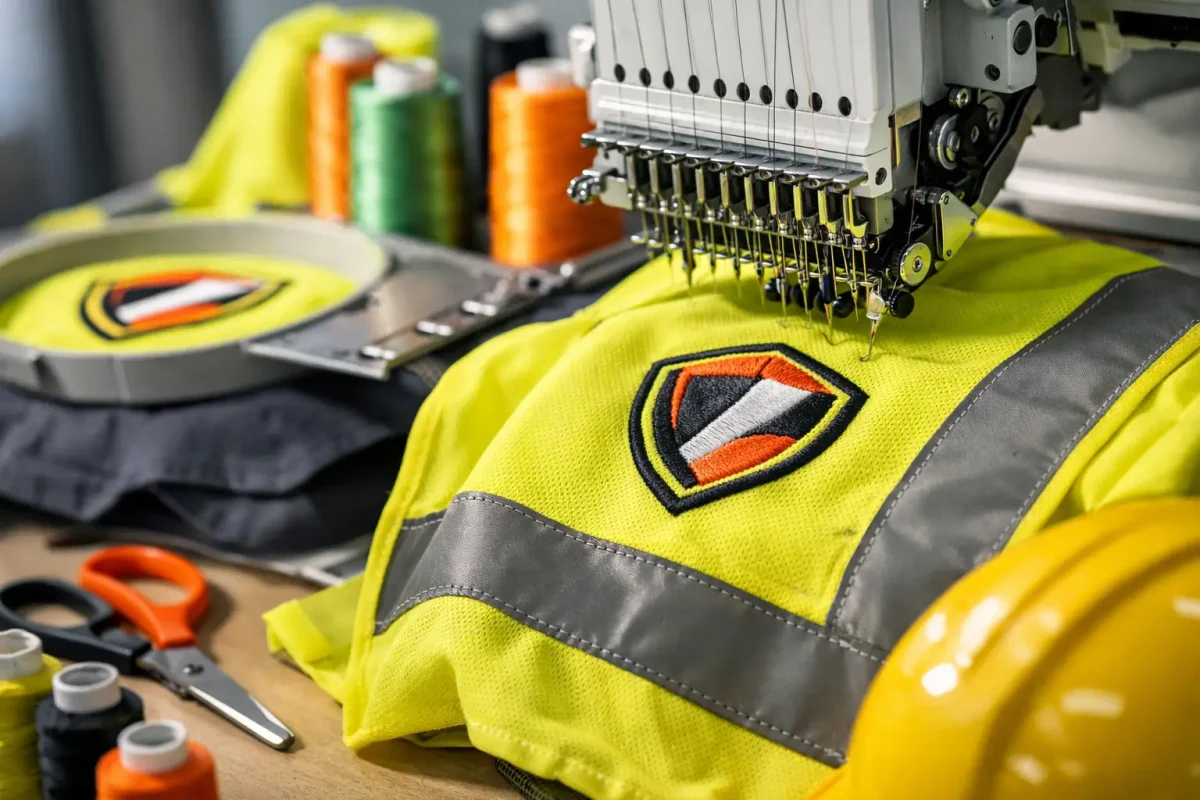
Embroidery gives workwear a durable, professional finish, particularly for company names and simple logos. Hi-vis clothing, however, is PPE in many working environments. That changes the decision. The wrong logo size or placement can cover fluorescent fabric or reflective tape, compromise the garment’s visibility, or affect whether it remains appropriate for the risk assessment.
Can Hi Vis Be Embroidered Without Losing Compliance?
Hi-vis waistcoats, polos, fleeces, jackets and trousers can often be embroidered in designated areas. The key point is that decoration must not reduce the visible background material or retroreflective tape below the level required for the garment’s classification.
For UK workplace use, many garments are certified to EN ISO 20471 for high-visibility clothing. Railway garments may also carry RIS-3279-TOM certification, which includes specific requirements for use on or near the rail network. These standards relate to the garment as manufactured and tested. Adding a logo is an alteration, so it must be handled carefully rather than treated as a cosmetic afterthought.
A small embroidered logo on a suitable chest panel may be acceptable. A large stitched design across the front of a vest, over reflective bands, is not. It can obstruct a vital visibility area and introduce unnecessary bulk into a garment designed to be lightweight and conspicuous.
The practical rule is simple: keep embroidery away from reflective tape and use only the available decoration area identified by the garment manufacturer or supplier. Where there is any doubt, choose a garment designed for customisation and confirm the proposed logo position before production begins.
Where Should an Embroidered Logo Go on Hi-Vis Workwear?
The best position depends on the garment. On a hi-vis polo, sweatshirt or fleece, the left chest is often the most familiar and workable location, provided it sits clear of reflective bands. On waistcoats, there may be a dedicated chest area above the tape. Some jackets also allow a small logo on the chest, sleeve or rear yoke, but the tape layout must always take priority.
Back branding needs more caution. A company name may be useful for traffic marshals, event crews, delivery teams and site operatives, but it should not cover reflective strips or take up excessive fluorescent surface area. In many cases, a carefully positioned printed logo is the more suitable option for the back of a hi-vis garment.
The size and shape of the artwork matter as much as the location. A compact, clearly defined logo is easier to embroider without taking up too much area. Fine lettering, gradients, photographic detail and broad solid blocks are less suitable. Simplifying the artwork for embroidery can produce a neater result and reduce stitch density, weight and wear on the garment.
Embroidery or Print: Which Is Best for Hi-Vis?
There is no single answer for every uniform. Embroidery is usually the stronger choice for durable chest logos on heavier garments such as fleeces, softshells, sweatshirts and bodywarmers. It stands up well to regular wear and gives a smart, consistent result for customer-facing teams.
Print is often preferable when the design is large, detailed or needs to sit across a wider area. It is also the better option for lightweight hi-vis waistcoats, where dense embroidery can pull on the fabric. A printed logo may be more flexible, lighter to wear and easier to position between reflective bands.
Waterproof hi-vis outerwear needs particular care. Embroidery requires needle penetrations, which can create holes in the waterproof membrane or outer shell. Even when small, those holes may affect water resistance around the logo area. For waterproof jackets and coats, print is normally the safer decoration method unless the garment has a purpose-made embroidery access point and the manufacturer confirms it is suitable.
For a quick operational comparison:
- Choose embroidery for small, durable logos on suitable chest areas of fleeces, polos, sweatshirts and selected softshells.
- Choose print for larger graphics, lightweight vests, detailed designs and most waterproof outerwear.
- Avoid decoration over reflective tape, seams, zips, pockets and areas required to maintain the garment’s high-visibility performance.
- Check the garment’s certification, class and manufacturer guidance before approving artwork placement.
Do Not Treat Every Hi-Vis Garment the Same
A promotional yellow waistcoat for an event crew is not necessarily the same as certified PPE for roadworks, warehousing or rail operations. The required level of visibility depends on the workplace risk assessment, traffic speed, lighting, weather and whether workers need to be seen against complex backgrounds.
EN ISO 20471 garments are commonly grouped into classes based on the amount of fluorescent and reflective material used. Class 3 offers the highest visibility and is typically chosen where workers face the greatest exposure to moving traffic or poor light. A logo that might be reasonable on one garment can be inappropriate on another if it reduces a limited visible area.
For rail work, do not assume that a generic orange hi-vis item is suitable. RIS-3279-TOM requirements are specific, and any branding plan should protect the garment’s intended use. If the uniform is contractual PPE, seek confirmation from the site, principal contractor or safety lead before ordering customised items.
It also pays to separate uniforms by purpose. Staff who visit site occasionally may need a different garment from operatives working close to live traffic. Office, event or warehouse teams may need branded hi-vis for identification, while a construction crew may require certified, task-specific PPE. Ordering by role avoids paying for the wrong specification and helps keep issue records clear.
What We Need Before Embroidering Your Hi-Vis
A clean logo file and a clear instruction are the starting point, but a reliable order needs a little more detail. Specify the garment make and style, the intended logo position, approximate finished size, quantity and whether the clothing is being used as certified PPE. If there are different departments, names or roles, provide a size breakdown and wearer list early.
Artwork often needs converting into an embroidery-ready stitch file. This is not simply a matter of pressing print. The design must be digitised so the stitch direction, density and thread colours suit the logo and fabric. A good conversion prevents gaps, puckering and unreadable small text, especially on lightweight hi-vis materials.
Ask for a visual proof before production. This should show the logo position and scale on the selected garment, not just the logo alone on a white background. It is the simplest way to spot a placement that is too close to tape, a pocket or a zip before the order is stitched.
For repeat uniform programmes, retain the approved artwork and specification: garment code, colour, logo size, thread colours and position. That makes reorders faster and helps maintain a consistent appearance across new starters, replacement garments and different sites.
Make Issuing Uniforms Easier
The garment decision is only half the job. Large orders can create an avoidable sorting exercise when boxes arrive with mixed sizes and multiple branded items. If a team needs hi-vis vests, polos, fleeces and outerwear, consider ordering them as named or per-employee packs. Each worker receives the correct combination, while the manager has less unpacking and fewer allocation errors.
This is particularly useful for construction projects, care and facilities teams, event staffing and multi-site businesses. A clear packing schedule can separate garments by department, location, role or wearer, while bulk delivery keeps the order manageable for site stores.
Vivid Promotion can advise on garment suitability, logo conversion and the most appropriate decoration method before production starts. That upfront check is worth making when visibility and compliance sit alongside brand presentation.
The best branded hi-vis is not the one with the largest logo. It is the one that keeps people identifiable, visible and properly equipped for the work they are doing.