Branded Workwear
Embroidery vs Vinyl Printing: Which Is Best?
Jul
A logo that looks right on a polo shirt can be the wrong choice for a waterproof jacket, a hi-vis vest or a batch of staff T-shirts. The embroidery vs vinyl printing decision affects how the garment wears, how clearly your branding reads and how well the finished uniform stands up to the job.
For most organisations, there is no single best option across every garment. Embroidery is a dependable choice for many everyday uniforms, while vinyl printing is often the practical answer for waterproof clothing, large graphics, names and certain detailed designs. The right method starts with the garment, the logo and the working environment – not simply the lowest unit price.
Embroidery vs vinyl printing: the practical difference
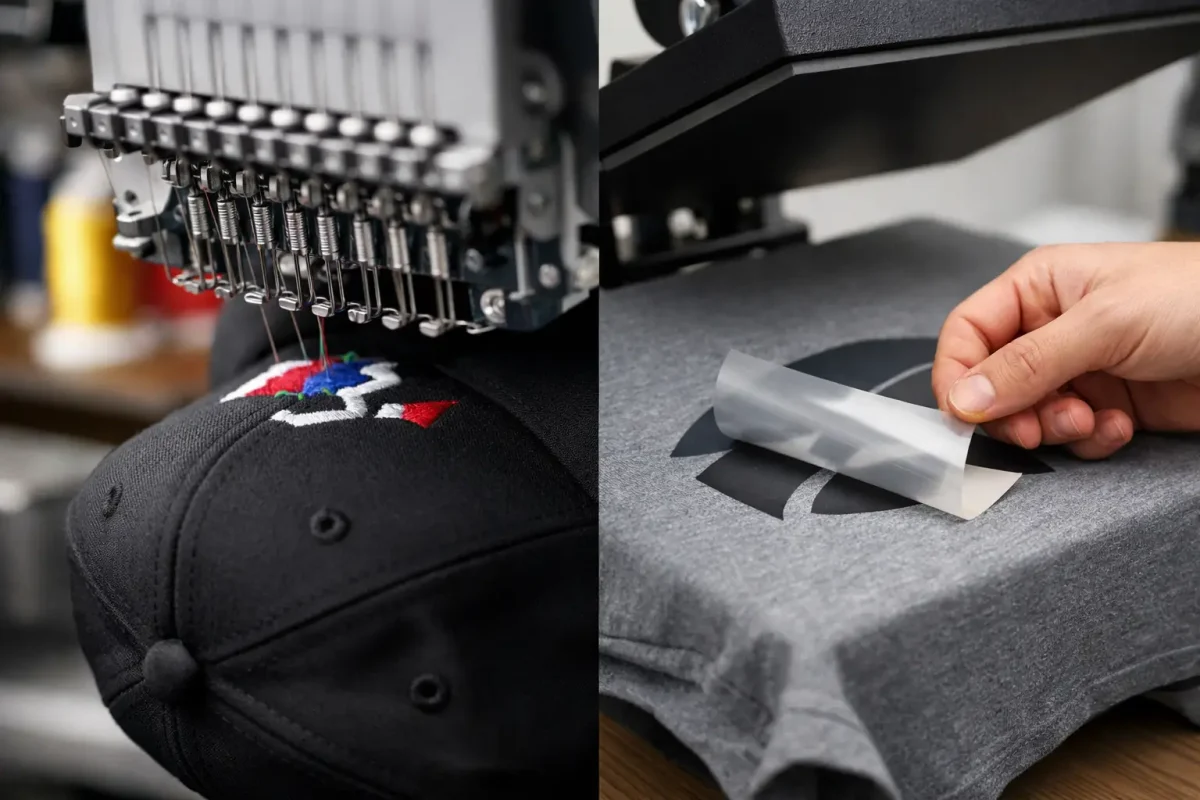
Embroidery creates a logo from coloured threads stitched directly into the fabric. Your artwork is converted into a stitch file, then produced by an embroidery machine. The result is a textured, raised finish that is familiar on polos, sweatshirts, fleeces, softshells, caps and many jackets.
Vinyl printing uses cut coloured vinyl that is heat applied to the garment. It produces a smooth, flat finish with clean edges. It is commonly used for names, job roles, numbers, simple logos and bold graphics, and it works particularly well where stitching through the garment would be unsuitable.
Neither method is automatically more professional. A well-produced embroidered chest logo gives a smart, hard-wearing uniform finish. A properly applied vinyl print can be just as sharp and is often the better technical choice. What matters is whether the decoration suits the fabric and use case.
When embroidery is the right choice
Embroidery is usually the first choice for branded workwear that needs a traditional, established look. It is particularly effective on heavier, stable fabrics such as pique polos, hoodies, sweatshirts, fleeces, bodywarmers and work jackets. It also gives a strong result on caps and beanies, where printed decoration is not generally practical.
For teams who wear their uniform day after day, embroidery offers excellent longevity. The thread becomes part of the garment rather than sitting on its surface, so it copes well with regular wear and washing when the garment care instructions are followed. This makes it a sensible option for trades, facilities teams, hospitality staff, school uniform and customer-facing teams.
It also works well for simple logos with solid shapes and clear lettering. A small embroidered logo on the left chest is compact, recognisable and suitable for repeat orders. Once the stitch file has been set up correctly, the same branding can be used consistently across compatible garments.
Where embroidery has limits
Thread has physical limits. Very fine text, tiny icons, close-together lines and tonal gradients may not reproduce cleanly in stitches. Small lettering can fill in, while highly detailed artwork may need simplifying before it is embroidery-ready. A good logo conversion is not just a technical step – it determines whether the finished badge remains clear at workwear scale.
Embroidery also adds thickness. On a lightweight T-shirt, a large stitched design can feel heavy and pull the fabric. On a thin or stretchy garment, it may distort the material around the logo. Larger designs generally carry more stitches and take longer to produce, so embroidery is often less economical for oversized back artwork.
The key restriction is waterproof or water-resistant outerwear. Needle holes can compromise the outer layer and may affect its ability to shed water. For rain jackets, certain coated garments and some technical outerwear, vinyl printing is normally the safer route.
When vinyl printing is the better option
Vinyl printing is a direct choice for garments where a smooth, flexible decoration is needed. It is highly effective for staff names, individual roles, squad numbers and short runs where every item needs different personalisation. For example, a set of event crew T-shirts with a logo on the front and individual roles on the back is well suited to vinyl.
It is also a practical option for simple, high-contrast designs. White lettering on a black hoodie, a bold company logo on a hi-vis vest or a large back print on a T-shirt can all be produced with clean definition. Vinyl retains crisp edges, making it useful when embroidery would struggle with very small or narrow lettering.
For waterproof garments, printing avoids puncturing the outer fabric. This is especially relevant for site teams, delivery staff, outdoor events and any role where rainwear is part of the issued kit. Choosing print here is about garment performance as much as appearance.
What to consider before choosing vinyl
Vinyl is durable when it is applied correctly and looked after properly, but it is still a surface decoration. It needs the right heat, pressure and garment compatibility to bond well. Washing garments inside out, following the care label and avoiding excessive heat helps preserve the finish over time.
The feel of vinyl is different from ink-based garment printing. It can be more noticeable on large solid areas, especially on lighter fabrics. For a large, full-back design, discuss the artwork and garment first rather than assuming that one decoration method fits every order.
Vinyl is also best suited to designs that can be built from solid colours. Complex photographic artwork, subtle fades and artwork containing many shades may call for another print process. The useful question is not only whether the logo can be printed, but whether it will remain clear, comfortable and appropriate for the intended garment.
Match the decoration to the garment
The garment category should guide the decision early. Polo shirts, fleeces and heavyweight sweatshirts are reliable embroidery candidates. Their fabric structure supports stitching well and the finished logo looks at home on the garment.
T-shirts can take either method. A small embroidered chest logo can work on a quality, heavier-weight tee, but vinyl is often more comfortable and cost-effective for larger front or back designs. For promotional T-shirts, event uniforms or short-term campaigns, print is frequently the more practical option.
Softshells need a closer look. Many are suitable for embroidery, particularly for chest logos, but the fabric, lining and intended weather protection must be considered. On fully waterproof jackets, vinyl printing is usually preferable to avoid needle holes. The same approach applies to rainwear and garments with coated surfaces.
Hi-vis clothing requires more than a branding decision. Logo position must not interfere with reflective tape, and the garment’s safety requirements must be respected. If you need hi-vis clothing for regulated work, check the specific garment and proposed decoration placement before ordering. A branded vest still needs to be suitable for the environment in which it will be worn.
Healthcare tunics, scrubs and lightweight uniforms often benefit from a smaller, carefully positioned logo. Embroidery can provide a tidy departmental identity, while vinyl may be useful where fine text, role labels or a lightweight finish is preferred. Consider infection-control procedures and the expected wash routine alongside the visual result.
Start with the logo, not the garment image
A logo supplied as a clear vector file or high-resolution artwork gives the best starting point. However, the artwork still needs to be adapted for the chosen process. An embroidery file translates shapes into stitch directions, thread colours and density. A vinyl design needs clean cut paths and workable detail at the final print size.
This is why the same logo may be treated differently across a uniform range. A detailed crest might be embroidered on a fleece, simplified for a cap and printed on a waterproof jacket. Keeping colours, proportions and placement consistent allows the uniform to look coordinated without forcing one method onto every garment.
Before approving production, check the intended logo size and location. A design that reads well at 100 mm wide may lose important detail at 50 mm. Likewise, a back print needs enough contrast against the garment colour to be readable from a sensible distance. Black branding on a dark navy jacket may technically be present but offer little practical visibility.
Think about ordering and issuing the uniform
For a small team, the choice may be as straightforward as a left-chest logo on a handful of polos. For a larger rollout, decoration method affects the whole issuing process. Different departments may need different garments, while individual names, sizes and job roles need to be matched accurately.
A planned order can combine embroidery and vinyl where it makes sense: embroidered polos and fleeces for everyday wear, printed waterproofs for outdoor work, then named hi-vis vests for site access. This avoids compromising the garment simply to keep every item decorated in the same way.
When ordering for several locations or a growing workforce, provide a clear size breakdown, wearer list and decoration requirement for each garment type. Per-employee packaging can remove a significant sorting job at your end, particularly for schools, care providers, event teams and multi-site employers. It also makes replacement orders easier when the original branding and positions have been agreed.
Choose for the work, then protect the result
Embroidery is the dependable choice for durable, smart-looking branding on many standard workwear garments. Vinyl printing is the practical answer for waterproof outerwear, large simple graphics and individual personalisation. The best uniform programmes use each method where it performs best rather than treating one as a universal solution.
Before placing the order, consider what each employee will actually wear, wash and work in. A clear logo, the correct decoration method and garments packed ready to issue will do more for a consistent uniform rollout than choosing on appearance alone.