No products in the basket.
Branded Workwear
Plumber Workwear Choices That Work on Site
18
Nov
Nov
A boiler cupboard, a wet floor and a customer waiting for an answer are not the place to discover that a uniform restricts movement, holds water or looks tired after two washes. Good plumber workwear choices start with the actual jobs your team carries out, then build in the right levels of protection, comfort and professional presentation.
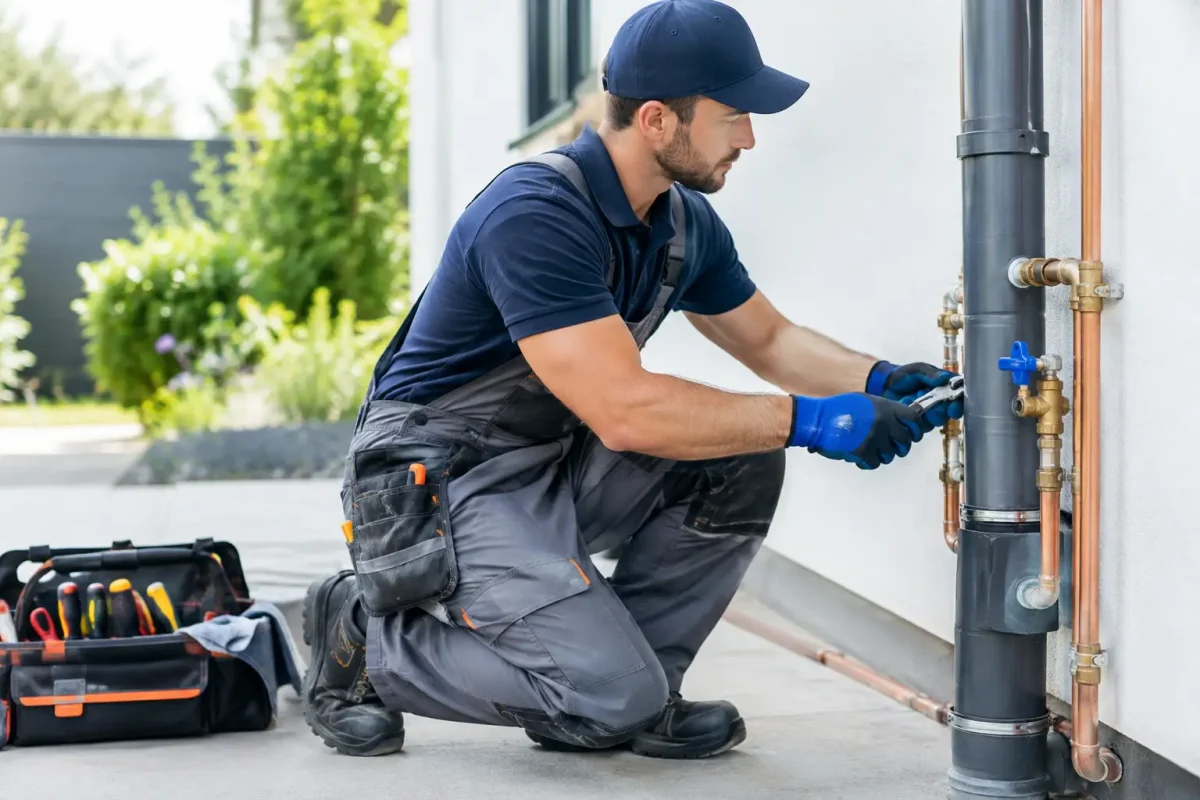
For plumbing firms, workwear has to cover more than one environment. An engineer may begin the day loading materials, spend the morning under a sink, attend a domestic call-out after lunch and finish on a commercial site where hi-vis is required. One garment rarely does every job well. A practical uniform range gives staff dependable core clothing, with layers and PPE-led items added when conditions demand them.
Start with the work, not the catalogue
The right specification depends on whether your team mainly handles domestic repairs, new-build installations, commercial maintenance, drainage work or heating services. There is overlap, but the risks and working conditions are different.
Domestic engineers usually need clean, presentable garments that move easily in occupied homes. Commercial and site-based teams may need more hard-wearing trousers, weather protection and certified hi-vis clothing. Drainage and external work can call for garments that cope with mud, water and repeated laundering, while boiler engineers often benefit from flexible layers for working between cold outdoor areas and warm plant rooms.
Before selecting colours or adding a logo, identify the non-negotiables: freedom of movement, pocket requirements, weather exposure, visibility rules and the likely washing routine. That avoids buying a smart-looking uniform that is unsuitable after a fortnight of real use.
Plumber workwear choices for the working day
Trousers that allow movement and carry tools
Work trousers are usually the foundation of a plumbing uniform. Look for durable fabric, reinforced high-wear areas and a fit that allows kneeling, squatting and climbing without pulling at the waistband or seams. Stretch panels can make a noticeable difference for engineers working in awkward positions, but the fabric still needs to stand up to abrasion from floors, van interiors and site materials.
Pocket layout matters as much as fabric weight. Plumbers often need quick access to a phone, small tools, fittings, a tape measure and paperwork. Cargo pockets can be useful, although oversized or loose pockets can catch when working in confined spaces. For some teams, a simpler trouser with secure zipped pockets is the better choice.
Knee-pad pockets are worth considering for regular installation and maintenance work. They do not remove the need for good working practice, but they offer a practical option for tasks carried out at floor level. Check that the knee-pad position suits the wearer when kneeling, not just when standing in a fitting room.
Polos, T-shirts and base layers
Branded polos remain a strong choice for customer-facing plumbing teams. They look tidy, are easy to identify and work well under a sweatshirt, fleece or softshell. Cotton-rich options feel familiar and comfortable, while performance fabrics can dry faster where work is physically demanding or regularly involves water.
T-shirts are often a more practical base layer for installation crews and hot-weather work. They can be issued in quantity for regular changes and are straightforward to print with a larger company logo. A mixed issue of polos for visits and T-shirts for heavier work gives staff appropriate options without making uniform control difficult.
Colour should be chosen with the job in mind. Darker shades hide everyday marks better, but a very dark uniform can be less suitable for teams who need to be visible around vehicles, traffic or active sites. Navy, black, charcoal and royal blue are common trade colours because they remain professional while coping well with regular wear.
Mid-layers for changing conditions
A sweatshirt, quarter-zip or fleece gives plumbers a useful layer between a polo and an outer jacket. This is particularly valuable for engineers moving in and out of properties throughout the day. Choose a garment that is warm without being bulky, as excess fabric can be inconvenient when reaching into cupboards, lofts or under-floor spaces.
Fleeces suit dry, cool conditions and are comfortable for travelling between jobs. Sweatshirts are often more hard-wearing for daily site use. If staff need a smarter finish for customer appointments, a well-fitted branded quarter-zip can strike the right balance between warmth and presentation.
Jackets, softshells and waterproofs
Outerwear should be selected by weather exposure rather than appearance alone. A softshell is a sensible everyday option for light rain, wind and cold weather. It is flexible, breathable and less restrictive than a heavy coat, making it a popular choice for mobile engineers.
For prolonged rain or external call-outs, provide a proper waterproof layer. This should be treated as a working garment, not an occasional extra left in the van. Waterproof jackets can be branded, but decoration needs care. Embroidery creates needle holes, which can compromise a waterproof surface. Print is usually the better option for waterproof garments, provided the logo and placement are suitable for the fabric.
Bodywarmers work well for jobs where staff need core warmth and full arm movement. They are useful for warehouse collection points, boiler rooms and milder outdoor work, but they are not a replacement for a waterproof jacket when rain is expected.
Hi-vis and PPE: specify what the site requires
Hi-vis clothing should never be chosen simply because it is bright. If a customer, principal contractor or site rule requires certified hi-vis, supply garments that meet the specified visibility standard and make sure any logo application does not reduce the required fluorescent or reflective areas.
Many plumbing firms issue hi-vis waistcoats for occasional site visits and keep branded workwear separate for normal domestic calls. Others require hi-vis polos, jackets or trousers as part of a regular site uniform. The right approach depends on the work programme. Where PPE is required, check the garment specification against the relevant risk assessment and site requirements rather than assuming one hi-vis item covers every situation.
Footwear, gloves, eye protection and respiratory protection also form part of the wider workwear decision, even when they are sourced separately. Clothing should work with this equipment. For example, trousers should sit comfortably over safety footwear, and sleeve or cuff designs should not interfere with gloves during practical work.
Branding that looks professional and lasts
A clear logo on the chest is usually enough for most plumbing uniforms. It identifies the engineer at the door, helps customers feel confident and creates a consistent team appearance without overloading the garment. Larger back branding can be useful for installation teams, roadside visibility and site work.
Embroidery is a durable choice for polos, sweatshirts, fleeces, softshells and bodywarmers. It gives a smart finish, especially for company names and simple logos. Printed branding is often better for T-shirts, larger designs and waterproof clothing. Fine artwork, gradients and very small text may need adjustment before production so that the finished result remains legible and consistent across garment types.
A supplier should check how the logo will translate into stitch or print, not just place a file on a garment. The decoration method, garment fabric and logo position all affect the finished appearance. Getting this right at the setup stage prevents inconsistent uniforms on repeat orders.
Make issuing uniforms easier for the office
The most practical uniform programme is one that can be reordered without starting again every time a new engineer joins. Standardise a core range, record approved garment colours and decoration positions, and agree a clear size process. That gives managers control while allowing staff enough choice to work comfortably.
For a typical plumbing team, a core issue may include trousers, branded polos or T-shirts, a mid-layer and suitable outerwear. Add hi-vis garments where required by the job. Seasonal top-ups are often more cost-effective than issuing every item at once, particularly for smaller firms with variable staffing levels.
For larger teams, individually packed uniform sets reduce the admin burden. Each employee can receive the correct sizes, garments and branded items in one package, rather than someone in the office sorting a bulk delivery by hand. This is especially useful for multi-site contractors, growing maintenance teams and firms onboarding several engineers at the same time.
A straightforward ordering check
Before placing an order, confirm these practical points:
- Which roles need customer-facing garments, sitewear or both.
- Whether hi-vis clothing must meet a specific standard.
- Which garments will be embroidered and which should be printed.
- The size range required, including allowance for layering in colder months.
- How uniforms will be issued, stored and reordered as staff change.
Vivid Promotion can help businesses turn these requirements into a consistent branded workwear order, with garment decoration and packing arranged around how the team will receive and use the kit.
The best workwear is not the item that looks best on a product page. It is the uniform an engineer can wear through a full shift, wash repeatedly, replace easily and still feel confident wearing when they knock on the next customer’s door.