No products in the basket.
Branded Workwear
Garment Print Finishes for Workwear That Lasts
20
Nov
Nov
A printed logo that cracks after a handful of washes, disappears against a dark jacket or feels too heavy across the back is not a minor uniform issue. It creates replacement costs and an inconsistent team appearance. Choosing the right garment print finishes starts with how the item will be worn, washed and issued – not simply with the look of the artwork on screen.
For busy teams, the right finish needs to work as hard as the garment. A lightweight T-shirt for an event crew, a waterproof softshell for site operatives and a hi-vis vest for roadside work all place different demands on a printed design. The logo, fabric, print position and order quantity need to be considered together before production begins.
Choosing garment print finishes for the garment
The word “finish” is often used to describe how a printed design looks and feels once applied. It can mean a smooth, solid-colour logo; a softer print that moves with the fabric; a matt appearance; or a more noticeable transfer finish. In practice, the application method has the biggest influence on the final result.
Screen printing remains a dependable option for larger runs of garments carrying a simple design in one or a few colours. Ink is applied directly through a screen, producing strong colour coverage and a consistent result across the order. It is particularly suited to staff T-shirts, promotional clothing, leavers’ hoodies and event garments where many items carry the same artwork.
For logos with fine detail, multiple colours, gradients or individual names, printed transfers are often the more practical choice. A transfer is produced separately and heat-applied to the garment. This allows detailed artwork to be reproduced accurately without the set-up required for a separate screen per colour. It can also be useful where a team needs the same logo but different job titles, squad numbers or names.
Direct-to-garment printing can suit certain cotton-rich garments and detailed full-colour artwork, particularly for smaller quantities. The ink is printed into the fabric rather than sitting as a distinct transfer layer. The finished feel can be softer, but results depend heavily on the garment composition, base colour and quality of the original artwork.
There is no universal “best” option. A high-coverage chest logo on 500 cotton T-shirts calls for a different approach from a small, detailed logo on 20 performance polos. The correct choice is the one that gives a clear, durable result on the actual garment being ordered.
Fabric affects the print more than most buyers expect
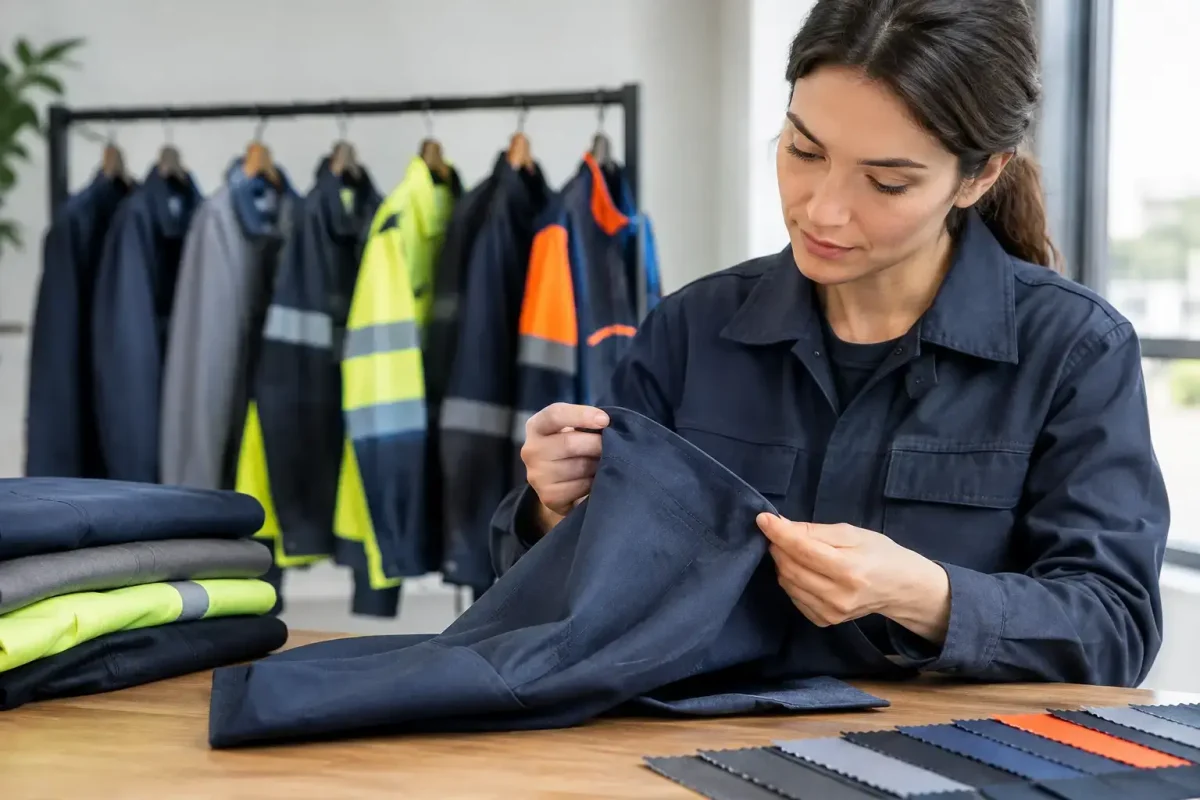
Cotton is generally straightforward for garment printing and works well with several methods. Polyester, however, is common across work polos, technical tees, sportswear and hi-vis clothing, and it needs more care. Some polyester fabrics can release dye when heated, which may affect lighter print colours unless the correct transfer and production process are used.
Softshells, fleece-backed jackets and padded outerwear bring different challenges. Their textured or layered surfaces may make a large printed area less suitable, while the garment’s movement and use can place added stress on the decoration. A small left-chest or upper-back print is often more practical than a large solid design across the body.
Waterproof and water-resistant garments deserve particular attention. Embroidery can create needle holes that compromise the fabric surface, so print is often the better option where maintaining weather protection matters. The print position must still avoid seams, pockets, zips and areas likely to crease heavily during wear.
What makes a workwear print durable?
Durability is not just about using thicker ink or a heavier transfer. A good workwear print needs the right balance between adhesion, flexibility and coverage. If the print is too rigid for a stretchy polo or technical fabric, it may crack or lift as the garment moves. If it is too light for the background colour, the logo may lose impact from a normal working distance.
The garment itself also determines the likely lifespan of the finished item. A budget T-shirt used for a one-day promotion does not need the same solution as a sweatshirt worn every day in a warehouse. For trade teams and facilities staff, it usually makes sense to select hard-wearing garments first, then match the decoration method to that garment.
Washing routine matters as well. Workwear may be washed more frequently than casual clothing, sometimes alongside heavier items or at temperatures unsuitable for the print. Staff should follow the garment care label, turn printed garments inside out where possible, and avoid excessive heat from tumble drying or ironing directly over the print. These simple steps help retain colour and flexibility over the garment’s working life.
For organisations that supply garments into healthcare, food production or other environments with specific laundering requirements, raise this at the ordering stage. The garment and print method both need to suit the required care process. It is better to confirm suitability before production than to discover a limitation once a full issue has been distributed.
Logo detail, colour and print position
A logo designed for a website or vehicle does not always translate directly to a garment. Fine lines, small reversed lettering and low-contrast colours can become difficult to read once printed at chest-logo size. This is especially true on textured fabrics, fleece garments and hi-vis items.
A print-ready logo should be supplied at high quality, ideally in a format that allows clean scaling. If artwork needs converting or tidying before it can be printed, that work should be completed before approval. A sharp logo at the proofing stage prevents avoidable delays and ensures the same branding can be used consistently across polos, hoodies, jackets and accessories.
Colour choice should be based on contrast, not brand guidelines alone. A navy logo may look correct on a white polo but disappear on a navy sweatshirt. A white print may show clearly on a black softshell, while a reflective or high-visibility garment may need a different treatment altogether. When uniforms are used on site, by drivers or at public-facing events, visibility and legibility are operational requirements.
Print position also changes the result. The standard left chest is practical for most company logos and works across a broad range of garments. Larger back prints are useful for trades, delivery teams and event staff who need to be identified from a distance. Sleeve prints can add a professional detail, but should not replace a clear main logo where quick recognition matters.
Avoid placing prints across zip lines, deep seams, pocket openings, reinforced panels or areas covered by PPE. These positions can distort the design, reduce adhesion or make the garment less comfortable in use.
When print is better than embroidery – and when it is not
Embroidery and print are not competing options in every case. Many uniform programmes use both. An embroidered chest logo can suit polos, sweatshirts, fleeces and corporate layers, while a printed back logo provides better visibility and allows larger artwork without adding excessive weight.
Print is usually the stronger option for detailed designs, photographic images, large back branding and garments where embroidery may affect performance, such as lightweight technical clothing or waterproof outerwear. It is also useful when colour gradients or fine text need to remain clear.
Embroidery can be preferable for a compact logo on durable garments where a raised, traditional finish is wanted. However, it may not suit very small lettering, highly detailed artwork or garments that cannot comfortably carry the stitch density. The decision should be based on the logo and garment combination rather than a fixed preference for one method.
Ordering printed uniforms without creating more admin
For a uniform order to run smoothly, standardise the details early: garment style and colour, logo position, print size, staff sizes and any personalisation. This makes it easier to repeat the order later without changing the approved finish or introducing inconsistency between departments.
For larger teams, consider how garments will be received as well as how they are printed. Bulk delivery may work for an event organiser with a distribution point. Per-employee packing can save significant time for employers issuing uniforms across several sites, shifts or departments. The best fulfilment method is the one that prevents an admin team from spending days sorting hoodies, polos and jackets after delivery.
It is also worth separating garments by purpose. Site staff may need printed hi-vis and outerwear; office or customer-facing teams may require polos and knitwear; temporary event staff may need cost-effective printed T-shirts. A single logo can remain consistent while the print finish and garment specification are adjusted for the job.
Vivid Promotion approaches printed workwear as part of the wider issue process, from checking logo suitability through to preparing orders in a format that is ready to distribute. That attention to the practical detail is what keeps a uniform programme consistent when teams grow or repeat orders are needed.
The right print should look clear on day one and still do its job after real shifts, regular washes and everyday wear. Start with the garment’s working conditions, approve artwork at the correct size, and choose a finish that suits the fabric rather than forcing the fabric to suit the logo.