No products in the basket.
Branded Workwear
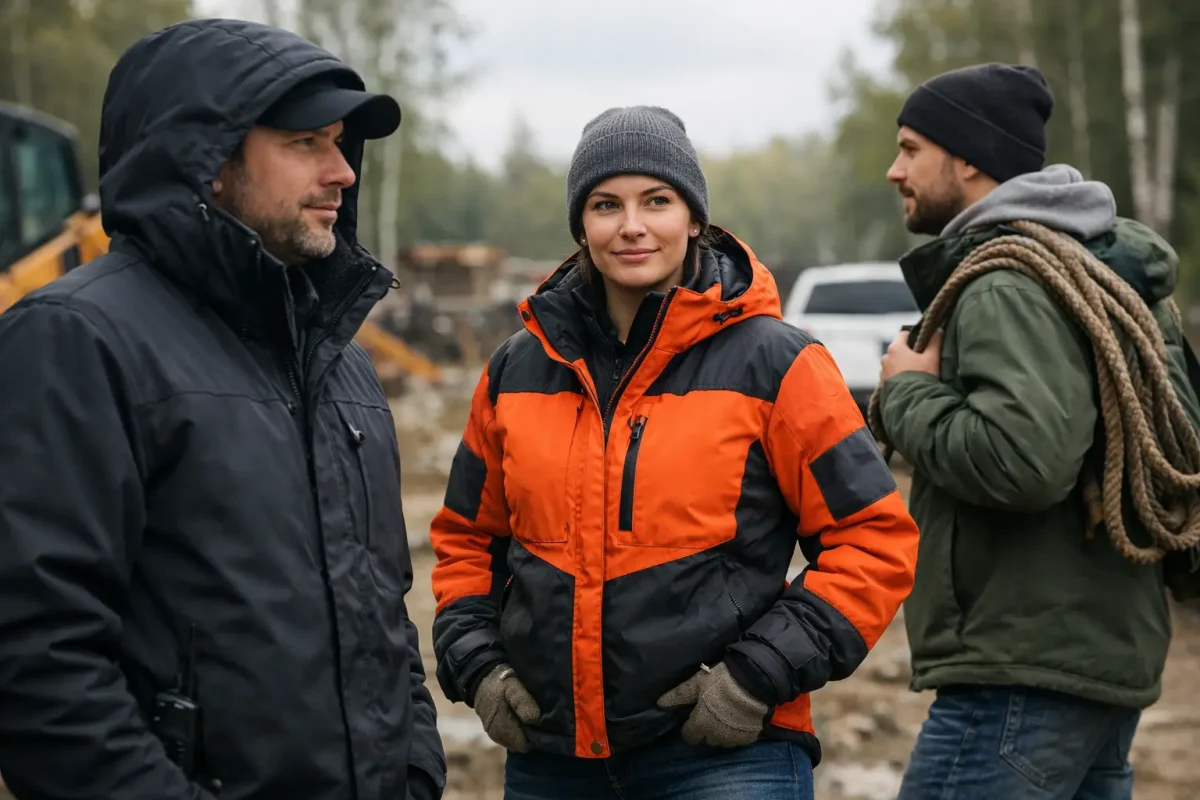
Best Jackets for Outdoor Crews at Work
25
Jun
Jun
A jacket that works on a quick depot walk-round can fail badly on a wet site at 6am. That is why choosing the best jackets for outdoor crews is less about picking the warmest option and more about matching the garment to the job, the weather and the way your team actually works.
For operations managers and buyers, the wrong choice usually shows up fast. Staff take jackets off because they overheat, waterproofs get left in vans because they feel stiff, or branded outerwear starts looking tired after repeated washing. A decent jacket range should do three things properly – protect the wearer, present the business well and hold up across repeat ordering.
What the best jackets for outdoor crews need to do
Outdoor crews rarely all work under the same conditions, even within one business. A groundworks team, event setup crew and highways contractor may all need outerwear, but not the same outerwear. The best result usually comes from thinking in layers and roles rather than trying to force one jacket across the whole workforce.
Weather protection is only one part of it. Movement matters just as much. If staff are lifting, climbing, driving or walking long distances, a bulky coat can become a problem. Breathability also matters more than buyers sometimes expect. A jacket that traps heat and moisture will often be worn open or not at all, which defeats the point.
Branding needs some thought too. On some garments, embroidery gives a smart, durable finish. On waterproof outer layers, print can be the better route because it avoids putting needle holes through the fabric. That is a practical detail, but it matters when you are ordering branded jackets in quantity and expecting them to perform outdoors.
Softshell jackets for everyday outdoor work
If you are buying for teams that work outside most days but are constantly moving, softshell jackets are often the strongest all-round option. They are lighter than a heavy coat, easier to wear across seasons and generally better for active jobs. For service engineers, site supervisors, installers and event crews, that balance of weather resistance and mobility is hard to beat.
A good softshell will handle wind and light rain while still looking presentable enough for customer-facing roles. That makes it useful where staff move between site work and client contact. It also tends to layer well over polos, sweatshirts or fleeces, which helps if you want a more flexible uniform setup.
The trade-off is straightforward. Softshells are not full waterproof jackets, and they are not the right answer for prolonged heavy rain. If your crews spend hours exposed in poor weather, you will usually need a proper waterproof option available as well.
When softshells make sense
Softshells work best where staff need freedom of movement and moderate weather protection. They suit delivery crews, telecoms teams, warehouse-yard staff, school site teams and trades that move in and out of vehicles through the day. They also tend to give a cleaner branded appearance than heavier technical rainwear.
Waterproof jackets for exposed conditions
For crews working through persistent rain, a waterproof jacket is not optional. It is standard kit. This is where buyers need to look beyond the word waterproof on a product page and think about actual use. A jacket for occasional showers is different from one needed for rail, civils, utilities or event breakdown in bad weather.
The practical features matter. Taped seams, a proper storm flap, adjustable cuffs and a hood that stays put in wind all make a real difference on site. Longer body length can also help where workers are bending, kneeling or standing for long periods in rain.
There is, however, a comfort trade-off. Fully waterproof jackets can feel heavier and less breathable than softshells. If teams are doing physically demanding work, they may run hot. In those cases, some businesses issue waterproof shells for wet weather and rely on lighter jackets for daily wear. That tends to be a better operational decision than expecting one jacket to cover every condition.
Branding on waterproof outerwear
If you need logos applied to waterproof jackets, decoration method matters. Embroidery can be suitable on some garments, but on many waterproof fabrics print is the safer option because it avoids compromising the fabric. For buyers responsible for consistency across a uniform range, getting that choice right saves problems later.
Insulated jackets for colder months
When temperatures drop, warmth becomes the deciding factor. Insulated jackets are a good fit for outdoor crews who spend long periods stationary or semi-stationary, such as marshals, security staff, caretaking teams, traffic management operatives and some event staff.
The key question is whether warmth comes at the cost of movement. Some insulated jackets are practical enough for active work, but heavier padded styles can feel restrictive. If staff need to drive between jobs or carry equipment regularly, too much bulk quickly becomes unpopular.
That is why insulated styles are often better as part of a winter issue rather than the only outerwear option all year. They are useful when crews are working in cold yards, open compounds or roadside settings, but less useful once spring arrives or if teams are physically active throughout the shift.
Hi-vis jackets for compliance-led roles
For some crews, visibility is the first filter, not the second. If your staff are working roadside, in logistics yards, on construction sites or anywhere with vehicle movement, the best jackets for outdoor crews will often be hi-vis by default.
In these settings, there is no point choosing a smart-looking jacket that does not meet site requirements. Buyers need to check the correct visibility class, suitability for the environment and whether the garment still performs in terms of waterproofing, warmth and comfort. Compliance is essential, but wearability still matters because staff need to keep the jacket on.
A common mistake is treating hi-vis as a separate issue from branding and fit. In practice, all three need to work together. A branded hi-vis jacket should still allow clear visibility, and the logo position should be planned around reflective tape and garment construction.
Fleeces and layering pieces still matter
Not every outdoor garment has to be a jacket. Fleeces and lightweight mid-layers do a lot of work in real uniform programmes, especially where teams start early, work through changing conditions or move between indoor and outdoor tasks.
A fleece on its own can suit dry, cool weather and gives a lower-cost branded layer for shoulder seasons. Under a softshell or waterproof, it adds warmth without forcing staff into a bulky winter coat. For larger organisations, this can be a more efficient way to kit teams out because it gives flexibility without issuing multiple heavy jackets to every employee.
Layering also helps with role differences. Supervisors, drivers and labour crews often need slightly different levels of warmth through the day. A sensible jacket programme accounts for that instead of pretending one garment will suit everyone.
How to choose the right jacket for your crew
Start with exposure. Ask how long staff are outside, what sort of weather they actually work through and whether they are active or static. That will usually narrow the field quickly between softshell, waterproof and insulated options.
Then look at the work itself. Jobs involving climbing, lifting and regular vehicle access need lighter, less restrictive jackets. More static roles can carry extra insulation. If the team interacts with customers or the public, appearance may carry more weight as well, particularly for front-facing service businesses.
After that, think about branding and repeat supply. A jacket that looks good with your logo, washes well and can be reordered consistently is more useful than a fashionable style that changes every season. This matters even more for multi-site businesses that need uniform consistency across departments.
Sizing and distribution should not be an afterthought either. Outdoor jackets are one of the easiest uniform items to get wrong if there is no clear issue process. If garments arrive unsorted or without role planning, admin time goes up and staff end up in the wrong fit. For businesses ordering at scale, fulfilment matters nearly as much as garment choice.
The best jackets for outdoor crews are rarely just one jacket
Most buyers get better results when they stop looking for a single perfect jacket. A more practical setup is usually a small range: perhaps a softshell for everyday wear, a waterproof for poor weather and a fleece or insulated layer for colder periods. That gives crews options without making the uniform programme messy.
It also improves wear rates. Staff are more likely to wear the right branded outerwear if it suits the conditions rather than fighting against them all day. That is better for presentation, better for morale and better value over time.
For businesses managing larger teams, this is where a supplier should act as a workwear partner rather than just a box mover. The details – decoration method, garment suitability, consistent supply and how items are packed for issue – are what keep a jacket order straightforward instead of turning it into another admin problem.
If you are buying for outdoor teams, the right question is not which jacket looks best on a product page. It is which jacket your crew will still be wearing, comfortably and properly branded, halfway through a wet February shift.