No products in the basket.
Branded Workwear
Custom Trade Workwear That Works Harder
13
Jun
Jun
A scuffed van, a wet site and a team starting at 7am is where poor uniform decisions show up fast. Custom trade workwear is not just about getting a logo on a hoodie. It has to stand up to the job, represent the business properly and arrive in a way that does not create extra admin for whoever is issuing kit.
For most trade businesses, the pressure points are predictable. New starters need kitting out quickly. Existing staff need repeat orders that match previous batches. Logos need to look sharp on everything from polos to softshells. And if garments are going onto active sites, comfort and compliance matter just as much as branding. Getting all of that right means treating workwear as an operational purchase, not a promotional extra.
What custom trade workwear needs to do
On site, workwear has a short list of jobs. It needs to identify your team clearly, cope with regular washing, stay comfortable through long shifts and suit the working environment. That sounds straightforward, but the right answer changes depending on the trade.
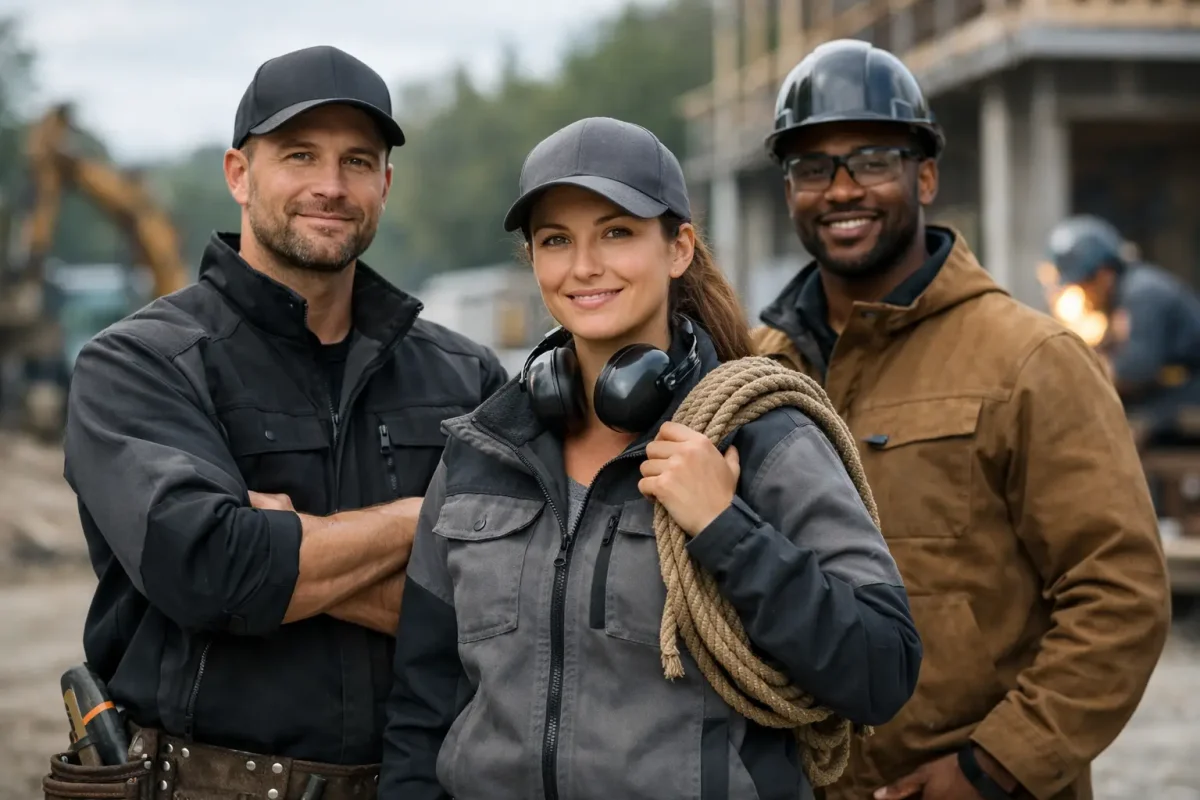
A plumbing and heating firm might prioritise hard-wearing trousers, layered tops and outerwear that still allows movement in tight spaces. An electrical contractor may need smart branded polos and fleeces for domestic callouts where presentation matters as much as practicality. A civils team working outdoors may need hi-vis garments, waterproof options and heavier-duty layers for all-weather use. The point is simple – custom trade workwear should be chosen around the real conditions your team works in, not around a generic uniform bundle.
That is where a broader garment range matters. T-shirts, polos, sweatshirts and hoodies cover the basics, but many teams also need fleeces, softshell jackets, bodywarmers, work trousers, coveralls, hats and accessories. If buyers can source everything in one place, it cuts down the time spent juggling multiple suppliers and trying to match colours, branding and lead times.
Choosing the right garments first
Branding gets the attention, but garment selection is what determines whether staff actually wear the kit properly. If the fit is poor, if the fabric feels flimsy or if the layers do not suit the season, the uniform will quickly become inconsistent. Some staff will keep wearing old items, others will substitute their own clothing, and the brand presentation you were aiming for starts to slip.
For day-to-day trade use, cotton-rich T-shirts and polos work well as a base layer where breathability matters. Sweatshirts and hoodies are common for warehouse, transport and general trade teams, especially when they need warmth without restricting movement. Softshells are popular because they look smart, offer some weather resistance and sit neatly over branded base layers. Fleeces still earn their place for colder environments, particularly where comfort is more important than a more fitted outerwear look.
Trousers are worth more attention than they usually get. Tradespeople notice quickly whether pockets are practical, knee pad sections are useful and the fabric can cope with repeated wear. The cheapest option often becomes the most expensive when replacements are needed too often. If a team spends most of the week bending, kneeling, carrying or climbing in their kit, durability is not a minor detail.
Embroidery or print for custom trade workwear?
This is one of the most common buying decisions, and there is no universal answer. The right decoration method depends on the garment, the logo and the way the item will be used.
Embroidery is a strong choice for polos, sweatshirts, fleeces, bodywarmers, many jackets and other heavier garments. It gives a durable, professional finish and holds its shape well over time. For trade businesses that want a dependable branded look across everyday uniform items, embroidery is often the safest choice.
Print comes into its own where you need larger designs, more detailed artwork or branding on garments that are less suited to stitching. It is also the better option for some waterproof products. Stitching through certain outerwear can create needle holes, which is not ideal if weather protection matters. In those cases, print is often the more practical route.
It also depends on logo complexity. Fine gradients, small text and intricate shapes may not convert neatly into embroidery without adjustments. A supplier that understands logo setup properly can advise what will reproduce cleanly rather than simply taking artwork and hoping for the best. That matters more than many buyers realise. A poor logo conversion can make even decent garments look second-rate.
Why consistency matters on repeat orders
Trade businesses rarely place one order and leave it there. Uniform buying is usually ongoing. Staff numbers change, sizes need topping up and seasonal garments are added later. That means consistency matters from the first order onwards.
Colours need to match across product types as closely as possible. Logo positioning should stay consistent. Decoration size should not shift from one batch to the next. If one employee is wearing a navy hoodie with a crisp left chest logo and the next has a slightly different navy with oversized branding, the team stops looking organised.
This is where structured ordering helps. Buying by garment type, by role or by bundle makes the process easier for operations staff and procurement teams who need to reorder without starting from scratch each time. It also reduces the risk of one-off purchasing decisions creating an inconsistent uniform set later on.
Fulfilment is part of the product
For larger uniform orders, the garments themselves are only half the job. The other half is how they arrive.
A lot of workplace frustration happens after the order is delivered. Boxes turn up mixed by size or garment type, someone in the office has to split everything manually, and issuing uniform becomes a sorting exercise that drags on for hours. That might be manageable for a small team. It becomes a problem when you are supplying multiple crews, locations or departments.
Per-employee packing makes a real difference here. If each person’s order arrives sorted and ready to hand over, admin time drops immediately. For event teams, trade customers or larger site rollouts, pallet delivery can also be the practical answer. It is not glamorous, but it is exactly the sort of detail that matters to buyers who have a deadline and no appetite for extra handling.
Reliable lead times are just as important. A supplier may offer a broad catalogue, but if branded items arrive unpredictably, that creates problems for onboarding and team planning. Consistency in production and distribution is what turns a one-off supplier into a useful uniform partner.
Don’t treat every team the same
One of the most common mistakes with custom trade workwear is trying to put everyone into the same kit regardless of role. A smart-looking uniform range is useful, but it still needs to reflect how people actually work.
Site staff may need harder-wearing garments and hi-vis options. Surveyors and supervisors may need branded outerwear that looks more presentable for client-facing visits. Drivers may want lighter layers and flexible jackets for time in and out of the vehicle. Warehouse teams may need warmth without bulk. The branding can stay consistent while the garment choice varies by task.
That approach usually gives better wear rates and fewer complaints. It also prevents overspending on garments that are unsuitable for part of the workforce. Standardisation has its place, but forcing one clothing setup across very different working conditions rarely gives the best result.
Custom trade workwear should make buying easier, not harder
The strongest uniform setups are usually the simplest to manage. Buyers should be able to choose by profession, by department, by compliance need or by product category without second-guessing every decision. That makes it easier to build a practical range that covers core uniform, outerwear and any specialist requirements.
For UK businesses managing branded clothing at scale, that straightforward approach saves time at every stage – from selecting garments and approving logos through to delivery and issuing. It is one reason companies work with suppliers such as Vivid Promotion when they need more than just garments off a shelf. They need decoration advice, consistent production and a fulfilment process that fits the way teams are actually deployed.
If you are reviewing your current uniform setup, the useful question is not whether the garments look good in a product image. It is whether the kit will still be doing its job after months of site use, regular washing and repeat ordering. That is the standard custom trade workwear should meet.