Branded Workwear
Choosing Hi Vis Hoodies with Logo UK
Jun
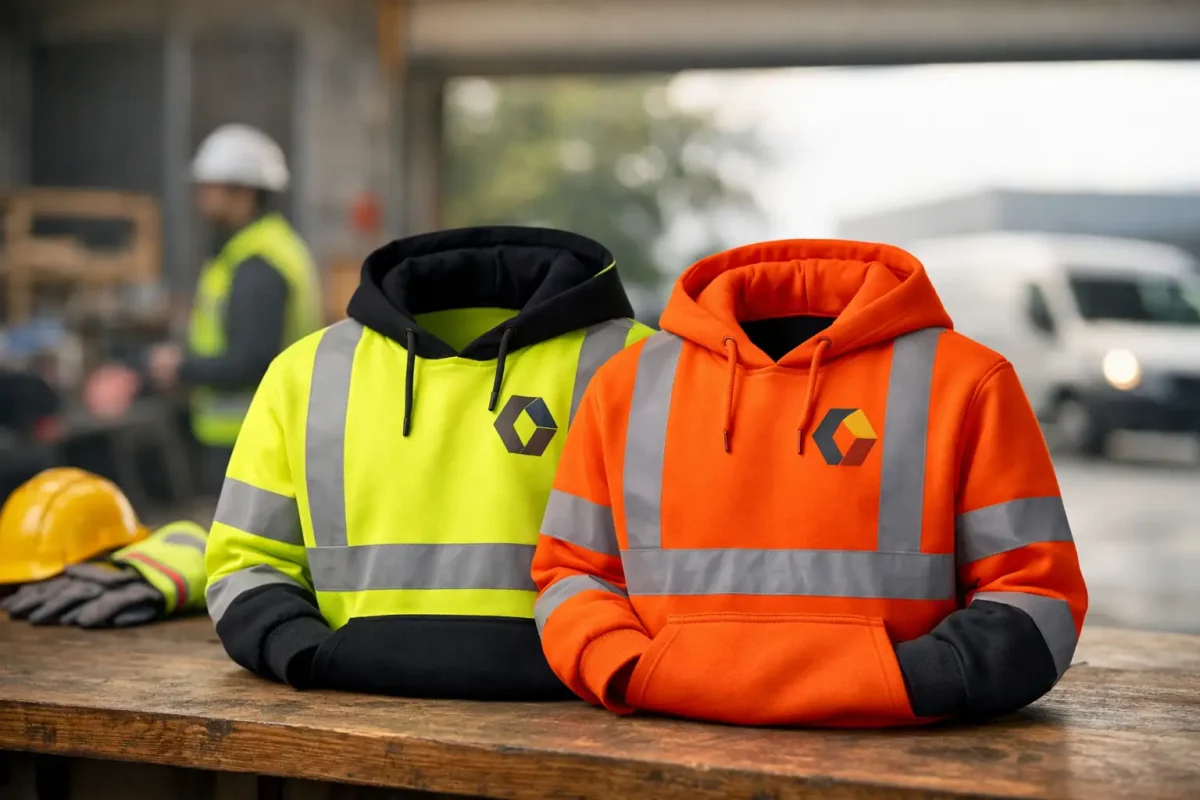
When a team is working outside in poor light, on a live site or around moving vehicles, the wrong hoodie becomes obvious very quickly. It rides up under a jacket, the logo disappears after washing, or the garment is warm but not actually suitable for the job. That is why buying hi vis hoodies with logo UK businesses can rely on is less about picking a colour and more about getting the garment, branding and fulfilment right from the start.
For most buyers, the brief sounds simple enough. You need staff to stay visible, you want the company logo on show, and you need an order process that does not create more work internally. In practice, those three requirements affect every decision, from fabric weight to decoration method to how the finished garments are packed and issued.
What to look for in hi vis hoodies with logo UK teams will actually wear
A hi vis hoodie needs to do two jobs at once. It must support visibility requirements on site, and it must be comfortable enough that staff will choose to wear it for a full shift. If either part is wrong, the garment becomes dead stock or gets replaced by something unofficial.
Start with the working environment. A warehouse picker, a highways contractor and an event crew member may all need hi vis, but not in the same way. Some need a pullover layer for early starts and cold loading bays. Others need a full-zip option they can take on and off quickly over other branded uniform. For teams moving between indoor and outdoor tasks, breathability and easy layering often matter just as much as warmth.
Fit is another practical point that gets missed. A hoodie that is too slim restricts movement and gets rejected by tradespeople wearing base layers underneath. One that is too oversized can catch on equipment and simply looks untidy. The best choice is usually a workwear fit with enough room for movement, reinforced stitching in stress areas, and ribbed cuffs and hems that keep the garment in place during active work.
Then there is wash performance. Hi vis garments take punishment – regular laundering, dirt, abrasion and repeated wear. If the fabric pills quickly, fades badly or loses shape after a short run of washes, your branding and presentation suffer at the same time.
Compliance matters, but so does real-world use
Hi vis clothing is not just branded uniform. In many settings it forms part of a wider PPE requirement, so the garment needs to be suitable for the job rather than simply bright in colour. Buyers should always check the garment specification, reflective tape layout and the intended use before placing an order, especially for teams working on construction sites, roadside projects, logistics yards or rail-related environments.
The trade-off is straightforward. Some of the heaviest, highest-coverage garments may support visibility needs well, but they can feel bulky if staff are constantly moving, lifting or working indoors for part of the day. On the other hand, lightweight options can improve comfort and compliance through wearability, but they may not be the right answer for colder months or exposed sites.
That is why buying by job role usually works better than buying one hoodie for the whole business. Operations teams often save money in the long run by matching garments to departments instead of forcing a single spec across everyone.
Pullover or zipped?
This usually comes down to working pattern rather than preference. Pullover hoodies are often warmer and can feel more substantial, which suits outdoor trades and colder conditions. Zipped hoodies are easier for layering and quicker to remove, which is useful for delivery, warehousing and event crews moving between different temperatures.
If your staff wear bodywarmers, waterproofs or softshells over the top, think about how the hoodie will sit underneath. A bulky hoodie under a fitted jacket tends to create complaints very quickly.
Print or embroidery for a hi vis hoodie?
This is one of the most common questions, and the answer depends on logo type, garment construction and where the branding needs to sit.
Embroidery gives a hard-wearing, professional finish and is often the best choice for simple logos on stable areas such as the left chest. It suits businesses that want a smart, consistent uniform appearance across multiple garments. For many workwear ranges, embroidered logos also hold up well over repeated washing.
Print is often the better option when the logo is large, highly detailed or needs to go across the back. It can also be more practical where fabric thickness, seams or reflective tape placement make embroidery less suitable. On some hi vis garments, especially where there are design restrictions around tape and certification areas, print gives more flexibility in positioning.
It is not always an either-or choice. A chest logo in embroidery and a larger printed back graphic can be the right setup for firms that need clear brand identification from a distance. The key is using the decoration method that fits both the garment and the logo, rather than applying the same method to every item in the order.
Good artwork preparation matters here. A logo that looks fine in a PDF or on a van sign may still need converting properly for embroidery or garment print. Clean files, sensible sizing and correct stitch or print setup make a visible difference to the finished result.
Placement affects visibility, branding and cost
Most buyers default to a left chest logo, and in many cases that is sensible. It keeps the branding neat, works across mixed uniform ranges and usually avoids interfering with reflective tape. But chest branding alone may not be enough if teams work across large sites, public events or roadside jobs where identification from a distance matters.
A back logo can improve visibility for the brand without affecting the function of the garment, provided placement is planned properly around the hi vis design. Sleeve branding is another option, though it tends to be more useful for presentation than for immediate recognition.
The practical point is this: more branding positions increase unit cost, but they can also reduce confusion on site and improve professional presentation. Whether that extra spend is worthwhile depends on how public-facing the role is and how easily your staff need to be identified.
Buying for one team is different from buying at scale
A ten-piece order and a 300-piece rollout should not be handled the same way. Once you are ordering at scale, the garment itself is only one part of the job. You also need to think about size curves, role allocation, replacement ordering and distribution.
This is where many uniform projects slow down internally. Someone in admin ends up sorting boxes, matching names to sizes and splitting garments by depot, vehicle or employee. If the order includes multiple departments and branding positions, that workload grows fast.
A more efficient approach is to plan fulfilment at the same time as product selection. For some organisations, bulk cartons by site make sense. For others, individually packed employee orders are far easier to issue. Event businesses and trade customers may need pallet delivery by deadline, while multi-site employers often need consistent repeat ordering so later top-ups match the original run.
That operational side is a major part of whether a supplier is actually helping. Vivid Promotion works with many organisations on that basis – not just supplying branded garments, but reducing the admin involved in getting them out to the right people.
Common mistakes when ordering branded hi vis hoodies
The first mistake is choosing on price alone. A cheaper hoodie that staff avoid wearing, or that needs replacing early, rarely saves money. The second is treating every logo the same. A small stitched logo may be right on one garment and the wrong choice on another.
Another common issue is ignoring seasonality. If you order a heavy fleece-lined hoodie for a team that works hard indoors for half the day, they may stop wearing it by mid-morning. Likewise, a lightweight option may not be enough for winter site work. It depends on the role, the site and how the garment fits into the wider uniform.
There is also the problem of underestimating repeat demand. New starters, damage replacements and seasonal labour all affect stock planning. If you know the hoodie will become a standard issue item, it makes sense to choose a garment with reliable availability and a straightforward repeat order process.
How to make the right choice first time
The best buying process is usually quite simple. Define the job role, confirm the visibility requirement, choose the hoodie style, then match the branding method to the logo and garment. After that, think about fulfilment – where the goods need to go, how they should be packed and what repeat ordering is likely to look like.
If you are buying for mixed departments, do not be afraid to split the range. One hoodie does not have to solve every use case. A zipped option for warehouse and transport staff and a heavier pullover for site teams can be a more practical solution than forcing a compromise across both.
It also helps to review the rest of the uniform alongside the hoodie. If staff already wear branded polos, softshells, bodywarmers or waterproofs, the hi vis hoodie should work as part of that system. Consistency in logo size, thread colour, print finish and garment tone creates a more professional result without overcomplicating the order.
The right hoodie is the one your team will wear, your site can accept, and your business can reorder without starting from scratch. Get those details right at the beginning and the whole process becomes easier – from approval to delivery to the first cold morning when staff reach for the correct layer without being told.