Branded Workwear
Best Garments for Event Staffing Teams UK
Jul
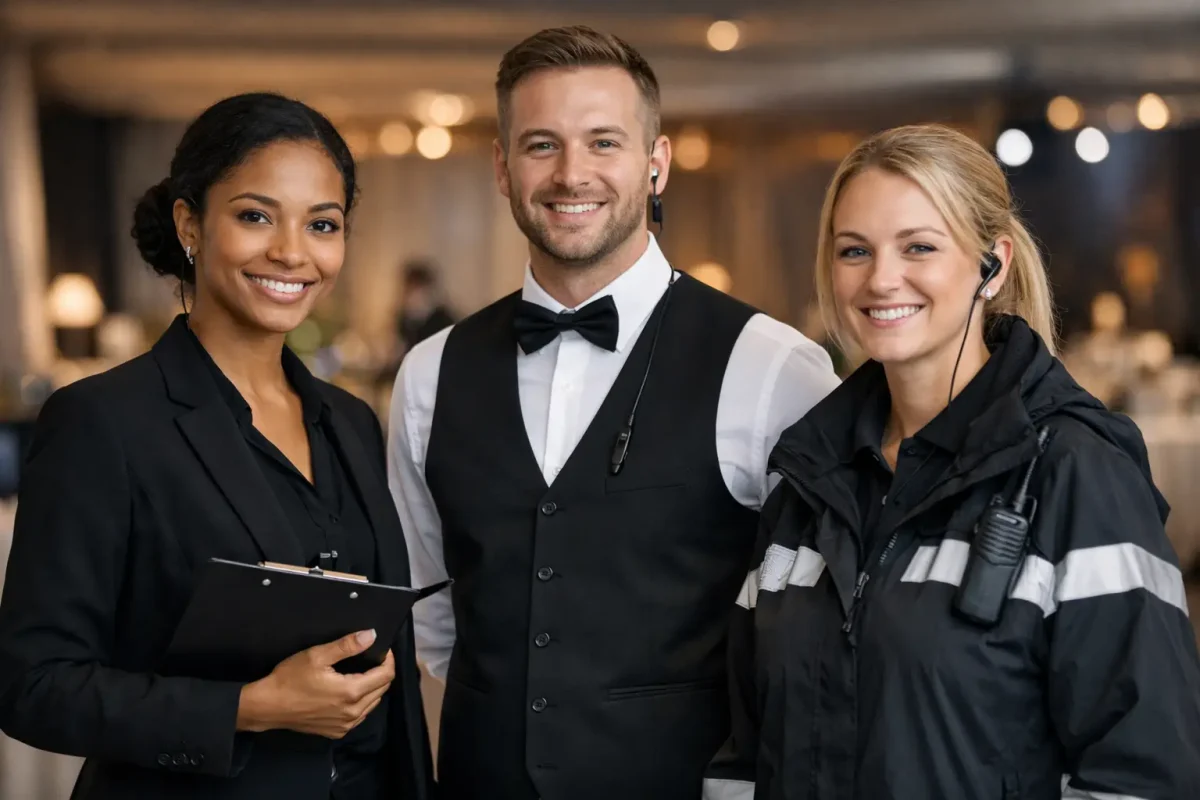
A staff uniform has to work long before doors open. Your team may be unloading equipment at 6am, directing guests in the rain, handling stock, serving food or working a registration desk under hot exhibition lighting. The best garments for event staffing are the ones that keep people recognisable, comfortable and appropriately protected through every part of that shift.
For organisers, agencies and venue teams, the right choice is rarely a single garment. A practical event uniform usually combines a branded core layer with weather protection, role-specific additions and a clear plan for issuing garments to temporary or permanent staff. That approach gives the team a consistent appearance without forcing everyone into clothing that is unsuitable for their job.
Start with the event, not the logo
A logo matters, but it should not be the first decision. Begin with where the team will work, how long they will be on shift and what they need to do. An indoor conference team has very different requirements from festival stewards, exhibition installers or roadshow staff.
For a one-day indoor event, a branded polo shirt or T-shirt can be enough, especially where staff are moving between registration, guest services and exhibition stands. For multi-day events, add a sweatshirt, hoodie or fleece so staff can regulate their temperature. Outdoor events need a layer system rather than a single heavy garment, as conditions can change quickly between set-up, opening hours and pack-down.
Also consider the level of customer contact. Front-of-house staff should be easy to identify at a glance, but their uniform needs to look considered in photographs and when meeting sponsors or delegates. Crew and logistics teams may need more durable workwear, with practical pockets, reinforced areas and suitable protective clothing.
Core garments for event staffing
Polos for a smart, hard-working uniform
Branded polo shirts are often the strongest all-round option for event teams. They look smarter than a standard T-shirt, are suitable for a wide range of body types and work well as a base layer under a fleece, softshell or jacket. They are particularly useful for exhibition staff, hospitality teams, brand ambassadors and venue personnel.
Choose a fabric weight that matches the workload. A lighter polo can suit warm exhibition halls and active front-of-house roles. A more substantial fabric is better for repeated wear, outdoor use or teams handling equipment. Darker colours are more forgiving during long shifts, while brighter colours can help visitors locate staff quickly.
Embroidery gives polos a durable, professional finish for simple chest logos. If the artwork includes fine detail, colour gradients or a large design, garment printing may produce a clearer result. The decoration method should be chosen around the logo and fabric, not simply because one option is familiar.
T-shirts for large teams and fast-moving campaigns
Printed T-shirts are cost-effective for promotional staffing, charity events, product launches and summer festivals. They are easy to size, straightforward to issue and well suited to bold campaign graphics across the chest or back.
The trade-off is presentation and warmth. A T-shirt can feel too casual for premium corporate events, and it leaves staff exposed when temperatures drop. It works best when supported by a branded outer layer, or when the event is short, informal and held in stable indoor conditions.
For larger orders, think about whether staff will keep the garment after the event. A well-designed branded T-shirt can extend campaign visibility beyond the venue, but only if the garment is comfortable and the print remains sharp after washing.
Sweatshirts, hoodies and fleeces for changing temperatures
Layering is essential for crews starting early or finishing late. Sweatshirts and hoodies are practical for event build teams, runners, security support and outdoor staff who need warmth without the bulk of a full coat. A hoodie is often appreciated by teams working physically demanding shifts, although it may be less appropriate for formal customer-facing roles.
Fleeces provide a smarter option where staff need an easy mid-layer. They are light, warm and simple to remove when moving indoors. A branded fleece paired with a polo is a dependable uniform combination for venue teams, exhibition contractors and visitor services.
For repeated event use, choose garments with consistent availability. Reordering the same colour and style for future dates helps preserve a recognisable team appearance, even when seasonal staff numbers change.
Outerwear for outdoor events and site work
Outdoor staffing needs clothing that deals with weather without restricting movement. Softshell jackets are a good choice for teams working in cool, breezy or lightly wet conditions. They have a more fitted, professional appearance than many heavier coats and are useful for supervisors, hosts and mobile event staff.
For prolonged rain, a properly waterproof jacket is the safer option. This is one area where decoration needs careful thought. Embroidering directly onto waterproof fabric creates needle holes that can compromise the garment’s water resistance. Printed branding is generally the more suitable method for waterproof outerwear.
Bodywarmers are useful when staff need their arms free for lifting, scanning tickets, setting displays or managing equipment. They work well over polos and sweatshirts during shoulder seasons, but they are not a substitute for a waterproof jacket when staff are stationed outdoors for long periods.
Do not overlook trousers for build and logistics teams. Durable work trousers are more suitable than casual clothing where staff are lifting, kneeling, carrying barriers or working around staging and equipment. For some roles, coveralls may be the practical choice, particularly where tasks are dirty or require a clear separation between personal clothing and site work.
When hi-vis is part of the uniform requirement
Hi-vis is not simply an event branding choice. It may be required where staff work near vehicles, in loading bays, around plant, on roadside locations or during low-light set-up and pack-down. If visibility is a safety requirement, select garments that meet the relevant standard for the working environment and keep the garment suitable for its intended use.
A hi-vis vest may be enough for short-term access to controlled areas, but it is not always sufficient for staff working outside for extended periods. Hi-vis jackets, trousers and weatherproof layers can be needed where conditions and risk assessments demand them. Keep branded front-of-house clothing separate from PPE decisions where necessary. A high-visibility garment must remain visible, and over-decoration can reduce the available fluorescent or reflective area.
Make sizing and issue part of the plan
The best garment selection can still fail if staff receive the wrong size on the morning of the event. Obtain sizes early, allow for a sensible spread of spares and make sure each role receives the correct combination of garments. This is particularly important where teams include temporary workers, multiple agencies or staff travelling directly to the venue.
For large events, per-employee packing saves considerable time. Individual packs can contain a named polo, outer layer, headwear and any role-specific item, rather than leaving an event manager to sort boxes on site. Vivid Promotion can also support bulk pallet deliveries where a venue, organiser or trade customer needs garments delivered together and ready for distribution.
It is worth agreeing a clear garment matrix before placing the order. For example, registration staff may receive a polo and fleece, outdoor stewards a polo, sweatshirt and waterproof layer, while build crew receive durable T-shirts, work trousers and hi-vis. This avoids paying for one universal uniform that suits nobody particularly well.
Choose colours that help people do their jobs
Colour should support recognition, not create confusion. A single strong brand colour can look effective, but it may be impractical if it shows dirt quickly or clashes with mandatory hi-vis requirements. Black, navy, charcoal and dark grey are dependable options for active teams, with a bright printed logo or coloured trim to retain brand presence.
For larger sites, colour-coding can help visitors and managers identify roles. Hosts, technical crew, security support and supervisors can wear related but distinct garments. Keep the system simple, however. Too many colours make the team look fragmented and can make it harder for guests to know who to approach.
Headwear can be useful for outdoor teams, whether that means caps for sun exposure or beanies for cold-weather work. It also provides a visible location for a small embroidered logo, although it should complement rather than replace clear branding on the main garment.
A good event uniform should reduce questions on site: who is staff, who is responsible for what, and is this person equipped for the conditions? Choose garments around those operational answers, then apply branding that stays clear, durable and consistent from the first shift to the final pack-down.