No products in the basket.
Branded Workwear
How to Choose Workwear for Trades
26
May
May
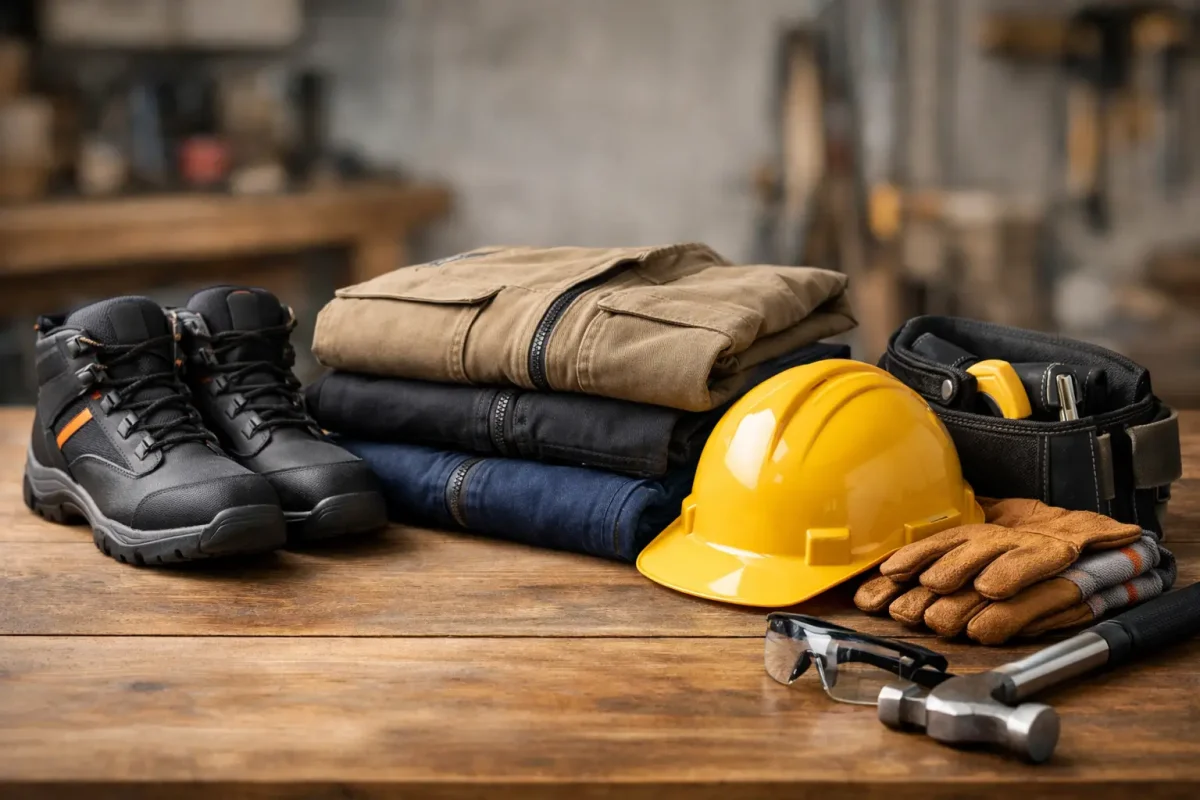
A ripped knee on week two, a jacket that leaks in light rain, or a logo that peels after a few washes usually means the same thing – the workwear was chosen on price alone. If you are working out how to choose workwear for trades, the right starting point is not colour or branding. It is the job itself, the site conditions, and how often the kit will actually be worn.
For trades businesses, workwear is not a small buying decision. It affects safety, comfort, how presentable your team looks on site, and how often you need to replace stock. If you are buying for a team rather than one person, there is another factor as well: admin. Good workwear should be easy to re-order, easy to issue, and suitable for different roles without turning the process into a patchwork of one-off purchases.
How to choose workwear for trades starts with the job
Different trades wear “workwear”, but that word covers very different requirements. A groundworker, electrician, decorator and heating engineer do not need the same kit, even if they all want durable trousers and a branded outer layer.
Start with the tasks involved day to day. If the team is regularly kneeling, climbing, carrying materials and working outdoors, trousers need reinforcement in the right areas and outerwear needs to cope with changing weather. If the job involves frequent customer visits inside homes or commercial premises, presentation matters more, and lighter branded polos, fleeces or softshells may be more practical than heavier site gear.
This is where buyers often overcomplicate things. You do not need one perfect garment for every possible job. You need a sensible core uniform for most working days, then specific additions for weather, visibility or higher-risk tasks.
Match garments to the working environment
Indoor trades can usually prioritise comfort, ease of movement and a tidy appearance. Breathable polos, sweatshirts and work trousers often cover most of the year, with fleeces or lightweight jackets added when needed.
Outdoor trades need more layers and more protection. Waterproofs, bodywarmers, insulated jackets and hi-vis options are less of an extra and more of a standard requirement. If staff move between indoor and outdoor work, layered clothing usually works better than one heavy coat that is too warm half the day.
Think in seasons, not single items
A common mistake is buying a summer polo and a winter coat, then leaving a gap between the two. British weather does not work like that. Most trade teams need transitional layers they can wear for much of the year, such as sweatshirts, hoodies, fleeces and softshells.
That approach also helps with repeat ordering. If your team has a core range built around layering, replacements are simpler and staff are more likely to wear the garments properly rather than swapping in non-branded alternatives.
Safety and compliance come before appearance
A smart-looking uniform still fails if it is wrong for the risks on site. Before choosing colours, logo placement or garment style, check whether any part of the role requires hi-vis clothing, flame-retardant garments, waterproof protection, or more specialised PPE-compatible items.
For many trades, hi-vis is not optional. Site rules, highway work, rail environments and low-light conditions all change what is acceptable. In those settings, branded garments still need to meet the visibility requirement first. There is no point choosing a fashionable cut or a large chest print if it compromises compliance or makes the garment less suitable for site use.
If waterproof clothing is part of the requirement, decoration method matters too. Embroidery works well on many garments, but on waterproof outerwear it can create needle holes. In that case, printing is often the better option. This is the kind of detail that saves problems later, especially when you are ordering for a whole team and expecting the garments to last.
Durability usually saves money
Cheap workwear rarely stays cheap once it is in use. If seams fail, knees wear through, zips break or fabric loses shape quickly, the true cost is in replacements, downtime and the hassle of reissuing kit.
Tradespeople are hard on clothing. Trousers catch on timber and metal, sweatshirts are washed constantly, and jackets are stuffed in vans, site cabins and tool stores. That means fabric weight, stitching, reinforcement and fastening quality matter more than they might for office uniforms or event clothing.
Where durability matters most
Trousers take the most punishment, so this is usually where it pays to avoid the bottom end of the market. Look at reinforcement around the knees, seat and pocket areas, especially if your team carries tools or kneels regularly. Coveralls also need strong construction if they are being worn for mechanical, engineering or heavy maintenance work.
Outerwear should be judged on practical wear, not catalogue appearance. A softshell can be an excellent everyday option for mobile trades because it gives weather resistance without bulk. A heavier coat may be necessary for winter, but if it is too restrictive, staff will leave it in the van.
Wash performance matters more than buyers expect
Branded workwear is worn repeatedly and washed hard. That is why print quality, embroidery quality and garment stability matter. If garments shrink, twist or fade quickly, the branding suffers as well as the clothing itself.
For teams that need to look consistent, especially customer-facing trades, wash performance is part of the buying decision. There is no value in choosing a garment that looks right on delivery but poor after ten washes.
Fit affects wearability more than most specs do
Even compliant, durable workwear gets ignored if it is uncomfortable. That sounds obvious, but it is often missed when purchases are made quickly or based on one sample size.
Trades need room to move. That does not mean oversized everything. It means choosing garments that allow crouching, reaching, lifting and driving without pulling across the shoulders or riding up at the waist. Trousers that are too tight get damaged faster. Jackets that are too bulky become a nuisance on site.
If you are buying for a mixed team, range depth matters. Size availability, fit consistency across repeat orders and suitable options for different body shapes all make day-to-day issuing easier. This is particularly important for growing businesses where new starters need to be added into an existing uniform system rather than handed whatever is left on the shelf.
Branding should suit the garment, not fight it
For trade businesses, branding is not just marketing. It helps teams look consistent, makes staff easy to identify on customer premises, and gives a more professional impression on busy sites where multiple contractors are present.
But branding works best when it is practical. A small embroidered logo on polos, sweatshirts, fleeces and bodywarmers is often a solid choice because it is durable and smart. Printed logos can be better where you need larger graphics, more detailed artwork, or garment types that are not suited to embroidery.
The key is not to treat every item the same. A logo that works well on a polo might not be the right approach for a waterproof coat or hi-vis vest. Getting the artwork converted properly and choosing the decoration method by garment type avoids the usual problems – poor legibility, unnecessary bulk, or decoration that affects performance.
Buying for one person is different from buying for a team
If you are choosing workwear for your own use, you can often adjust as you go. If you are buying for ten, fifty or a hundred staff, consistency matters more. The buying process itself becomes part of the decision.
This is where standardising your range pays off. Instead of letting every department choose entirely different garments, build a practical selection by role. For example, one core trouser, one polo, one sweatshirt, one fleece or softshell, then hi-vis and outerwear options where required. That keeps branding consistent and makes replenishment easier.
It also reduces internal admin. When garments are supplied in a way that is easy to issue, especially if they arrive packed by employee or department, you save time before the uniforms even reach site. For operations managers and office teams, that is often as valuable as shaving a few pounds off the garment cost.
Price matters, but replacement cycles matter more
Every buyer has a budget. That is normal. The question is whether you are buying the lowest ticket price or the best value over time.
If a better trouser lasts twice as long, holds branding properly and avoids repeated replacement orders, it is usually the better buy. The same applies to outerwear. A jacket that performs through a full winter and still looks presentable next season is worth more than a cheaper option that staff stop wearing because it is cold, stiff or no longer waterproof.
There is also a middle ground. Not every item needs to be premium. Often the best approach is to spend where wear is highest – trousers, outerwear and compliance-led garments – while choosing more cost-effective basics for layering pieces or occasional-use items.
A practical way to make the right choice
If you want a straightforward method for how to choose workwear for trades, keep it simple. Start with the job, then check the risks, then build the clothing around working conditions and replacement frequency. After that, look at branding and fulfilment.
For many UK trade businesses, the right range ends up looking similar in structure even if the garment styles vary: durable trousers, comfortable branded tops, practical mid-layers, weather-ready outerwear and hi-vis where the site demands it. The difference is in choosing the right version of each, rather than buying everything from one end of the price scale.
A dependable supplier should help you get those details right, from decoration method to issuing logistics, not just take an order. Vivid Promotion works with organisations that need that level of consistency because the right workwear is not simply clothing – it is part of how a team turns up ready for the job.