No products in the basket.
Branded Workwear
Portwest Coveralls Review for UK Work Teams
24
Nov
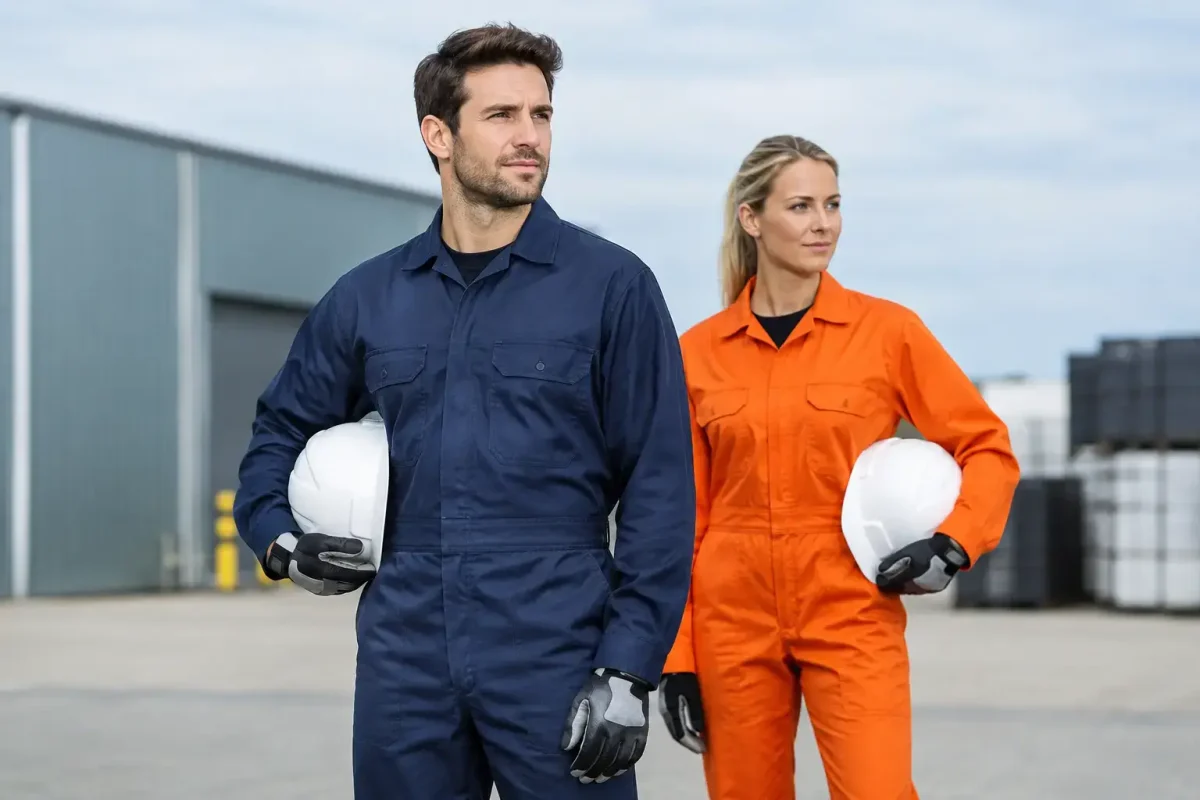
A coverall has to earn its place on site. It needs to go on easily over work clothes, allow enough movement for climbing, kneeling and driving, and still look presentable after repeated washes. This Portwest coveralls review looks at where the range performs well, where specification matters more than price, and how to select a garment that works for a whole team rather than one person.
Portwest is a familiar name in UK workwear because the range is broad. Standard polycotton coveralls sit alongside stretch workwear, flame-resistant garments, hi-vis options and weather-protective styles. That gives purchasing teams useful choice, but it also means there is no single ‘best’ Portwest coverall. The right option depends on the job, the risk assessment, the season and whether your logo needs to be added.
Portwest coveralls review: build quality and day-to-day use
For general maintenance, engineering, logistics and trade work, Portwest’s standard coveralls are generally built around the practical details people notice during a shift: a front fastening that is easy to use with gloves, pockets in useful positions, adjustable cuffs and a fit that leaves room for normal workwear underneath. Polycotton fabrics are a sensible default for teams that need a balance of comfort, durability and manageable wash care.
The main strength is range consistency. If a company employs warehouse operatives, installers and mobile engineers, it is usually possible to keep the uniform looking coherent while selecting different coverall specifications for each role. That is more practical than forcing everyone into a heavy-duty garment when some staff spend much of the day driving or working indoors.
Durability is good when the fabric weight and garment type match the task. A basic coverall can handle routine dirty work, light engineering and premises maintenance well. It is not automatically the right choice for abrasive fabrication work, welding or work around chemicals. In those environments, reinforced panels, certified protection and the correct laundering process matter more than the colour or pocket layout.
Fit is another positive, particularly for uniform issue. Coveralls need enough ease through the shoulders, seat and knees, otherwise workers avoid wearing them or size up excessively. That creates snagging risks and an untidy appearance. Portwest offers a broad spread of sizes in many lines, but it is worth checking the specific product size chart before a bulk order. Fit varies between conventional, action-back and stretch-oriented styles.
Pockets, fastenings and movement
A well-specified coverall reduces small frustrations throughout the working day. Look for a two-way front zip if staff need quick access while wearing gloves or boots, and consider action backs or stretch panels where regular reaching, crouching and overhead work are part of the role. Knee-pad pockets are worthwhile for fitters, floor layers and maintenance teams, provided compatible knee pads are selected and issued correctly.
Pocket choice should be based on the tools staff actually carry. Chest pockets suit pens, phones and paperwork; leg pockets can be useful for hand tools and tape measures. More pockets are not always better. For machinery operators, loose items and bulky pockets can be a nuisance or a hazard. A simpler, cleaner coverall may be the better operational choice.
Choosing the right Portwest range
The Portwest catalogue covers very different workplace requirements. Grouping garments by use makes buying faster and helps avoid under-specifying protective clothing.
For everyday trades and maintenance, standard workwear coveralls and action-back styles are usually the most cost-effective route. They suit dirty work, property services, vehicle workshops and general site activity. Darker colours can help maintain a professional appearance between washes, while navy, black and grey often work well with embroidered company logos.
For more physical work, stretch and contemporary workwear ranges can justify the higher garment cost. The benefit is not simply comfort. Better movement can reduce the tendency for staff to split seams, strain fastenings or select an oversized garment. This is especially relevant for installers, engineers and teams moving between site work and customer-facing appointments.
Where hot work is involved, flame-resistant and welding coveralls must be selected against the specific hazard and required standards, not on appearance. Products such as those in Portwest’s Bizweld range are designed for protective applications, but the garment label, certification, risk assessment and care instructions should all be checked before issue. Protective performance can be compromised by incorrect laundering, contamination or unsuitable alterations.
Hi-vis coveralls are useful where a full-body garment is required for visibility in vehicle areas, rail-related environments or low-light outdoor work. The required class and standard depend on the work location and employer assessment. Do not assume that adding a hi-vis waistcoat over any dark coverall gives the same result as choosing compliant hi-vis clothing for the role.
Waterproof or weather-protective coveralls have a place for outdoor teams, but there is a trade-off. Greater weather protection can mean reduced breathability and a bulkier feel. For workers alternating between rain, vehicles and heated indoor areas, a standard coverall with suitable outerwear may be more comfortable than an all-day waterproof one.
Fabric, wash care and replacement planning
A coverall that looks good on day one is not necessarily economical over six months. Before standardising on a garment, consider how it will be washed, how heavily it will be soiled and how often employees need replacements. Polycotton is a dependable option for routine industrial laundering and repeated domestic washing within the garment’s care guidance. Cotton-rich or flame-resistant fabrics may suit particular tasks, but can require more disciplined wash procedures.
For branded uniform programmes, test a sample through the expected wash cycle before committing to a large rollout. This is particularly useful where teams work with oils, paint, dust or grease. Staining may be unavoidable in some trades, so budget for planned replacement rather than expecting every garment to remain customer-facing indefinitely.
Colour selection has an operational impact too. Navy and black disguise workshop grime better than lighter colours, while royal blue and red can align more closely with an established brand identity. If staff work near traffic or moving plant, visibility requirements must take priority over brand colour preferences.
Sizing for a team issue
Coveralls are harder to size than polos because staff may wear layers underneath and need room to move. Ask employees to provide chest, waist and inside-leg measurements where possible, rather than relying only on their usual trouser size. Ordering a sensible spread of additional sizes is often cheaper than handling multiple urgent exchanges once a site rollout has started.
When issuing coveralls, make clear whether they are intended to be worn over clothing or as the main work garment. That single decision affects size selection and employee satisfaction. It also helps managers apply a consistent appearance standard across shifts and locations.
Embroidery and print on Portwest coveralls
Most standard Portwest coveralls can be branded effectively, but the decoration method must suit the fabric and garment construction. Embroidery gives a durable, professional result on suitable chest areas and works well for company names and simple logos. It is often the preferred choice for engineers, tradespeople and supervisors who need a smart, long-lasting uniform.
Print can be the better option for larger artwork, detailed designs or areas where embroidery would be too heavy. It also avoids stitching through certain technical fabrics. On waterproof garments, printing is normally preferable because embroidery needle holes can affect the outer layer’s water resistance.
Protective clothing needs extra care. Branding must not cover reflective tape, interfere with garment construction or undermine the certified protective properties. For flame-resistant garments, the chosen logo application must be appropriate for the garment and use case. This is not an area for a generic one-size-fits-all decoration decision.
A supplier should check logo position against pockets, seams and zip lines before production. A small adjustment to placement can prevent an embroidered design sitting awkwardly on a chest pocket or disappearing into a fold. For multi-site teams, keeping an approved artwork file and agreed logo position on record also makes repeat orders more consistent.
Is Portwest a good choice for workwear coveralls?
Portwest is a strong choice where an organisation needs practical options across several job roles without moving between multiple brands. The entry-level garments offer sensible value for routine work, while the specialist ranges give a route into hi-vis, flame-resistant and more technical requirements. The key is to avoid selecting solely by unit price.
A low-cost coverall may be the right answer for occasional visitor use or light-duty work. For daily engineering, outdoor installation or a safety-critical task, paying for the correct fabric, movement features and protection is normally the better decision. The garment should suit the work first, then the branding and colour requirements.
For a new uniform issue, start with a small wear trial involving the people who will use the coveralls every day. Their feedback on sizing, pocket access, warmth and freedom of movement will usually identify the right specification faster than a catalogue comparison alone. Once that choice is made, a consistent logo setup and organised employee-by-employee packing can make the eventual rollout far easier to manage.