No products in the basket.
Branded Workwear
Screen Printing Versus DTG Shirts for Workwear
17
Oct
Oct
A 200-shirt order for a site team is a very different job from 12 staff T-shirts with individual artwork. That is why screen printing versus DTG shirts is not simply a question of which print looks better. The right choice affects unit cost, colour accuracy, garment suitability, repeat ordering and how well the logo stands up to daily wear.
For UK businesses buying branded uniforms, screen printing is usually the efficient option for larger runs with a consistent design. Direct-to-garment, or DTG, printing is often the better fit for smaller quantities, detailed artwork or designs that change from person to person. The garment, the logo and the way the team will use the clothing all matter.
Screen Printing Versus DTG Shirts: The Practical Difference
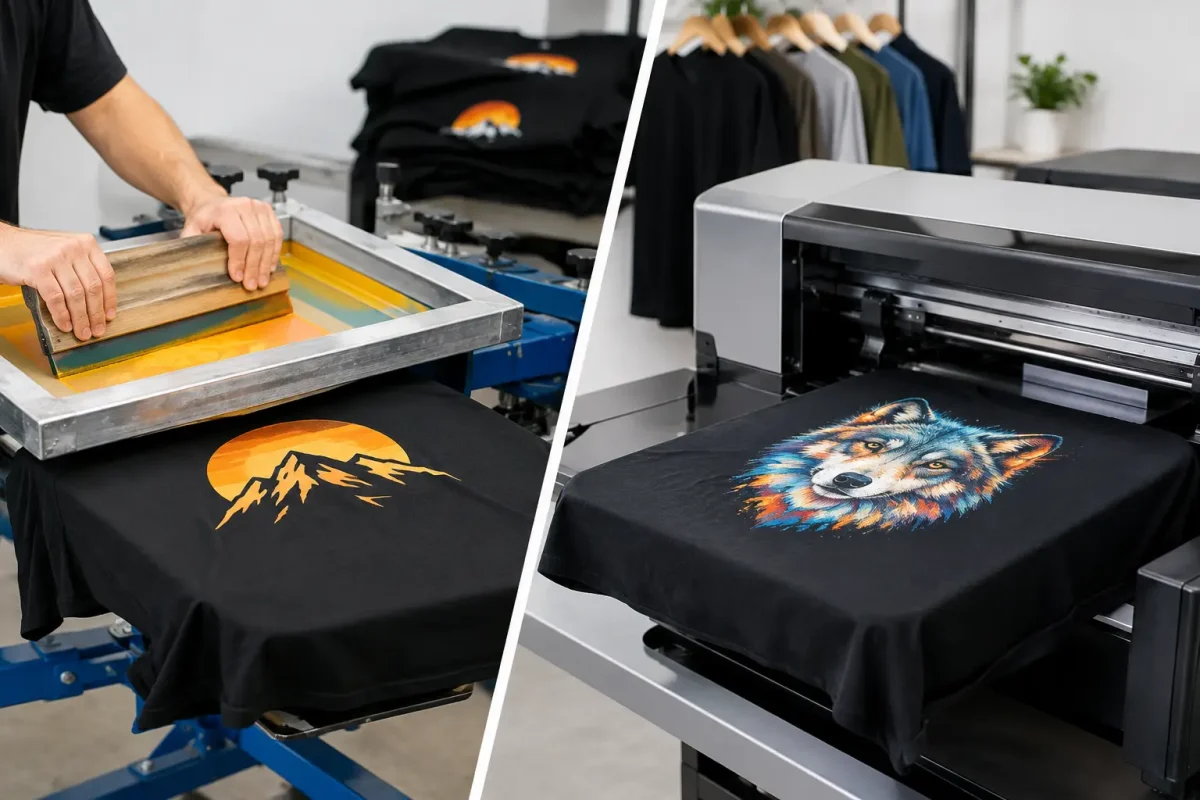
Screen printing applies ink through a prepared mesh screen, with a separate screen normally required for each print colour. The ink is then cured so it bonds to the fabric. It is a proven method for bold logos, large chest prints, back prints and event merchandise where the same artwork is needed across many garments.
DTG printing works more like a specialist fabric printer. The artwork is printed directly onto the garment, usually after the fabric has been pre-treated where required. It is particularly useful for full-colour graphics, fine lines, gradients and small runs because there is no need to prepare individual colour screens.
Neither process is automatically right for every order. A simple one-colour construction logo on 150 black T-shirts calls for a different production route from a detailed school leavers design containing photographs, names and tonal shading.
When Screen Printing Is the Better Choice
Screen printing earns its place in workwear supply because it is economical at volume. There is initial set-up involved, but that cost is spread across the order. As quantities rise, the cost per garment usually becomes more favourable than DTG.
It also produces a strong, opaque result on coloured garments. A white or yellow logo on a navy, black or hi-vis T-shirt needs to remain clear at a distance. Screen print is well suited to this type of high-contrast branding, particularly where the artwork uses solid colours and defined shapes.
For teams that reorder the same garments regularly, screens and approved artwork provide consistency. This is useful for trade firms, warehouse teams, event crews and franchise operations that need the same logo reproduced over multiple purchases. The finish is durable when the garment is washed according to its care label, and it handles regular workplace use well.
Screen print is also flexible across garment types. Cotton and cotton-blend T-shirts, sweatshirts, hoodies and many polo shirts can be printed effectively. The print position needs sensible planning: a large front graphic may suit a promotional T-shirt, while a smaller left-chest logo and clear back identification may be more practical for daily uniform issue.
There are limits. Each additional colour increases preparation and production time. Complex artwork with dozens of colours, photographic imagery or subtle tonal changes can be reproduced, but it may not be the most cost-effective route. Very small orders can also carry a higher unit cost because the set-up remains much the same whether there are 10 garments or 100.
Best uses for screen printing
Choose screen printing when you need a repeated design across a larger order, especially for bold logos, simple artwork and solid corporate colours. It is often the sensible choice for promotional T-shirts, event staff clothing, trades uniforms, sports support crews and large school or college orders with a shared design.
When DTG Printing Is the Better Choice
DTG comes into its own when the artwork is detailed or the quantity is low. Because the printer works from a digital file, it can reproduce fine type, complex illustrations, colour blends and photographic elements without the screen set-up associated with traditional print methods.
This makes DTG useful for samples, short runs, personalised designs and garments carrying several colour variations. If an events business needs 15 shirts with a full-colour campaign graphic, or a department needs a limited run featuring individual names or roles, DTG can avoid paying for screens that would only be used once.
The print generally has a softer feel than a heavy multi-layer screen print, particularly on light cotton garments. That can be a genuine advantage for staff who wear a T-shirt through a full shift. The result depends on the artwork, garment colour and fabric quality, so supplying a clear, high-resolution logo remains essential.
DTG has more specific garment requirements. It performs best on high-cotton-content clothing, especially 100% cotton. Polyester-heavy garments, technical fabrics and some performance workwear are not always suitable. This matters for organisations buying moisture-wicking polos, hi-vis clothing or weather-resistant outerwear. The decoration method must suit the fabric, not just the logo.
Dark garments often require a white base layer beneath the coloured artwork. This allows colours to show correctly, but it can affect production time and the final feel of the print. DTG is still an excellent solution in the right circumstances, but it should not be treated as a like-for-like replacement for screen printing on every shirt.
Best uses for DTG
Choose DTG for smaller orders, highly detailed full-colour designs, one-off garments and projects where artwork changes often. It is particularly practical for campaign merchandise, creative event shirts, detailed leavers designs and test orders before a larger uniform rollout.
Start With the Garment, Not Just the Artwork
Workwear buyers often begin with a logo file. In practice, the garment should lead the decision. A cotton crew-neck T-shirt gives you broad printing options. A polyester performance top, waterproof jacket or softshell needs more careful consideration.
For waterproof outerwear, embroidery can create needle holes that compromise the fabric, so a suitable print method is often preferred. For fleece, embroidery may give a more dependable and professional result than print. For hi-vis garments, decoration positions must be selected carefully so reflective bands and visibility requirements are not unnecessarily obstructed.
The same applies to heat, abrasion and laundering. A mechanic, landscaper or warehouse operative may need clothing that copes with frequent washing and physical work. A conference host may only wear a branded T-shirt for a day or two. There is no value in specifying an expensive print process if the garment itself is unsuitable for the working environment.
Cost, Lead Time and Order Planning
A fair comparison between screen printing and DTG must include the whole order, not only the price of one shirt. Screen print has set-up costs but becomes competitive as volume grows. DTG has less preparation per design, making it efficient for lower quantities, but its per-unit cost does not reduce in quite the same way at high volumes.
Lead time is also tied to artwork readiness. A clean vector logo with defined Pantone or brand colours is easier to prepare for screen print. DTG needs a high-quality digital image at the correct size and resolution. Poor artwork can produce blurred edges, weak small text or unexpected colour variation regardless of the print method.
Think ahead about reorders. If new starters will be issued clothing every month, a stable screen-printed design may be simpler to manage. If the order includes names, individual graphics or frequent campaign changes, DTG may reduce administration. For larger deployments, per-employee packing can also prevent site managers spending hours sorting sizes and departments after delivery.
Choose for the Job the Shirt Has to Do
Screen print is usually the workhorse for high-volume branded shirts with clear, repeatable artwork. DTG is the flexible option for small quantities and detailed designs. The strongest choice is the one that matches the garment fabric, print area, artwork complexity, order size and expected wear.
Before approving an order, check the logo at its intended print size, confirm the fabric composition and be clear about whether this is a one-off event run or an ongoing uniform programme. Getting those details right at the start means the shirts arrive ready to issue, look consistent on the team and remain fit for the job after the first wash.