No products in the basket.
Branded Workwear
Workwear Personalisation Trends 2026 That Matter
13
Sep
Sep
A uniform order can create more work than it removes if the garments arrive unsorted, the logo is poorly converted or the decoration is unsuitable for the job. That is why workwear personalisation trends 2026 are less about adding more branding and more about getting a dependable system in place: suitable garments, correct decoration, clear team identification and issue-ready delivery.
For UK employers, the practical questions remain the same. Will it stand up to the working day? Is it appropriate for the site, role and weather? Can the next order match the first? The trends shaping 2026 answer those questions with better planning rather than novelty for novelty’s sake.
1. Decoration is being chosen by garment performance
The most useful shift is away from treating embroidery and print as interchangeable. Both have a place, but the garment fabric, the logo detail and the working environment should decide the method.
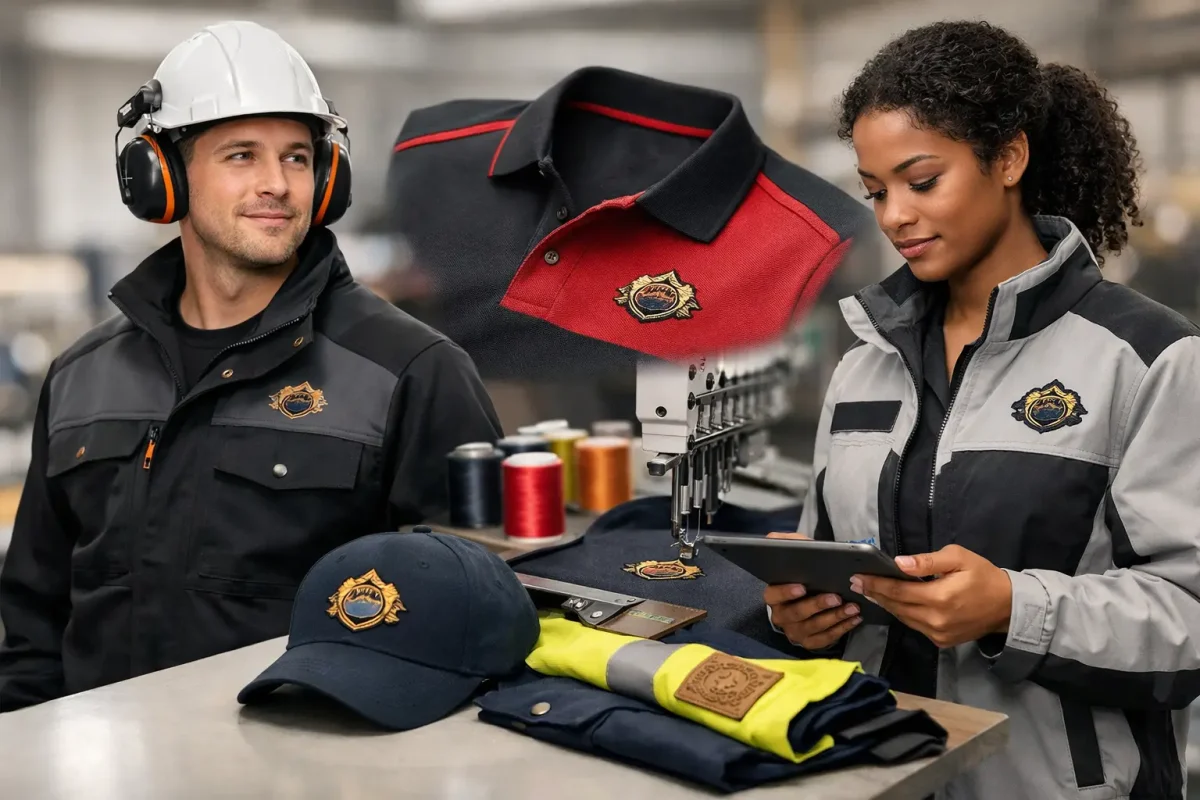
Embroidery remains the first choice for polos, sweatshirts, fleeces, hoodies, work shirts and many caps. A well-digitised embroidered logo gives a durable, professional finish and works particularly well for simple marks, company names and chest placements. It is also a strong option where staff need a uniform that keeps its appearance through frequent laundering.
Print is increasingly specified for lightweight garments, larger designs and logos with fine detail or colour gradients. It is often the better choice on technical fabrics and waterproof jackets. Stitching through a waterproof outer layer can create needle holes and compromise its resistance to rain, so printing avoids a preventable problem. The same principle applies to garments where a lighter finish or greater flexibility is needed.
In 2026, buyers are asking suppliers for a decoration recommendation before approving an order, rather than selecting a method by habit. That is sensible procurement. A logo that looks good on a cotton polo may need a different approach on a softshell, hi-vis waistcoat or insulated coat.
Logo conversion is no longer an afterthought
The quality of the original artwork has a direct effect on the finished uniform. A low-resolution image copied from a website may be enough for a screen, but it is rarely suitable for accurate embroidery or print production. Clean vector artwork helps, but it still needs preparing for the decoration method and garment size.
For embroidery, that preparation includes digitising the logo so the stitches follow the design cleanly. Fine lines, very small lettering and tightly packed colours may need simplifying. For print, colours, gradients and small details can often be retained, but placement and fabric type still matter. Approving a visual before production is becoming standard practice for organisations that want consistent repeat orders.
2. Personalisation is becoming more role-specific
One logo across every garment is still the right answer for many businesses. However, larger teams are increasingly using workwear to make roles clear at a glance. This is especially useful on active sites, in care settings, schools, venues and events where visitors need to identify the right person quickly.
The approach does not need to be complicated. A company logo on the chest can be combined with a printed job title, department name or individual name on another area of the garment. Supervisors, first aiders, security staff, delivery teams and event crew can be identified without creating a completely separate uniform range for every role.
Colour also has a practical role. A consistent base uniform with different polo, hoodie or tabard colours can distinguish departments while keeping the overall brand presentation controlled. For healthcare and care agencies, colour-coded scrubs and tunics can support a clear departmental system. For construction and facilities teams, a common logo with role-specific outerwear may be more practical than changing every garment.
The trade-off is stock complexity. Every colour, name and role variation creates another item to manage. The best systems use a limited number of approved garment styles and decoration positions, then add personal details only where they genuinely improve operations.
3. Hi-vis branding is being planned around compliance
Branded hi-vis remains a key requirement for construction, logistics, utilities, highways and site-based teams. In 2026, the stronger approach is to treat visibility performance and branding as one decision, not two separate tasks.
A logo must be positioned so it does not cover or reduce the effectiveness of reflective tape. Garment class, required visibility area and the conditions of use all need checking before a print location is selected. A large back print may be suitable on one hi-vis garment but not another. The same is true of chest logos, sleeve details and identification panels.
Buyers are also paying more attention to the lifespan of the garment. Hi-vis clothing is not permanent PPE. Dirt, abrasion, repeated laundering and general wear can reduce its effectiveness. A clear replacement process, with approved branded garments ready to reorder, is more useful than trying to stretch a tired garment beyond its working life.
Where teams work across multiple environments, it may be worth separating everyday branded workwear from task-specific protective clothing. A polo or softshell can carry a prominent logo for customer-facing work, while the correct compliant hi-vis layer is worn when site conditions require it.
4. Fewer, better garment choices are replacing oversized ranges
The catalogue is still important. Teams have different requirements, from breathable T-shirts and durable trousers to bodywarmers, coveralls, fleeces and weatherproof coats. But the 2026 trend is towards tighter approved ranges that make ordering simpler.
A practical uniform matrix might set out one or two choices for each category: a standard polo, a warmer sweatshirt or hoodie, a softshell for regular outdoor work, a waterproof coat for exposed roles, and a suitable hi-vis option where required. Staff receive garments appropriate to their role, while purchasing teams retain control over fit, colour and branding consistency.
This does not mean forcing every employee into the same cut or fabric. Comfort affects whether workwear is worn properly. Mixed-gender teams, frontline staff working long shifts and employees moving between indoor and outdoor work may need different fits or layers. The point is to offer deliberate choices, not an unstructured selection that produces mismatched uniforms.
Durability remains a deciding factor. Lower-cost garments can be appropriate for short events, promotional campaigns or temporary crews. For daily wear, however, fabric weight, seam strength, colour retention and ease of washing often justify a better specification. The cheapest unit price is not always the lowest cost once frequent replacement and inconsistent presentation are considered.
5. Fulfilment is now part of personalisation
Personalised workwear has always needed accurate production. What is changing is the expectation that it also arrives ready to issue. Operations teams do not want to spend a morning opening boxes, finding names, dividing sizes and chasing missing items.
Per-employee packing is becoming a more valuable part of the service, particularly for multi-site businesses, new-starter programmes, care providers and organisations with seasonal recruitment. Each person can receive their named or allocated garments together, reducing distribution time and errors. Bulk pallet delivery remains useful for trade customers, events and larger campaigns where goods need to reach a site in volume.
The detail behind this matters. A purchase order may include several departments, different decoration methods, named items, hi-vis garments and a mix of sizes. Without a clear order structure, mistakes become more likely. A supplier that can manage garment selection, logo preparation, production and packing as one process removes a significant administrative burden.
For repeat ordering, agreed artwork, garment codes and decoration positions should be recorded from the first order. This is what gives a uniform programme continuity when staff change, new branches open or an annual clothing allowance is issued.
Workwear personalisation trends 2026: practical buying priorities
The organisations getting the best result from branded workwear are not necessarily choosing the most elaborate design. They are setting standards early. They decide which garments are approved, where the logo sits, when embroidery is appropriate, which details need printing, and how named items will be packed and delivered.
Before placing the next order, review a sample garment in the conditions it will actually face. Check that the logo is readable at the intended size, that waterproof and hi-vis items use the right decoration method, and that staff can move and layer comfortably. Then make the order process repeatable.
Vivid Promotion works with businesses that need those decisions translated into consistent, practical uniform supply. The useful end point is simple: workwear that reaches each team member ready to wear, looks right on day one and remains straightforward to reorder when the team grows.