No products in the basket.
Branded Workwear
Bulk Pallet Delivery Workwear for Busy Teams
22
Aug
Aug
A large workwear order is only useful when the right garments reach the right people without creating a sorting job in the stores cupboard. Bulk pallet delivery workwear is designed for organisations ordering at volume, whether that is uniforms for multiple sites, PPE for a growing trade team, or branded garments for an event. The delivery method matters just as much as the polo, jacket or hi-vis vest chosen.
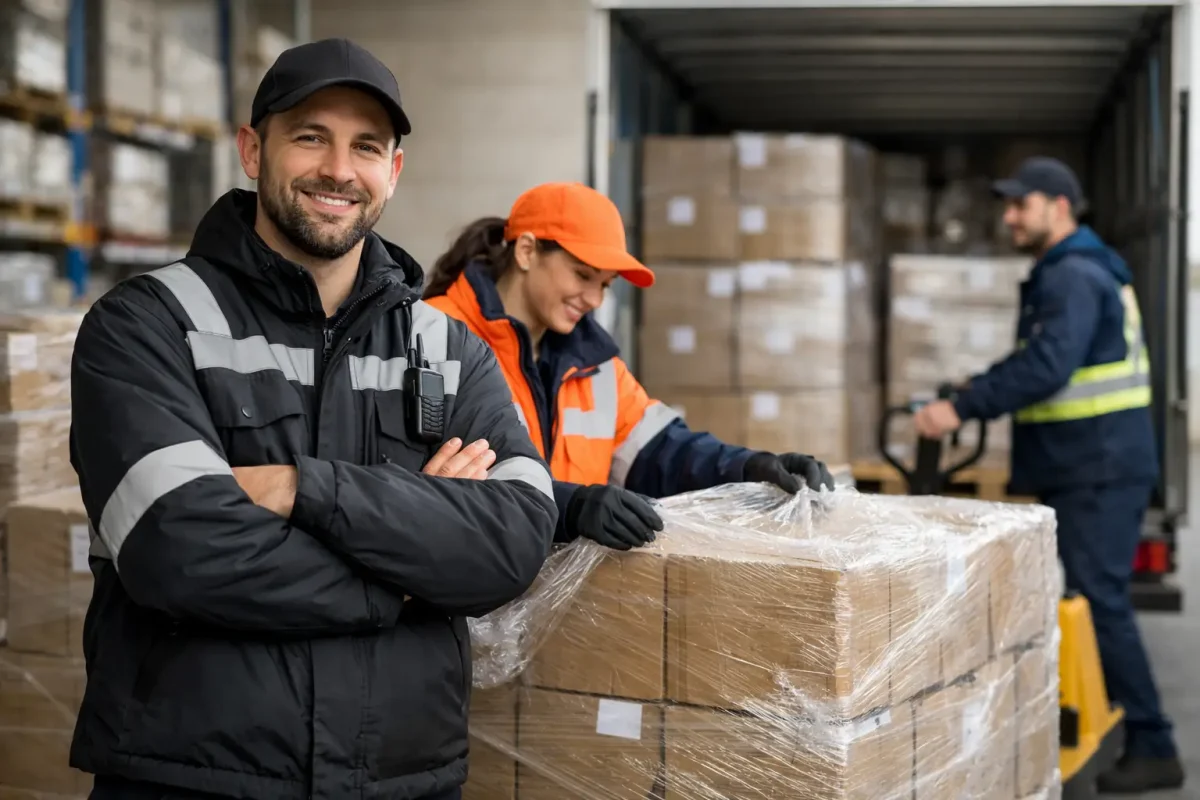
For operations managers and buyers, a pallet delivery gives structure to a large order. It protects garments in transit, makes unloading more predictable and provides a practical way to receive stock at a warehouse, depot, school or event venue. When the order is planned properly, it also cuts down the time spent counting cartons, separating sizes and chasing missing items.
When bulk pallet delivery workwear is the right option
Pallet delivery is generally the sensible choice when cartons would be difficult to handle as separate parcels or when an order needs to arrive together. This is common for construction contractors supplying several crews, facilities teams refreshing a uniform issue, care providers ordering by department and event companies preparing merchandise or staff clothing.
It is not automatically the best option for every order. A small top-up of embroidered polos or replacement trousers is usually easier as a standard parcel delivery. A pallet becomes more useful when volume, garment type or the delivery location makes consolidated freight the safer and more efficient route.
Consider the receiving point before placing the order. A depot with a loading bay and a forklift can accept a larger pallet very differently from a town-centre office, school reception or site with restricted vehicle access. If the delivery address has limited access, timed restrictions or no suitable unloading area, flag this at the quotation stage. Getting this detail right prevents a straightforward uniform order becoming a delivery problem.
Start with the issue plan, not the garment list
The usual starting point is a list of garments and sizes. That is necessary, but it is not enough for a large-scale issue. First decide how the team will receive the clothing. Are garments being issued to named employees, held as site stock, distributed to regional managers or handed out at an event registration desk?
That answer affects packing, labelling and the best way to group the order. A maintenance contractor may need bundles organised by site and job role. A care agency may need tunics and trousers separated by department, with clear size identification. An events company may need cartons arranged by garment colour and size so temporary staff can be issued quickly on arrival.
Per-employee packing is particularly useful when staff work across different shifts or locations. Each person receives their allocated items together rather than relying on an administrator to build individual packs from a mixed shipment. It reduces handling, makes discrepancies easier to identify and gives the issue process a cleaner audit trail.
For central stores, size-sorted cartons can be the more practical choice. This gives the site flexibility to issue replacement garments as needed. The right approach depends on whether the order is a planned one-off rollout, ongoing uniform stock or a mixture of both.
Choose garments that suit the job and the journey
Bulk ordering can magnify a poor garment decision. A saving per item is quickly lost if staff find the fit unsuitable, the fabric is too light for the job, or jackets do not meet the required protection level. Start with the environment and the task, then narrow down the range.
For everyday branded uniforms, polos, T-shirts, sweatshirts, hoodies and fleeces cover most office, retail, trade and visitor-facing teams. For outdoor work, softshells, bodywarmers and coats allow a practical layered approach. Trades and industrial teams may require work trousers, coveralls or hi-vis garments selected around visibility requirements and site rules.
Do not treat hi-vis as a generic category. The required class, garment design and any existing PPE policy need checking before ordering. A branded hi-vis vest may be suitable for one role, while another requires compliant long-sleeved coverage or waterproof outerwear. Branding placement also has to avoid compromising required reflective areas.
Sizing is equally operational. Ask for a current size breakdown rather than relying on last year’s figures, particularly where teams have expanded or changed. Include a sensible quantity for new starters and replacements, but avoid over-ordering specialist items that may remain unused in stores. For repeat orders, maintaining an approved garment and colour specification makes future purchasing faster and more consistent.
Get the logo method right before production
Embroidery and print each have a clear place in workwear supply. Embroidery is hard-wearing and works well on polos, fleeces, sweatshirts, hoodies, caps and many jackets. It gives a neat, professional finish for day-to-day uniforms, especially where the logo is relatively simple and positioned on the chest or sleeve.
Garment printing is often the better choice for larger artwork, detailed designs, names, numbers or high-coverage back prints. It is also the practical option for waterproof garments. Embroidering through a waterproof shell creates needle holes, which can affect the garment’s water resistance. A correctly selected print method avoids that issue while still giving clear branding.
Provide the best logo file available at the start. A vector artwork file is normally preferred, but a high-quality original image can often be assessed and converted where needed. A low-resolution image copied from a website, screenshot or social media profile may not reproduce cleanly in embroidery or print. Resolving artwork early protects lead times and avoids approving branding that looks different from the rest of your fleet or workforce.
For larger orders, keep decoration positions consistent. A standard left-chest logo, back print and optional sleeve detail are easier to manage than multiple variations across the same garment. Where departments need different identifiers, agree a clear system such as print colour, role wording or an additional logo position. That keeps the order readable for production and practical for staff.
Packing and labelling can save hours on issue day
The point of bulk pallet delivery is not simply to move more cartons at once. It is to make receiving and distribution easier. Clear carton labels should show what is inside, whether by garment, size, location, department or employee pack reference. That gives the recipient a usable check against the order without opening every box.
A well-planned pallet also protects the contents. Garments are packed into cartons, stacked securely and wrapped for transport, reducing the risk of loose parcels or damaged packaging. For a large delivery, this is a more controlled arrangement than receiving a stream of individual packages over several days.
It helps to nominate one person at the delivery point to receive the consignment and check it against the delivery paperwork. They do not need to inspect every garment immediately, but they should confirm the number of pallets and visible cartons, report any transit damage promptly and move the delivery into a dry, secure area. On a busy site, that simple handover process matters.
If the order is going straight to a temporary venue, plan where the pallet will be stored after unloading. Event halls, exhibition spaces and school sites may have rules about delivery windows, vehicle access and packaging removal. Share those details before despatch rather than expecting the carrier to solve them at the gate.
Build lead times around the real deadline
Customised workwear has several stages: confirming garments and stock, preparing artwork, approving the order, applying embroidery or print, quality checking, packing and arranging delivery. A large branded order should be scheduled from the date the team needs to wear it, not from the date someone first asks for prices.
Allow extra time where there are multiple garment types, several decoration positions, named packs or a delivery to a restricted location. If an event date, mobilisation date or school leavers deadline is fixed, state it early. This allows production and delivery arrangements to be matched to the requirement rather than relying on last-minute changes.
For organisations with regular recruitment or seasonal peaks, a repeat-order process is worth setting up. Keep approved artwork, garment choices, logo positions and pack rules on file. That reduces decision-making for every replenishment order and helps maintain a consistent uniform standard across locations.
A delivery process that supports the workforce
The strongest bulk workwear orders are planned as an issue operation, not just a purchase. The garment has to suit the role, the branding has to reproduce properly, and the packing needs to reflect how people actually receive their uniform. Vivid Promotion can support this from customised garment selection through to pallet delivery and employee-ready packing.
Before approving your next large order, walk through the receiving and issue process with the people who will handle it. A few practical decisions made before production can save your team a day of sorting when the workwear arrives.