No products in the basket.
Branded Workwear
How to Bundle Healthcare Uniforms Properly
08
Aug
Aug
A healthcare uniform order becomes difficult when every employee receives a different mix of scrubs, tunics, trousers and layers. Knowing how to bundle healthcare uniforms means setting clear garment combinations by job role, then supplying each person with the correct sizes, colours and branding in a package that is ready to issue.
For a care home, clinic, dental practice or community health provider, the aim is not to create one generic uniform package for everyone. It is to make ordering, distribution and repeat purchases simpler without overlooking comfort, hygiene requirements or the practical demands of each shift.
Start with roles, not garment types
The quickest way to create confusion is to begin with a long list of available garments and ask staff to choose. Start by mapping the roles in your organisation instead. A receptionist, healthcare assistant, senior carer and facilities colleague may all need different clothing, even when they work at the same site.
Group roles that genuinely have the same requirements. For example, care staff may need scrub tops and trousers for frequent movement and regular laundering, while reception staff may be better served by polo shirts, cardigans or tunics. Managers who move between office and clinical areas may need a more flexible combination, such as a branded polo with a fleece or softshell for travel between sites.
This approach also helps maintain a clear visual structure. Department colours can make staff easier for residents, patients and visitors to identify. However, confirm that the colour system works with your existing policies and is available consistently across your chosen garment range. A bundle that cannot be matched six months later creates an avoidable replacement problem.
Build a core bundle for each job
Each bundle should cover a realistic working week rather than the minimum needed to get through one shift. The right quantity depends on laundering arrangements, shift patterns and whether staff change on site. Where employees wash uniforms at home, more garments usually reduce pressure on turnaround and help keep presentation consistent.
A practical starting point is to define a standard issue for each role, then allow controlled additions where needed. A care assistant bundle might include three scrub tops, three pairs of scrub trousers and an optional layer for travelling to and from work. A dental nurse bundle may need a different number of sets if on-site changing and laundry are in place.
Consider these four elements when setting each standard bundle:
- Main garments, such as scrub tops, scrub trousers, tunics or polos
- Layering pieces, including fleeces, cardigans or softshell jackets for non-clinical areas
- Identification, such as embroidered job title, department or staff name where appropriate
- Replacement items, including a small reserve of common sizes for starters and urgent swaps
Keep optional garments separate from the essential issue. This makes approval easier and stops a standard bundle becoming unnecessarily expensive. It also lets managers order weather layers or additional garments only for staff who need them.
Choose garments for the work, not just the look
Healthcare uniforms need to stand up to frequent washing, long shifts and active work. Fabric weight, stretch, pocket layout and fit all affect whether staff will wear the garments comfortably. A low-cost item that loses shape or colour after repeated laundering is rarely good value.
Ask where and how the uniform will be worn. Scrubs are often the practical choice for hands-on clinical and care roles because they allow movement and can be issued as matching sets. Tunics may suit teams that need a more traditional healthcare appearance. Polos can work well for support staff, reception teams and community-based services, particularly when paired with trousers or smart workwear bottoms.
Pay attention to fit across the whole team. Offer the full size range required, and use samples or a managed sizing process before placing a large order. Ordering by assumption can leave you with unusable stock and staff waiting for replacements.
Decide what should be embroidered or printed
Branding should be clear, durable and suited to the garment. For most healthcare uniforms, an embroidered logo on the left chest gives a professional, long-lasting finish on scrubs, tunics, polos and fleeces. It is particularly effective for simple logos and text that need to remain visible after regular washing.
Printing may be a better choice where a larger design is needed or the fabric is not suitable for stitching. It can also be useful for back prints, department names and temporary campaign garments. The decoration method should always be matched to the material. For example, embroidery is not normally the right choice for waterproof outerwear because needle holes can affect the garment’s water resistance.
Keep the decoration consistent across each role bundle. Agree the logo size, placement, thread colours and any job-title wording before production begins. If your logo file needs converting for embroidery or print, make that part of the approval process rather than an afterthought. A clear visual proof helps prevent a whole run being branded incorrectly.
Names can be useful in smaller care settings, but they are not suitable for every organisation. Consider safeguarding, staff preference and replacement costs. A role or department label is often more flexible because the garment can be reissued if an employee leaves.
Make sizing and issue data part of the order
A bundle is only useful if it reaches the right person. Create a simple issue list containing employee name or staff number, role, department, size, bundle type and any approved additions. This gives procurement and site managers a record to check against before production.
For larger teams, collect sizing through a controlled form rather than email replies. Use consistent size labels and include guidance on whether staff prefer a closer or looser fit. If the garment brand has a specific size chart, use that chart rather than assuming a medium will fit the same across every range.
It is worth planning for starters, leavers and changes in role. Hold a small amount of unbranded or standard-logo stock in fast-moving sizes if staff numbers change regularly. Where job titles are embroidered, keep those garments separate from general reserve stock to avoid waste.
Pack bundles to reduce site admin
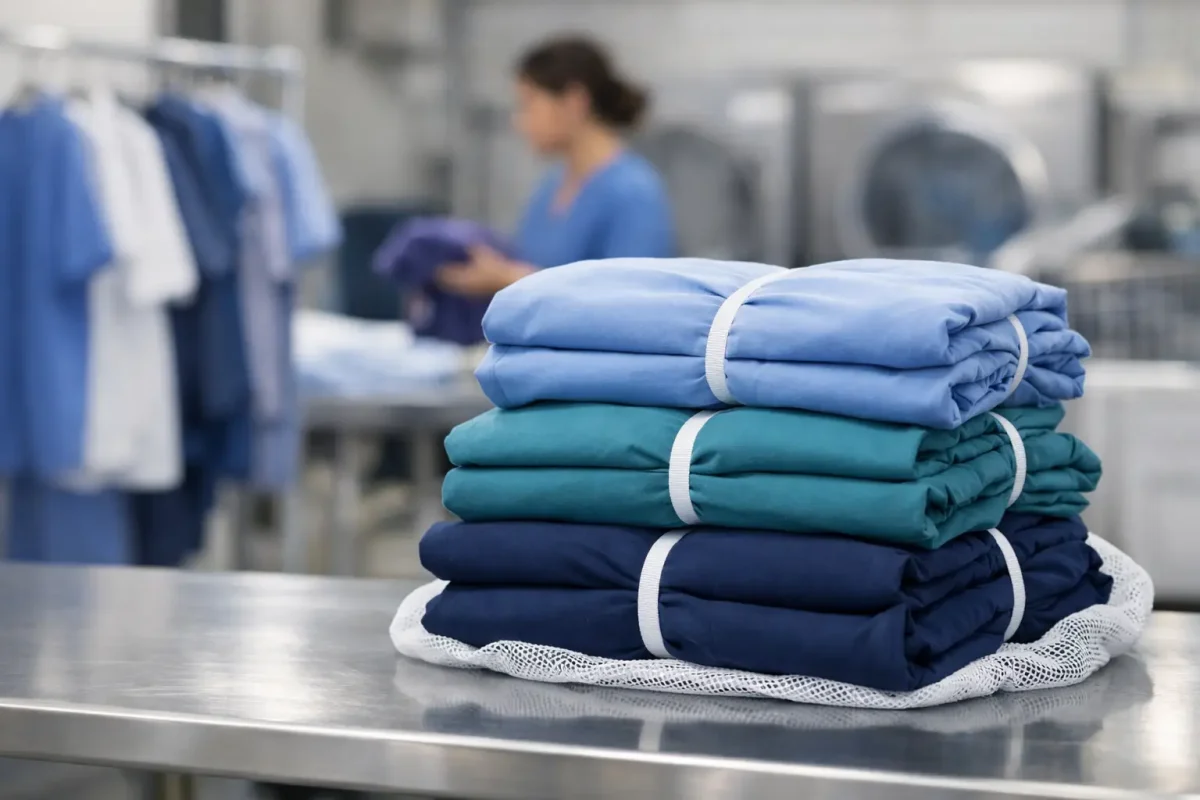
Bulk delivery is efficient for a single store room, but it can shift a large sorting job onto an already busy manager. For multi-person orders, per-employee packaging is usually the more practical option. Each package can be labelled with the employee’s name, role or staff number and contain their agreed garment allocation.
This is especially useful for care groups with several homes, clinics with staggered starters or organisations supplying teams across multiple locations. Managers can issue packs directly rather than opening cartons, counting garments and trying to match sizes by hand.
If stock is being sent to several sites, separate the order by location first and then by employee. Agree delivery points, contact names and any restrictions such as limited storage space or receiving hours. A well-planned packing schedule prevents cartons sitting in the wrong place while staff wait for uniform.
Vivid Promotion can support this type of fulfilment with individually packed employee orders as well as bulk delivery, helping healthcare managers spend less time sorting and more time running their teams.
Set rules for repeat orders
The best bundles are easy to repeat. Record the exact garment style, colour, branding position and bundle contents once the first order is approved. This becomes your uniform specification for future starters, replacements and additional sites.
Avoid changing garments simply because a similar item appears cheaper. A substitute can differ in shade, fit, fabric or logo finish, leaving teams looking inconsistent. If a product is being discontinued, review a replacement sample before changing the standard bundle.
Set a sensible approval process too. Individual employees may request extra items, but a named manager should confirm whether they are part of the standard issue, a replacement or a chargeable addition. That keeps costs visible and stops stock levels drifting.
A well-built healthcare uniform bundle should feel straightforward to the employee receiving it: the right garments, in the right size, ready for the first shift. The work happens earlier, in the role planning, garment selection, branding approval and packing detail. Get those decisions right once, and every future order becomes easier to manage.