Branded Workwear
How to Build Site Uniform Kits for Every Shift
Jul
A new starter should not arrive on site with a branded polo but no weather layer, or a hi-vis vest that does not match the work they are doing. Learning how to build site uniform kits properly starts with the reality of each shift: who is on site, what they do, where they work and what they need to wear safely and comfortably from day one.
A useful uniform kit is not simply a bundle of garments with a logo added. It is a controlled issue system that helps teams look consistent, meet site rules and avoid the delays caused by missing sizes, unsuitable clothing or last-minute ordering.
Start with roles, not garment categories
The quickest way to create an ineffective uniform order is to choose one set of garments for everyone. A site manager, groundworker, delivery marshal and office-based project coordinator may all need branded workwear, but their day-to-day requirements are different.
Set out the roles on each site before choosing products. For each role, confirm whether the wearer is mainly indoors, outdoors, customer-facing, driving, carrying out physical work or moving between environments. Also check the site-specific PPE requirements and whether workers need to comply with a client colour code or identification system.
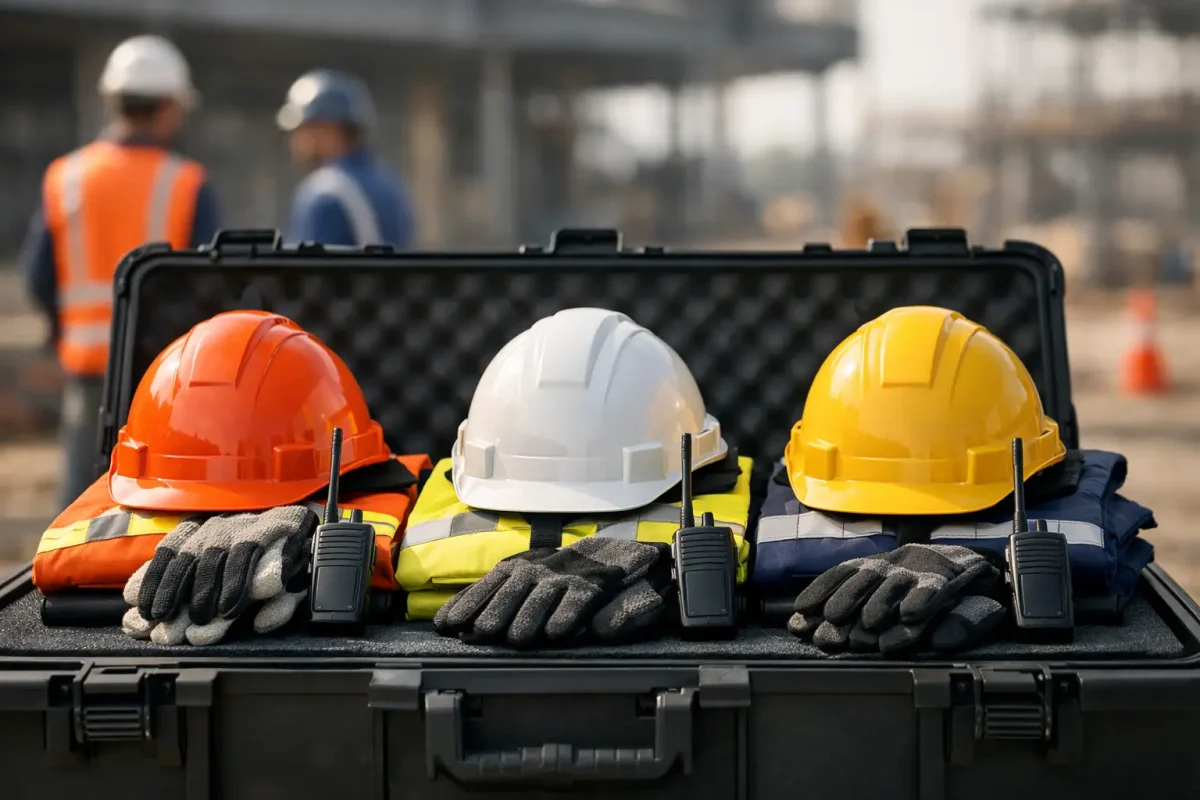
For example, an outdoor construction team may need a polo, sweatshirt, hi-vis waistcoat, softshell jacket and work trousers. A supervisor could require a more presentable polo and softshell combination, with a hi-vis layer available for site walks. Event crew may need matching T-shirts or hoodies for visibility and brand presentation, while retaining a waterproof layer for loading and outdoor work.
This role-by-role approach prevents over-ordering expensive outerwear for people who will not use it, while ensuring teams exposed to rain, cold or heavy wear receive garments fit for purpose.
How to build site uniform kits around working conditions
Once roles are mapped, build each kit in layers. This gives staff practical options across changing British weather and makes replenishment easier when one item reaches the end of its working life.
A standard site kit often includes:
- A branded base layer, usually a T-shirt or polo shirt
- A mid-layer, such as a sweatshirt, hoodie or fleece
- A weather layer, such as a softshell, bodywarmer or coat
- Suitable trousers, coveralls or role-specific protective clothing
- A hi-vis garment where the risk assessment or site rules require it
The right mix depends on the environment. A softshell offers a smart, flexible option for supervisors, installers and mobile teams, but it is not a replacement for a fully waterproof coat in prolonged rain. A fleece provides warmth but may not be appropriate where loose fibres, snagging risks or frequent wash cycles are a concern. Hoodies are popular with trade teams, although some sites restrict hoods near machinery or require hi-vis clothing to remain visible.
Do not treat hi-vis as an afterthought. Where it is required, confirm the relevant garment class, colour and reflective tape arrangement before ordering. A branded hi-vis waistcoat may suit visitor issue or low-risk duties, while workers operating near moving vehicles may require a higher-specification hi-vis jacket or coverall. The garment must meet the applicable standard before decoration is considered.
Seasonality also matters. Ordering only summer-weight polos can leave a site scrambling for layers in October. Equally, issuing heavy jackets to every employee in spring can tie up budget unnecessarily. Many employers keep a core all-year kit, then hold approved winter outerwear for scheduled seasonal issue or replacement.
Choose decoration methods that suit the garment
Your logo needs to remain clear after repeated wear, washing and site use. That does not mean embroidery is always the right answer.
Embroidery is a dependable choice for polos, sweatshirts, fleeces, caps and many softshells. It gives a professional finish and works particularly well for a company name or straightforward logo on the left chest. For complex designs, fine lettering or large back branding, garment printing may reproduce the detail more accurately.
Waterproof garments need particular care. Embroidering directly through a waterproof outer can create needle holes, potentially affecting its water resistance. Print is usually the better option for these items. The same principle applies when preserving the performance of technical fabrics is more important than achieving a raised embroidered finish.
Keep decoration positions consistent across the kit. A left-chest logo on core garments, paired with a back print where visibility matters, creates a recognisable standard without making every item overly branded. Consider whether names, job titles or departments are genuinely useful. They can help on large sites and in customer-facing teams, but individual personalisation can make reassignment harder when staff change roles.
Before production, make sure your artwork is assessed for both embroidery and print. A logo that looks sharp on a screen can require adjustment when converted into stitches or prepared for garment printing. Getting this right at the outset protects brand presentation and avoids costly reworks across future orders.
Set quantities by issue cycle, not guesswork
A kit should cover the wearer between laundry cycles and give the business a sensible replacement position. One polo per employee is rarely enough for a five-day working week, especially for physical work, food-facing environments or customer-facing roles where a clean presentation matters.
For many site teams, three to five branded tops per person is a practical starting point. The correct number depends on the work, laundering arrangements and whether staff are expected to wear uniforms every day. Outerwear usually requires a lower allocation because it is worn over other garments and lasts longer, provided the quality matches the workload.
Trousers, coveralls and high-wear items need their own replacement plan. Look at the likely abrasion, kneeling, cleaning and weather exposure rather than applying the same quantities to every role. It can be more cost-effective to specify durable work trousers for tradespeople than to repeatedly replace lower-cost alternatives that fail early.
For short-term projects, events or temporary labour, a lighter issue may be appropriate. In that case, prioritise clear identification, available sizing and fast distribution. For permanent teams, it is worth establishing a standard kit by role and approving it internally so repeat ordering stays controlled.
Build in sizing, stock and replacement controls
Sizing causes more uniform delays than most buyers expect. Collect sizes before placing the main order, but do not rely entirely on generic size labels. Different garment brands and fits vary, particularly across ladies’ healthcare uniforms, fitted polos and work trousers.
Where possible, use size samples or a structured fitting process for the first issue. This is especially useful when introducing a new brand, changing garment styles or ordering for a large workforce. Record the final size against each employee and role so future replacements are straightforward.
It is sensible to hold a small buffer of commonly requested sizes, particularly on active sites with regular starters. However, avoid storing large amounts of personalised clothing with employee names unless turnover is low. Standard branded stock can be reissued; named garments often cannot.
A simple kit record should show the approved garments, decoration location, colour, size range, issue quantity and replacement rules. It gives procurement, site managers and administrators one clear reference point. It also stops different sites ordering similar-looking garments with inconsistent logos or colours.
Make fulfilment part of the kit design
The final challenge is not selecting the garments. It is getting them to the right people without creating a sorting job for the site office.
For a team of ten, cartons may be manageable. For several sites, rotating labour or a large mobilisation, loose bulk delivery can quickly become a problem. Missing items are harder to trace, staff spend time opening boxes, and new starters may receive incomplete kits.
Ask for each employee’s order to be packed separately and clearly labelled, with their allocated garments grouped together. This allows a manager to hand out complete kits on induction day rather than sorting a mixed consignment by size and item. For trade customers and event orders, bulk pallet delivery can be the right answer where distribution will happen centrally, but it still needs a clear packing breakdown.
Delivery timing should be planned around mobilisation dates, not just the date the purchase order is raised. Allow time for artwork approval, garment availability, decoration and dispatch. If your sites operate nationwide, use a supplier that can deliver consistently across Great Britain rather than treating every location as a separate procurement exercise.
Vivid Promotion can support this process with branded garment selection, suitable embroidery or print guidance, and per-employee packing where it reduces issue-day admin.
A well-built site uniform kit gives workers what they need before they ask for it: the right layer, the right fit, clear identification and a professional standard that holds up through the shift.