Branded Workwear
Branded Workwear Ordering Process Guide
May
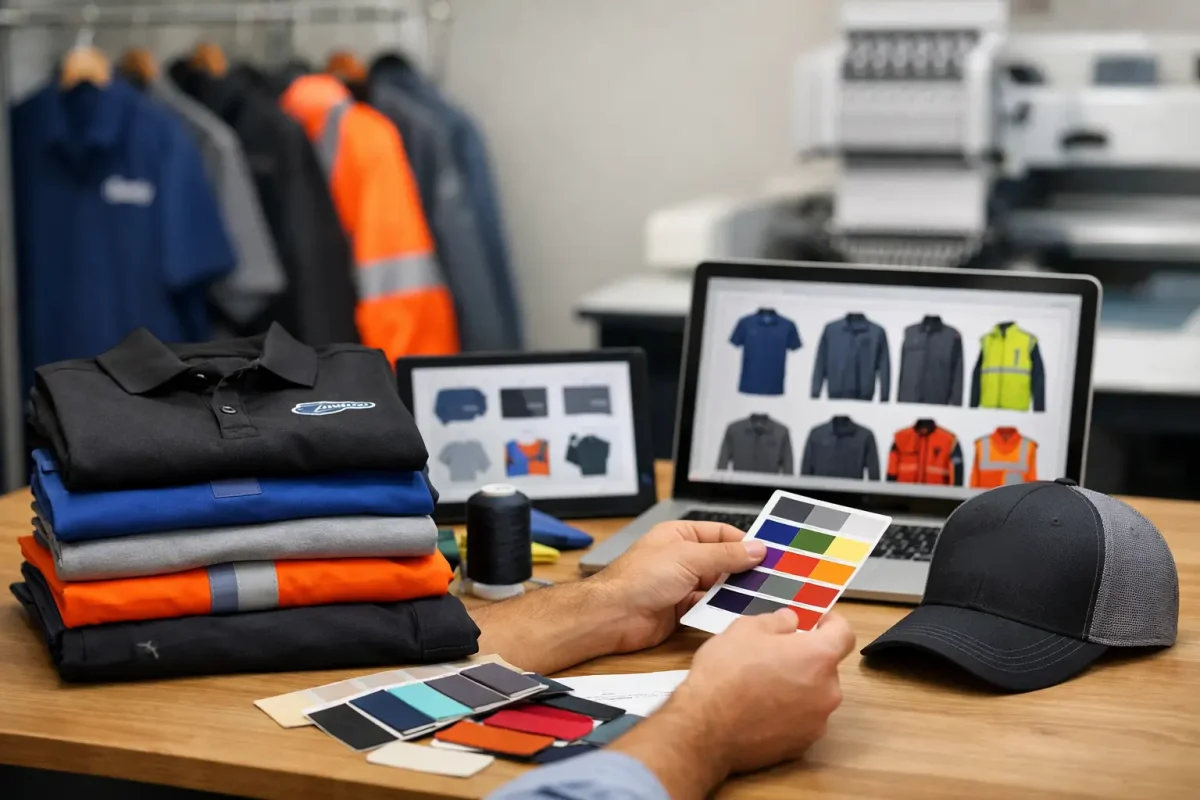
Ordering uniforms sounds simple until 40 polos need three different logos, half the team need women’s fit, two engineers require hi-vis, and the new starters have not sent their sizes. That is where a branded workwear ordering process guide earns its keep. If you are buying for a business, school, healthcare team or site crew, the fastest route is not just choosing clothing. It is getting the garments, branding method, artwork, sizes and packing plan right before production starts.
What a branded workwear ordering process guide should actually cover
Most delays happen before any garment reaches embroidery or print. Buyers are often deciding several things at once – what staff need to wear, what will hold up on the job, how the logo should appear, and how the order will be issued once delivered.
A proper process starts with use, not appearance. A front-of-house polo has different demands from a waterproof shell for engineers, and both differ again from care uniforms or event clothing. If the garment is wrong, even the best branding will not rescue the order.
This is why experienced buyers work through the order in stages. First define the job role and environment. Then narrow the garment range. After that, confirm branding method, artwork, quantities, sizes and delivery format. It sounds basic, but this order matters.
Start with the role, not the logo
The first question is not embroidery or print. It is where the clothing will be worn and what it needs to do. Trades and site teams usually need durable garments that can cope with repeated washing and tougher conditions. Healthcare buyers may need tunics, scrubs or polos that fit department use and are easy to identify. Schools and colleges often need leavers hoodies or staff uniform that balances presentation with budget.
Garment choice usually falls into a few practical groups. Everyday basics include T-shirts, polos, sweatshirts and hoodies. Layering garments include fleeces, softshells, bodywarmers and coats. More specialist ranges cover hi-vis PPE, healthcare uniforms and heavier-duty work trousers or coveralls.
At this stage, think about trade-offs. A cheaper polo may work for short-term promotions or event staffing, but daily wear across a full year usually needs a better fabric weight and stronger construction. A waterproof jacket may look ideal for branding, but embroidery can create needle holes in some outerwear, so print may be the safer option. The right answer depends on where and how the garment is used.
Match the garment to the working day
A warehouse team may need warm layers for early starts but lighter tops underneath for indoor picking. A care team may need colour coding by department. A construction firm may need a mix of standard branded clothing and compliant hi-vis garments for specific staff.
This is where a catalogue-led approach helps. Buyers can sort by garment type, profession, department or compliance requirement rather than trying to force one product across every role. It reduces mistakes and avoids paying for garments that look right on a screen but do not suit the job.
Choose the right branding method early
Once the garments are shortlisted, branding comes next. Embroidery and print do different jobs, and treating them as interchangeable can cause problems.
Embroidery is usually the first choice for polos, sweatshirts, fleeces, softshells, bodywarmers and many heavier garments. It gives a durable, professional finish and works well for company logos on the chest or sleeve. It is especially popular where buyers want a tidy, long-term uniform look.
Print is often better for T-shirts, lightweight garments, large back logos, event wear and products where a flat finish is more suitable. It can also be the practical answer on garments where stitching is not advisable, such as certain waterproof items.
There is no blanket rule here. A logo with fine detail may need adjustment before it works in thread. A large back design may be too heavy or expensive in embroidery but straightforward in print. The branding method should suit the garment and the logo, not just buyer preference.
Get the artwork ready before you order at scale
One of the biggest hold-ups in branded clothing orders is artwork. Businesses often send a logo pulled from a website, email signature or social media profile. It may look acceptable on screen, but that does not mean it is ready for production.
For embroidery, the logo usually needs converting into an embroidery-ready format so the machine can stitch it properly. For print, artwork must be clean enough to reproduce the design sharply at the intended size. If the file is poor, the finished garment will show it.
This is where quality control matters. Thin lines, tiny text and colour fades may need simplifying. That is not a design preference. It is a production reality. A practical supplier will flag those issues before garments are branded, not after.
Approve the logo position and size
Chest logo, back print, sleeve mark, leg print – all of these should be agreed before production starts. Different garments have different usable areas, and what works on a hoodie may not work on a zip fleece or scrub tunic.
If you are ordering across several garment types, check consistency as well as placement. Buyers usually want the logo to look aligned across the range, even if the exact print or stitch area varies slightly by product.
Quantities, sizes and wearer lists need more attention than most buyers expect
This is the stage where admin creeps in. The larger the order, the more likely it is that missing sizes or unclear wearer lists will slow things down.
For a small team, a simple size split may be enough. For larger organisations, it is worth building the order by department, site or employee name. That is especially useful where garments vary by role, such as office staff in polos, engineers in trousers and softshells, and supervisors in hi-vis outerwear.
Do not assume one unisex size run will cover everyone well. Some teams need women’s fit options, longer body lengths or larger size ranges. If staff are wearing the uniform every day, fit affects compliance and presentation as much as comfort.
It also affects reorders. A rushed size collection creates expensive corrections later. Taking an extra step at the order stage usually saves money over the full uniform cycle.
Think about fulfilment before dispatch day
A lot of buyers focus on production and forget the handover. Then 12 cartons arrive and someone in the office has to sort every garment by hand.
That may be manageable for a small order. It is not efficient for a multi-site team, a school intake, an event crew or a trade customer moving stock onward. This is where fulfilment becomes part of the ordering process rather than an afterthought.
Some organisations need bulk pallet delivery for onward distribution. Others need individual employee packs so each person receives the correct combination of garments without internal sorting. If that is the requirement, raise it at the start, not after branding is complete.
Good fulfilment planning reduces wasted admin time and lowers the risk of garments being issued to the wrong person. For repeat buyers, it also creates a cleaner process for future orders because pack formats, departments and wearer details are already established.
Lead times depend on decisions made upstream
Buyers often ask how quickly branded workwear can be delivered. The honest answer is that it depends on stock, artwork readiness, branding method, order complexity and packing requirements.
A straightforward repeat order with approved artwork is naturally quicker than a first order split across multiple garment types and locations. Hi-vis and healthcare lines may also need more careful checking if compliance, colour coding or department-specific requirements are involved.
The best way to protect lead time is to reduce uncertainty before production starts. Confirm products, confirm branding, confirm sizes, confirm delivery format. Every open question adds time.
For nationwide buyers, consistency matters just as much as speed. Reliable production and dispatch windows are often more useful than optimistic promises that slip once the order enters the system.
A practical branded workwear ordering process guide for repeat buyers
If you order uniform regularly, the aim is not just to place the current order. It is to make the next one easier. Keep a record of approved garments, logo positions, branding method, size history and department splits. That gives you a working template rather than starting from scratch each time.
This is especially useful for growing teams, seasonal staffing, care providers with multiple wearers, and businesses onboarding new starters throughout the year. Repeat ordering works best when the original setup was done properly.
That is why many organisations prefer a supplier that can handle the full process – garment selection, artwork preparation, embroidery or print, and delivery arranged in the format the business actually needs. Vivid Promotion works in that practical way because most buyers do not need more choice for the sake of it. They need fewer errors, clear options and uniforms that arrive ready to issue.
If you are planning your next order, treat the process as part of the product. The garments matter, but getting the details right before production is what keeps the whole job moving.