No products in the basket.
Branded Workwear
Coveralls or Separates Workwear for Your Team
19
Jul
Jul
A maintenance engineer moving between a dusty plant room, a customer reception area and a vehicle has different uniform needs from a warehouse picker working a long, warm shift. That is why the choice between coveralls or separates workwear should start with the job, not simply the garment price. Both options can give teams a consistent, professional appearance, but they perform differently in day-to-day use, branding and uniform issue.
For many organisations, the right answer is not one or the other across the whole workforce. It is often a core range of trousers and tops for most staff, with coveralls issued to roles that need full-body coverage or regular protection from dirt, dust and light industrial residues.
When coveralls make practical sense
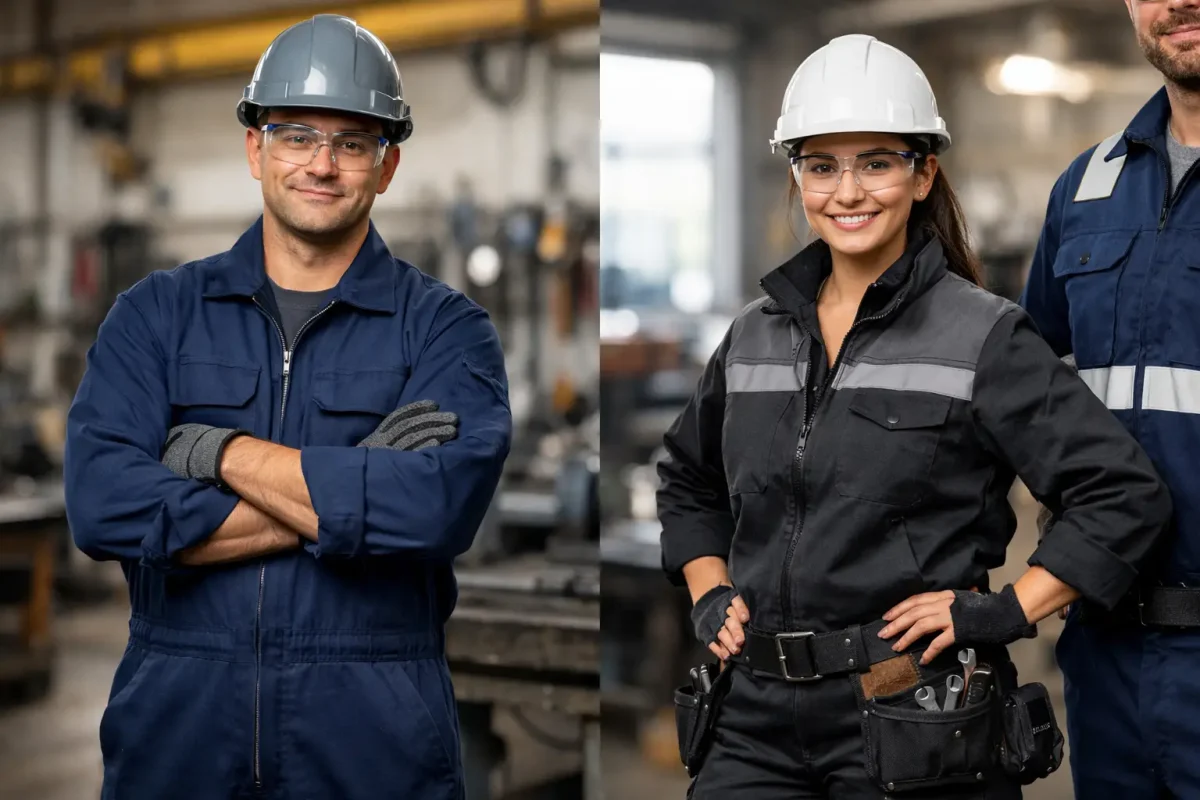
Coveralls are a one-piece garment designed to cover the clothing underneath. They are familiar across engineering, automotive, facilities management, agriculture, utilities and maintenance work because they are quick to put on, hard-wearing and reduce the amount of exposed clothing.
They work particularly well where staff may kneel, crawl, lean into machinery or handle materials that would quickly mark a polo shirt and separate trousers. A coverall also prevents the gap at the waist that can occur when a worker stretches, bends or reaches overhead. For tasks involving dust, grease or general workshop grime, this extra coverage is a genuine operational benefit.
From an issuing perspective, coveralls are straightforward. One garment provides a complete outer layer, making them useful for visiting contractors, temporary site teams and roles where employees change on arrival. If a depot needs to hold spare stock for new starters or visitors, coveralls can simplify sizing and stock control.
However, a coverall is not automatically protective PPE. The fabric, certification and garment design must match the hazard. Where the risk assessment calls for flame-resistant, anti-static, chemical-resistant or high-visibility protective clothing, select garments that carry the relevant standard and are suitable for the specific task. A standard polycotton coverall may be durable workwear, but it should not be treated as protection against hazards it was not designed to manage.
The trade-offs with one-piece garments
The same design that keeps dirt out can make coveralls less convenient during a full shift. Workers may need to remove or partly remove them for comfort breaks, and they can feel warmer than separates in heated workshops or during summer work. Fit is also less flexible. Someone may need a larger size for shoulder movement but a shorter leg, or have a different top and trouser size.
This matters when staff are active, customer-facing or wearing the garment all day. A poorly fitted coverall can restrict movement, look untidy and discourage consistent wear. Check the size range, leg-length options, pocket layout and ease of movement before placing a larger order. A wear trial with a few representative employees often prevents expensive changes later.
Why separate workwear suits mixed teams
Separates usually mean a combination of work trousers with polos, T-shirts, sweatshirts, fleeces, softshells or jackets. This approach gives managers more control over layers, seasonal changes and the look required for each department.
For trades teams who spend part of the day indoors and part outside, a polo and work trouser combination can be more comfortable than a coverall. Add a fleece, bodywarmer or softshell when conditions require it, rather than issuing a heavier one-piece garment for every task. Staff can adjust their layers without changing their whole uniform.
Separates are also useful for organisations with varied job roles. A supervisor, driver, installer and warehouse operative can share the same branded polo and outerwear while wearing trousers suited to their work. This creates a consistent company identity without forcing every employee into an identical garment.
The sizing advantage is significant. Tops and trousers can be ordered independently, so employees receive the right fit in both. Replacements are simpler too. If a trouser knee wears through, there is no need to replace a perfectly good branded top. For large teams, that can reduce waste and make repeat ordering easier.
Where separates need more planning
Separates offer flexibility, but they require clearer uniform rules. Without guidance, one team member may wear a T-shirt, another a hoodie and another a faded old fleece. The result can look inconsistent, particularly when staff work on customer sites.
Set out the approved combinations for each role. For example, installation staff may be issued two polos, two work trousers, a sweatshirt and a weatherproof jacket, while office-based visitors receive a branded polo and outer layer only. Defining the standard helps procurement control spend and gives employees a clear expectation.
You should also consider the waist gap. For jobs involving regular bending, lifting or overhead work, separate garments may leave the lower back exposed or allow dirt to enter. Trousers with a higher rise, longer tops or suitable base layers can reduce this issue, but coveralls may still be the better option for particularly dirty tasks.
Coveralls or separates workwear: choose by task
The most reliable way to decide is to map garments to the actual working day. Start with the environment: indoor, outdoor, customer-facing, wet, dusty, heated or exposed to traffic. Then consider movement, contamination, required protective standards and how often the employee must change layers.
Coveralls are usually the stronger choice for mechanics, engineers, workshop teams, grounds maintenance staff and contractors who need a practical outer layer over personal clothing. They are also suitable where the job involves intermittent dirty work and the employee needs to arrive in clean clothing, change quickly, then remove the garment at the end of the task.
Separates are often more effective for builders, installers, logistics teams, retail-facing trade counters, delivery staff and general site personnel. They allow better temperature control and give a polished uniform appearance across roles. They also make sense where branding needs to be visible on several garments throughout the year.
A blended issue is frequently the most economical answer. An engineer might receive branded polos and work trousers for routine duties, plus a coverall for workshop servicing. A facilities team may wear separates on planned rounds but use disposable or specialist coveralls for particular contamination risks. This avoids over-specifying every employee while ensuring the right garment is available when needed.
Branding, decoration and garment life
Branding should support the garment rather than compromise it. Coveralls provide useful decoration areas on the chest, back and sometimes sleeves, making them easy to identify on a busy site. Embroidery gives a durable, professional finish on suitable polycotton and heavyweight garments, especially for company names and smaller logos.
Printed decoration can be a better choice for larger back designs, detailed artwork or garments where embroidery would be too heavy. It is also the sensible option for waterproof jackets and outer layers. Needle holes from embroidery can affect a waterproof fabric, so print is normally preferred where maintaining the garment’s weather resistance matters.
With separates, keep logo placement consistent. A left-chest logo on polos, sweatshirts and fleeces, supported by a larger printed back logo where appropriate, gives teams a recognisable standard. Consider how a logo will look when staff wear an open jacket or bodywarmer. If the polo carries the key branding, the company remains visible even when outer layers come off.
Ask for the artwork to be prepared correctly before production begins. Clean logo conversion, sensible thread colours and a decoration size that suits each garment prevent the common problems of unreadable text, distorted artwork and inconsistent branding across different products.
Make uniform issue easier to manage
The best garment choice can still create work for administrators if ordering and distribution are not planned properly. Record each role’s standard issue, approved colourways, sizing information and replacement rules. This is especially helpful when teams are spread across sites or when new starters join regularly.
For bulk orders, arrange garments by employee or department rather than accepting mixed cartons that need sorting internally. Named or clearly separated packs reduce the time site managers spend matching tops, trousers and outerwear to the right person. They also make it easier to identify missing items before issue day.
At Vivid Promotion, this can be arranged through per-employee packing for uniform programmes, alongside bulk delivery where required. It is a practical detail, but one that matters when a team needs to be ready for work rather than waiting for someone to sort a pallet of garments in the stores.
Before committing to a full rollout, check a sample for fit, colour, pocket access and logo position. Then ask the people wearing it whether it works through a normal shift. The most effective uniform is the one your team can move in, maintain properly and wear without being reminded.