No products in the basket.
Branded Workwear
Guide to Choosing Uniform Logo Placement
18
May
May
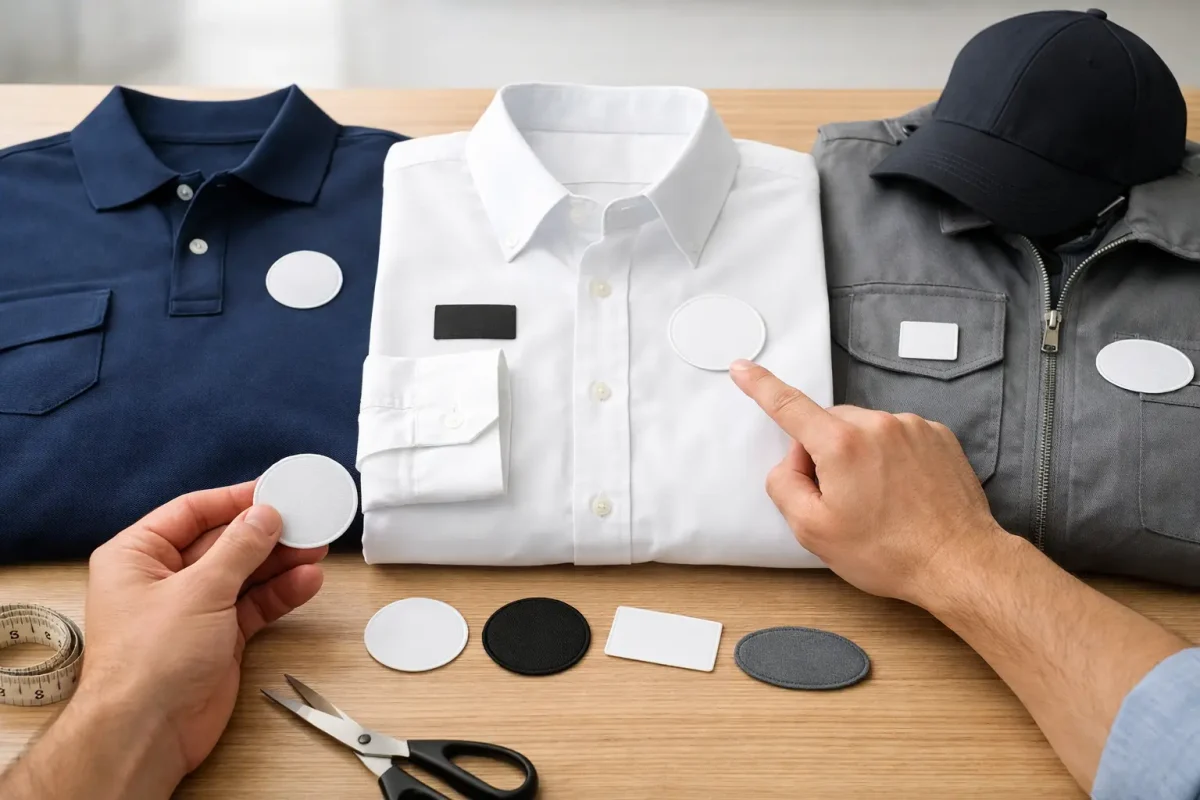
A logo in the wrong place causes problems fast. It can disappear under a bodywarmer zip, sit awkwardly over a pocket, fail to show on a hi-vis vest, or make a smart uniform look inconsistent from one department to the next. This guide to choosing uniform logo placement is built for organisations that need branded clothing to work properly in real use, not just look acceptable on a proof.
When you are ordering uniforms for a team, logo position affects visibility, comfort, garment lifespan and how easy it is to repeat the order later. It also affects which branding method is suitable. A placement that works well in embroidery on a polo may be a poor choice on a waterproof coat or lightweight PPE layer. Getting this right at the start saves rework, delays and unnecessary cost.
What uniform logo placement needs to achieve
The first question is not where the logo can go, but what the uniform needs to do. A front chest logo is often the default because it is tidy, recognisable and works across many garment types. That does not automatically make it the best option for every role.
For customer-facing staff, a left chest logo usually gives the cleanest professional look. It is visible at close range, fits neatly on polos, shirts, fleeces and softshells, and is easy to standardise across a mixed uniform range. For site teams, engineers or event crews who need to be recognised from a distance, a larger back print may do more of the practical work. In healthcare, placement often needs to stay unobtrusive and allow room for name badges, department text or infection-control considerations.
The right decision usually balances three things – visibility, garment function and consistency across the range.
A guide to choosing uniform logo placement by position
There is no single best location for every order, but some placements are tried and tested because they work well in day-to-day use.
Left chest
This is the most common placement for a reason. It looks smart, suits embroidery well, and works on polos, sweatshirts, hoodies, fleeces, jackets and many healthcare garments. If you need one standard branding position across several product types, left chest is usually the safest starting point.
It is especially effective for businesses that want a professional, understated finish. Trades, office-facing staff, schools and care providers often choose it because it gives clear branding without overpowering the garment.
The limitation is size. Detailed logos with fine text can become unreadable when reduced to fit the chest area, particularly in embroidery. If your artwork includes a strapline or small sub-brand text, you may need to simplify the design or use an alternative placement.
Right chest
Right chest placement is often used when the left side is already occupied by a pocket, an ID holder or another garment feature. It can also be useful when a company wants the logo on one side and employee names or job roles on the other.
This is common in healthcare, hospitality and front-of-house uniforms where identification matters as much as branding. The main point is to keep a clear system. If one department has names on the right chest and another has logos there, consistency can start to slip.
Centre chest
A centre chest logo or print can work well on T-shirts, hoodies and promotional garments. It is more casual and more prominent than a small chest logo. For events, leisurewear or teamwear, that may be exactly what you want.
For everyday workwear, it depends on the garment and the environment. On a hoodie or sweatshirt it can look strong and deliberate. On some jackets, zipped tops or technical garments, it can clash with seams, fastenings and pockets. It is less versatile across mixed product ranges, so it is not always the best choice for a standardised company uniform.
Full back
If people need to identify your staff from a distance, a back logo earns its place. Construction teams, warehouse staff, event crews, traffic marshals and delivery teams often benefit from large back branding because it stays visible while people are moving around, carrying items or working side-on.
Print is commonly the better method here, especially for larger designs. Large embroidered back logos can be heavy, costly and less comfortable on some garments. A back logo also needs to work around garment features such as yokes, vents and reflective tape on hi-vis clothing.
Sleeve
Sleeve branding is usually a secondary option rather than the main identifier. It can be effective for a compact logo, department mark or sponsor branding on outerwear, sportswear and premium garments. It gives a cleaner front and back while still adding branding.
The trade-off is visibility. Sleeves are not the first place most people look, and they are more affected by folds and movement. They also vary more between short-sleeve and long-sleeve garments, which can make standardisation harder.
Match the logo placement to the garment
One of the biggest mistakes in uniform buying is choosing a placement without considering the actual garment construction. A placement that looks right on a flat visual may sit badly once the item is worn.
Polos, T-shirts and sweatshirts are usually the easiest to brand consistently. Their surfaces are relatively clean and stable, so left chest and back branding tend to work well. Fleeces and softshells can also take chest logos neatly, but zipped pockets, panel seams and fabric thickness need checking.
Waterproof coats need more care. Embroidery can create needle holes, so print is often the better route depending on the garment and required performance. If the coat has storm flaps, chest pockets or reflective detailing, the available branding area may be smaller than expected.
Hi-vis garments need especially careful placement. The logo must not interfere with reflective bands or compromise compliance. In practice, that often means using approved clear areas on the chest and back rather than forcing the branding into a position that looks balanced on screen but does not suit the garment.
Healthcare tunics and scrubs bring their own considerations. Logos need to sit cleanly alongside role identifiers, department embroidery or staff names. Small, tidy chest branding is often the most appropriate choice because it keeps the uniform practical and professional.
Embroidery or print changes the answer
Logo placement and decoration method should be decided together. They are not separate choices.
Embroidery suits smaller positions such as left chest or right chest because it is durable, professional and well suited to polos, fleeces, sweatshirts and many jackets. It gives a quality finish, but very fine detail and large filled areas can be a problem. If the logo is too complex, the result may lose clarity.
Print is often better for larger back logos, more detailed artwork, or garments where embroidery is unsuitable. It can also be the better option for lightweight items and waterproof outerwear. The finish is different, so the decision comes down to garment type, artwork and use.
This matters when you are trying to keep branding consistent across a full issue of uniforms. Sometimes the smartest route is not using the same method everywhere, but making sure the logo sits in the same visual position while the decoration method changes by garment.
Think about repeat ordering now, not later
A good uniform setup is one you can repeat without new debates every time someone joins the team. That means documenting placement clearly from the start.
If your staff wear polos in summer, fleeces in winter and hi-vis outerwear on site, decide which placements are fixed and which can flex. For example, you may set left chest branding as standard across all main garments, then add a printed back logo only on hi-vis and outerwear where long-range visibility matters.
That approach helps procurement, admin teams and site managers keep orders consistent. It also makes employee pack fulfilment easier because everyone knows what each garment should look like before production starts.
Common mistakes when choosing uniform logo placement
Most placement issues come from treating every garment the same. A hoodie is not a tunic, and a waterproof site jacket is not a school leavers’ sweatshirt. The logo position needs to respect how each item is built and worn.
Another common problem is choosing a logo size first and trying to force it into every position. Placement should be led by readable branding and suitable decoration area, not by one arbitrary measurement carried across the whole order.
It is also easy to overlook practical conflicts, such as chest logos hidden by PPE harnesses, bodywarmers covering back prints, or name badges fighting for the same space as embroidery. These details matter because staff are wearing the garments to work, not for a photoshoot.
Making the right call for your team
If your priority is a clean, professional standard across mixed workwear, start with left chest branding and test from there. If staff need to be recognised at distance, add a back print where the garment and role justify it. If the uniform includes waterproofs, hi-vis or healthcare items, let garment function guide the branding choice rather than forcing a one-size-fits-all layout.
That is usually the difference between uniforms that simply carry a logo and uniforms that are properly specified. A dependable supplier should be able to flag placement risks early, adjust branding methods by garment, and keep the finished result consistent across repeat orders. For most organisations, that is what good uniform branding really comes down to – getting the details right before the order goes into production.