No products in the basket.
Branded Workwear
Portwest Hi Vis Trousers Review
16
May
May
A pair of hi-vis trousers can look fine on a product page and still be wrong for the job once they hit site. That is really what this Portwest hi vis trousers review comes down to – not whether the garment looks the part, but whether it holds up through kneeling, climbing in and out of vans, wet weather, repeated washing and long shifts.
For most buyers, Portwest sits in a practical middle ground. It is widely recognised, the range is broad, and the pricing usually works for businesses ordering for teams rather than one-off specialist wear. That matters if you are buying for trades, warehousing, highways, facilities or event crews and need something that balances visibility, comfort and replacement cost.
Portwest hi vis trousers review – where they sit in the market
Portwest hi-vis trousers are generally built for operational use rather than showroom appeal. That sounds obvious, but it is worth saying because some brands lean heavily on styling while others focus on hard-wearing fabrics and straightforward compliance. Portwest tends to favour the latter.
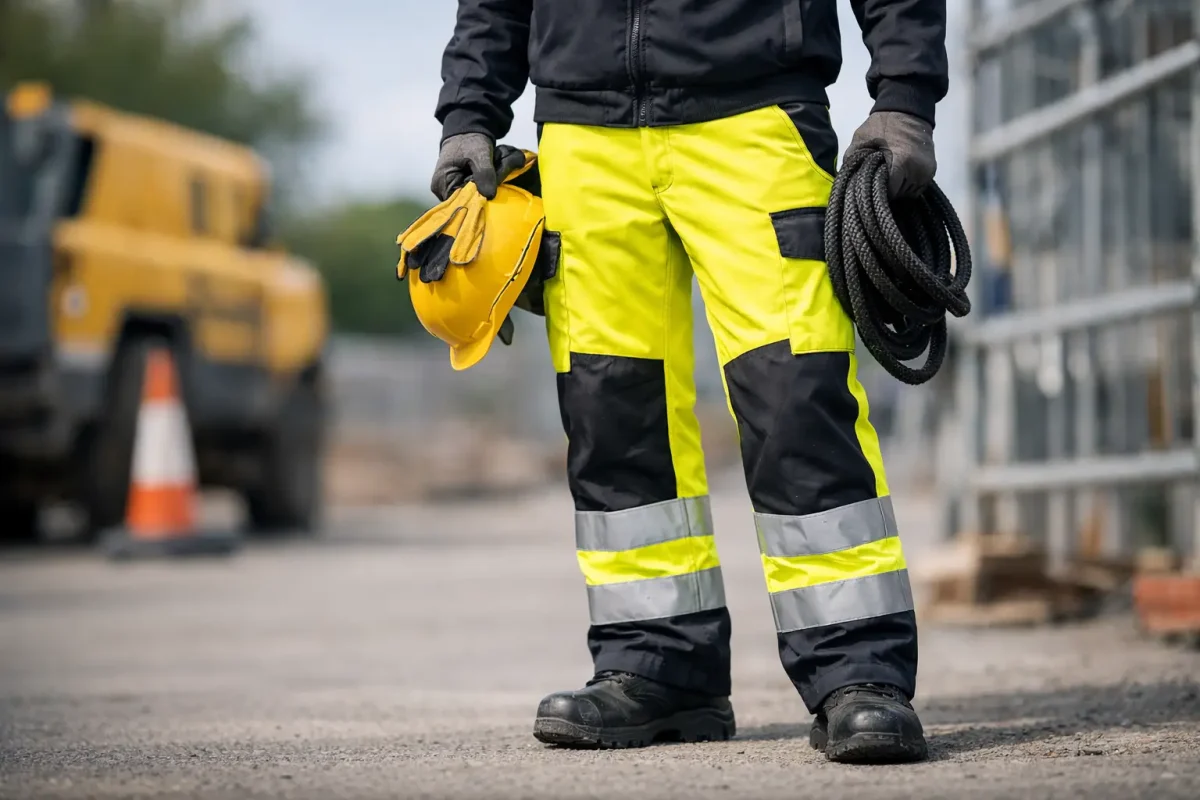
In practical terms, that means you usually get sensible pocket layouts, reflective tape placement that meets the expected standard, and fabric weights that make sense for regular site wear. The brand also offers enough variation to cover different working conditions, from lightweight hi-vis work trousers for warmer months to more substantial options for tougher environments.
If you are buying at scale, this range is one of Portwest’s strongest points. It is easier to standardise uniform issue when one brand offers multiple trouser types in similar colours and fits. That makes replacements simpler and helps keep teams looking consistent.
Fabric, build quality and day-to-day wear
The first thing most wearers notice is that Portwest hi-vis trousers are designed to take regular abuse. On the better-known workwear styles, the fabric has enough weight to feel durable without becoming stiff and awkward. That balance matters. Trousers that are too light wear through quickly, particularly around the knee, hem and seat. Trousers that are too heavy can become restrictive, especially for fitters, drivers and engineers who are constantly moving.
Stitching is usually solid, particularly on stress points around pockets and seams. That does not mean every style performs identically. Portwest has entry-level and more trade-focused options, so the cheaper end of the range can feel more basic in the hand. For light duty or occasional use, that may be perfectly acceptable. For daily wear on construction sites or roadside work, it is worth stepping up a level rather than buying to the lowest price.
The reflective tape is another point worth checking. On Portwest trousers, it is generally well positioned and durable enough for routine laundering, but like any hi-vis garment it will degrade over time. If your team works in dirty conditions and garments are washed heavily, replacement cycles still need managing properly. No hi-vis trouser stays compliant forever just because the brand is reputable.
Fit and comfort – better than basic, but check the style
Fit is where opinions tend to split. Portwest hi-vis trousers are usually cut with practicality in mind, so most styles lean towards a straightforward workwear fit rather than a tailored one. That works well for layering and for movement on site, but some wearers can find certain styles a bit boxy.
For general trade use, that is not necessarily a problem. A slightly roomier fit can be an advantage when kneeling, bending or wearing thermal layers underneath in winter. Problems arise when buyers assume every Portwest trouser fits the same way. They do not. Some are more generous through the leg, some sit better for warehouse and logistics teams, and some are clearly built around more demanding physical work.
Waist comfort is usually decent, particularly on styles with partial elastication or a more forgiving cut. Length can be more variable depending on the exact model, so it is worth checking sizing properly before placing larger orders. This is especially relevant for businesses trying to reduce returns and re-issues.
Weather performance and seasonal use
Not all hi-vis trousers are expected to do the same job. Portwest covers both standard work trousers and weather-resistant overtrousers, so buyers need to separate those uses.
For dry conditions or mixed indoor-outdoor work, a standard hi-vis work trouser is often the better option. It is more comfortable across a full shift and better suited to frequent movement. Portwest performs well here because the garments are built for regular wear rather than occasional emergency use.
For roadside teams, utilities and staff exposed to poor weather for long periods, the waterproof side of the range deserves more scrutiny. Waterproof hi-vis trousers can be useful, but they are always a compromise. You gain protection from rain, but often lose some breathability and ease of movement. That is not unique to Portwest. It is simply the trade-off that comes with waterproof workwear.
If your team spends most of the day in wet conditions, overtrousers are practical to issue alongside standard work trousers rather than relying on one garment to do everything. That tends to improve comfort and extends garment life as well.
Compliance and visibility
Any serious Portwest hi vis trousers review has to look beyond comfort and price. Visibility and compliance are the real reason these garments are being bought.
Portwest generally performs strongly on this front, provided the correct garment is selected for the role. Buyers still need to check the certification and garment class against the working environment. A hi-vis trouser that is suitable for one setting may not be enough for another without the right upper-body garment pairing.
This is where procurement mistakes often happen. Someone orders based on colour and cost, then assumes all hi-vis kit meets the same requirement. It does not. The safer approach is to buy according to the task, the environment and the relevant standard, then compare styles within that bracket.
Fluorescent fabric brightness is usually good when new, especially in yellow and orange options. As with all hi-vis clothing, washing, grime and sunlight gradually reduce effectiveness. That makes garment management just as important as garment selection.
Pockets, knee pad access and practical details
This is one area where Portwest often earns its keep. The better styles tend to include the details that site teams actually use, such as holster pockets, ruler pockets, phone storage and knee pad access.
Those details are not minor. They affect whether a wearer sticks with the trousers or leaves them in the locker. A pair that looks compliant but lacks usable storage can be frustrating for engineers, fitters and tradespeople who need tools and small parts close to hand. Likewise, knee pad pockets matter if the job involves frequent floor-level work.
That said, more features can also make trousers heavier and bulkier. If you are buying for marshals, event crews or warehouse staff, a simpler style may be the better fit. More pockets are only useful if the job calls for them.
Value for money for team purchases
Portwest’s value is not about being the cheapest option on the market. It is about being affordable enough for repeat issue while still delivering a level of durability that makes operational sense.
That is a useful position for SMEs, contractors and larger organisations buying in volume. If trousers are too cheap, they tend to fail early and cost more in replacements, admin and staff complaints. If they are too expensive, standardising across a wider team becomes harder. Portwest usually lands in the workable middle.
For large uniform programmes, consistency is another part of value. If reordering the same style six months later is straightforward, that reduces headaches for stores teams and site managers. It also helps when businesses want garments paired with matching hi-vis tops, jackets or outerwear from the same brand family.
Who Portwest hi-vis trousers suit best
Portwest hi-vis trousers are a sensible choice for construction teams, maintenance engineers, warehouse staff, roadside crews, utilities and event operations where visibility is required but budget control still matters. They also make sense for businesses that want a recognisable workwear brand with enough range to serve different departments.
They may be less suitable where a highly modern athletic fit is a priority, or where extremely specialist protective requirements call for a more niche garment. In those cases, buyers should compare the exact specification rather than assuming a standard hi-vis trouser will cover the brief.
For businesses ordering branded uniforms, the wider uniform plan matters too. Hi-vis trousers often need to sit alongside polos, sweatshirts, softshells or waterproof jackets that create a consistent issue across seasons. That is where an experienced supplier can help narrow the range and avoid mismatched kit. Vivid Promotion often supports buyers in exactly that kind of practical decision-making.
Final view
If you need a straight answer, Portwest hi-vis trousers are a dependable buy for many UK workplaces. They are not perfect for every wearer or every environment, but they are well positioned for businesses that need durability, compliance and sensible pricing without overcomplicating the decision.
The best results come when you match the style to the job rather than buying by brand name alone. Get that right, and Portwest is often a safe, workable choice that keeps teams visible, comfortable enough for the shift, and easier to kit out again when the next order is due.