No products in the basket.
Branded Workwear
How to Wash Embroidered Workwear Safely
13
Jul
Jul
An embroidered logo can outlast the garment around it if the uniform is washed carelessly. Knowing how to wash embroidered workwear safely helps protect thread colour, garment shape and the professional appearance your team needs on site, with customers or in front of patients.
For most organisations, the answer is not a complicated laundry process. It is about separating the right garments, following the care label, using sensible wash temperatures and avoiding habits that damage fibres over time. The same embroidered polo, fleece or hi-vis jacket may be worn every working day, so a small amount of care makes a real difference to replacement costs and consistency across the team.
Start with the garment care label
The care label inside the garment takes priority over general washing advice. It reflects the fabric, coating, reflective tape, flame-resistant treatment or other performance features built into that specific item.
Most standard embroidered polos, sweatshirts, hoodies and fleeces can be machine washed at 30°C or 40°C. A lower temperature is generally the safer choice for preserving colour and limiting shrinkage, particularly on cotton-rich garments. It will also reduce unnecessary wear on embroidery threads.
Healthcare uniforms may need a higher wash temperature to meet your organisation’s hygiene procedure. If this applies, choose garments specified for the required laundering temperature rather than assuming every tunic or scrub can be washed hot. Washing above the label recommendation can fade colours, weaken fibres and affect the shape of the garment.
Hi-vis and protective workwear need particular attention. The fluorescent background fabric and reflective tape are designed to perform to a standard, but repeated harsh washing can reduce visibility. Wash instructions are part of maintaining that performance, not an optional extra.
Turn embroidered workwear inside out
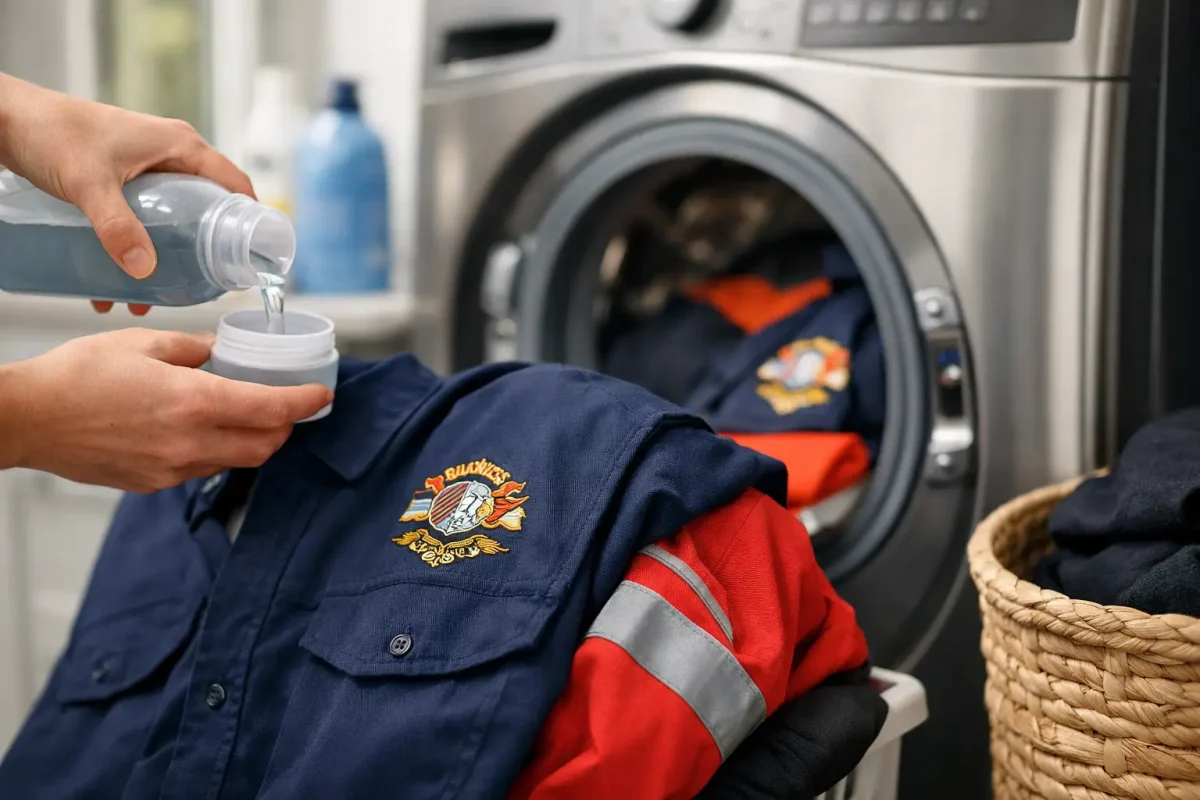
Before loading the machine, fasten zips, buttons and hook-and-loop tabs, then turn garments inside out where practical. This puts less direct friction on the embroidered logo as the drum turns and stops it catching against rougher items.
It is especially worthwhile for polos, hoodies, sweatshirts and softshells with chest embroidery. An embroidered badge is securely stitched, but it can still snag if it repeatedly rubs against exposed zips, work trouser hardware or the inside of a heavy jacket.
Turning garments inside out also helps preserve the outer finish of printed and embroidered uniforms. That matters for teams who need a consistent, presentable look across customer-facing, trade and event roles.
Sort loads by fabric, colour and level of dirt
Do not put every item of workwear into one mixed wash. A mud-covered pair of site trousers, a high-vis waistcoat and a pale healthcare tunic have different laundering needs. Sorting takes a few minutes and prevents one heavily soiled garment from affecting the rest of the load.
Wash darks and brights separately from whites and pale garments, particularly during the first few washes. New navy, black, red and fluorescent workwear can release dye. Use colour-catching sheets if appropriate, but do not treat them as a substitute for sensible sorting.
Keep abrasive items away from embroidered uniform where possible. Heavy canvas trousers, garments with metal fixings, towels and items with exposed hooks can all cause surface friction. Similarly, avoid washing embroidered garments with sharp tools, screws or cable ties left in pockets. Checking pockets is basic housekeeping, but it prevents torn fabric, damaged machines and snagged logos.
For heavily soiled workwear, pre-treat the dirty area rather than automatically raising the whole wash to the maximum temperature. Brush off loose dry mud first, then use a suitable stain treatment on cuffs, knees or collars. Keep treatment away from the embroidery where you can, and test it on an inconspicuous area if the garment is coloured.
Use a mild detergent and avoid harsh additives
A standard, good-quality laundry detergent is normally sufficient. Follow the dosage guidance for your water hardness and the size of the load. More detergent does not mean cleaner workwear. Too much can leave residue in the fabric, making garments feel stiff and potentially affecting breathability.
Avoid chlorine bleach unless the care label specifically allows it. Bleach can strip colour from fabric and thread, weaken fibres and damage hi-vis materials. It is rarely the right solution for branded uniforms.
Fabric conditioner is also not suitable for every garment. It may reduce the effectiveness of moisture-wicking fabrics, affect water-repellent finishes and leave a coating on some technical materials. This is particularly relevant for activewear-style polos, softshell jackets, hi-vis garments and weather-resistant outerwear. Check the label and, if in doubt, leave conditioner out.
Where odour is the issue rather than visible dirt, wash promptly and do not leave damp workwear in a kit bag, locker or washing basket. Bacteria build up quickly in damp fabric. A timely wash at the recommended temperature usually works better than aggressive chemicals later.
Choose a gentle, correctly sized wash
A normal or easy-care cycle is suitable for many embroidered garments. Delicate cycles are useful for lighter knitwear, while tougher items may need a more substantial programme if their label permits it. The key is matching the programme to the fabric rather than treating all uniforms the same.
Do not overload the machine. Workwear needs room to move through the water and rinse properly. An overfilled drum increases friction, leaves detergent behind and can cause creasing that is harder to remove. On the other hand, avoid repeatedly washing one or two items in a large load when a smaller setting is available.
A moderate spin speed is usually sensible for embroidered clothing. Very high spins can be hard on some fabrics and can leave logos looking temporarily puckered. Once the garment has dried, the embroidery will often settle, but there is no benefit in putting unnecessary stress on it.
Washing waterproof and water-resistant garments
Waterproof workwear requires its own approach. Embroidery involves needles passing through the outer fabric, which can create holes and compromise a waterproof membrane or coating. For this reason, printing is often the better decoration choice for waterproof jackets and coats.
If you have embroidered water-resistant outerwear, follow its specific care label closely. Wash it with a detergent designed for technical outerwear where required, avoid conditioner, and reproof the garment only with a treatment compatible with its fabric. Never assume a general-purpose reproofing product will suit every jacket.
Dry embroidered uniforms with less heat
Air drying is the safest all-round option for embroidered workwear. Reshape garments while damp, hang them on a rail or drying rack, and keep them away from direct high heat. This helps retain the fit of cotton-rich garments and is kinder to embroidery, printed areas and technical finishes.
Tumble drying may be allowed on some items, but only use it when the care label permits it. Choose a low heat setting where possible. High tumble-dryer heat can shrink cotton, affect elasticated areas, fade fabric and shorten the life of reflective tape or water-repellent finishes.
Do not dry workwear on a radiator for long periods. It can create uneven heat and make fabric feel harsh. For high-vis and protective garments, direct heat may also affect specialist trims or coatings.
Iron carefully, and never directly over a logo
If ironing is allowed, turn the garment inside out and use the temperature specified on the care label. Never run a hot iron directly over embroidery, printed decoration, reflective tape or coated fabric.
For a creased shirt or polo with a logo on the chest, iron around the embroidery. If needed, place a clean pressing cloth between the iron and the garment. Steam can help with creases on suitable fabrics, but avoid saturating embroidered areas unnecessarily.
Many fleeces, softshells, hi-vis garments and technical jackets should not be ironed at all. Their appearance and performance are better protected by careful washing, reshaping and air drying.
Build a repeatable uniform-care routine
For employers issuing uniforms at scale, clear care guidance prevents avoidable replacements. Include the manufacturer care instruction when uniforms are handed out, especially for hi-vis PPE, outerwear, healthcare clothing and branded garments with specialist finishes. Per-employee packaging makes this easier, as each worker can receive the correct garments and care information together.
It also helps to set a simple standard: wash uniforms after use when dirty or contaminated, deal with stains promptly, and report damaged garments before they become unsuitable for work. This matters where branding, hygiene or visibility is part of the job requirement.
At Vivid Promotion, we advise customers on decoration methods as well as garment choice because the right decision starts before the first wash. Embroidery is durable and professional on many workwear fabrics, while print can be the more practical option for waterproof or highly technical outerwear.
A clean uniform should still look like part of the same uniform six months later. Follow the label, use lower heat where possible and give embroidered areas a little protection in the wash. Those straightforward steps keep logos sharper, garments serviceable and your team ready to represent the business properly.