No products in the basket.
Branded Workwear
Softshell Jacket vs Bodywarmer at Work
09
Jul
Jul
If you’re weighing up a softshell jacket vs bodywarmer for a team order, the wrong choice usually shows up fast – staff get too warm on the move, too cold when static, or end up wearing their own outerwear instead of the branded kit you issued. For workwear buyers, this is less about fashion and more about function, comfort and whether the garment suits the job.
The good news is that both options earn their place. The better choice depends on how your staff work, how long they spend outdoors, what they wear underneath, and how you want the garment branded. A site supervisor doing walkarounds, a delivery driver hopping in and out of a van, and an events crew handling set-up at 6am do not need exactly the same layer.
Softshell jacket vs bodywarmer: the practical difference
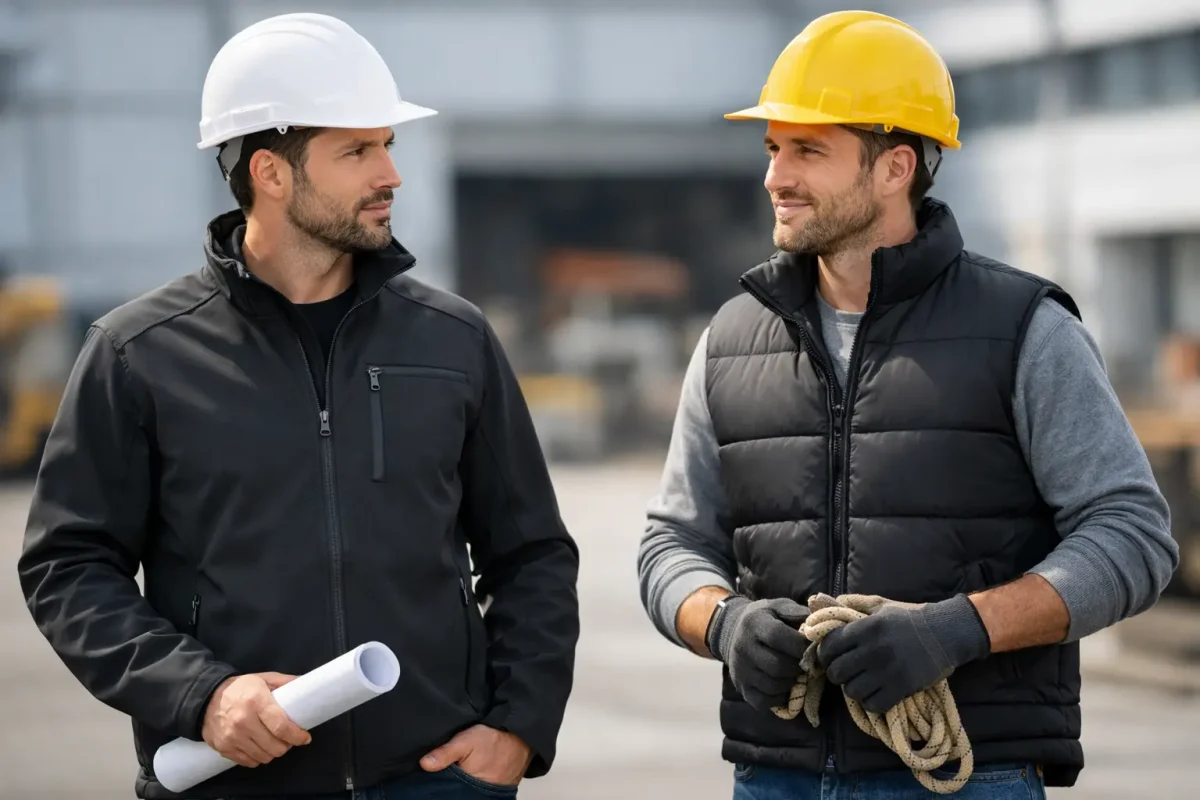
A softshell jacket gives full upper-body coverage, including the arms, and is built to deal with wind and light rain while staying more flexible than a heavy coat. It suits teams who need weather protection without the bulk of a padded jacket. In day-to-day use, it often works as an outer layer for spring and autumn, and as part of a layered system in colder months.
A bodywarmer does one job very well – it keeps the core warm while leaving the arms free. That matters for trades, warehouse teams, drivers and installers who are constantly lifting, reaching or working in and out of vehicles. Less restriction in the shoulders can make a real difference over a full shift.
If your team spends long periods exposed to wind or drizzle, a softshell usually makes more sense. If they generate a lot of body heat through movement and mainly need insulation rather than weather cover, a bodywarmer can be the smarter buy.
Where a softshell jacket works best
Softshell jackets tend to suit customer-facing teams and mixed-role staff because they look tidy, wear well over polos or fleeces, and handle variable conditions. They are a common choice for field engineers, surveyors, supervisors, school staff, facilities teams and sales or service crews who move between indoors and outdoors during the day.
The main advantage is balance. A good softshell is breathable enough for active work, but still offers a level of wind resistance and shower protection that a fleece or bodywarmer cannot. That makes it useful when staff do not have the option to keep changing layers.
There is also a presentation point. If your team is front-of-house, visiting clients or working on public sites, a softshell often gives a more complete uniformed appearance. It looks like a finished outer garment rather than an add-on layer.
That said, not every softshell is right for every environment. In very cold conditions, it may not provide enough insulation on its own. In heavy rain, it is not a substitute for a proper waterproof jacket. If compliance or weather exposure is a bigger concern than comfort and appearance, you may need to step up to heavier outerwear.
Branding on softshells
Branding needs a bit of thought with softshell fabrics. Embroidery can work well on many softshell jackets, especially for chest logos, but garment construction and water resistance matter. Where a jacket has a more waterproof finish, needle holes from embroidery may not be ideal. In those cases, print can be the better option. The right method depends on the garment specification, logo detail and where the branding will sit.
Where a bodywarmer works best
A bodywarmer is often the more practical option for active roles. It keeps the torso insulated without adding bulk at the elbows or shoulders, so it is popular with warehouse staff, drivers, tradespeople, installers, agricultural teams and event crews during set-up and breakdown.
If someone is loading, carrying, climbing in and out of a vehicle or working with tools at chest height, a full jacket can sometimes feel excessive. Sleeves get in the way, cuffs pick up dirt, and the wearer may overheat quickly. A bodywarmer avoids most of that.
It also layers easily over sweatshirts, hoodies and fleeces. For organisations managing uniforms across different roles, that flexibility can help. Staff can wear the same branded mid-layer underneath and add a bodywarmer when needed, rather than switching to a completely different outerwear system.
The trade-off is obvious enough – arms are exposed. On windy sites or for staff standing still outdoors, that can become uncomfortable quickly. Bodywarmers are useful in cool conditions, but they are less effective when the weather turns poor or when staff are waiting, supervising or greeting customers outside.
Branding on bodywarmers
Bodywarmers are usually straightforward for branding, but the decoration method still depends on fabric and padding. Embroidery often works well for left chest logos on fleece-lined or padded styles, provided the garment structure supports it neatly. For some fabrics, print gives a cleaner result, especially if the logo has finer detail or larger placement is needed on the back. As with any uniform order, the branding method should follow the garment, not the other way round.
Softshell jacket vs bodywarmer for different job roles
For construction and trade teams, the answer often comes down to task type. If the job involves constant movement, lifting and changing environments, a bodywarmer is frequently the better everyday layer. If staff are outside for longer periods, exposed to wind, or expected to present a more uniform look on client sites, softshell jackets usually earn their keep.
For drivers and logistics teams, bodywarmers are often a strong option. They work well in cabs, do not bunch at the arms, and can be thrown over a sweatshirt for stop-start rounds. But if drivers are handling kerbside deliveries in poor weather, a softshell gives better cover and may reduce the need for separate outerwear.
For event crews, either can work depending on season and shift pattern. Build crews moving equipment at pace may prefer bodywarmers. Front-facing staff outdoors for arrivals, stewarding or registration will often be better served by softshells because they look smarter and offer more weather protection.
For schools, estates teams and facilities staff, softshells tend to be the safer all-rounder. The work is varied, conditions change across the day, and the jacket gives a consistent appearance across departments. For healthcare or care environments, bodywarmers may suit maintenance, transport or support teams, but clinical roles usually need more specific uniform choices.
Cost, wear frequency and order planning
Price matters, but so does wear rate. A cheaper garment that staff leave in the van or locker is not saving you money. The best value usually comes from choosing the layer people will actually wear most often.
Softshell jackets can carry a slightly higher unit cost than basic bodywarmers, especially where fabric performance is stronger. But they may reduce the need for multiple separate layers in shoulder seasons. Bodywarmers can be a cost-effective addition to a wider uniform issue, particularly when paired with branded hoodies, fleeces or sweatshirts.
For larger rollouts, think beyond the item itself. Consider whether the garment needs to work across several departments, whether sizing needs to accommodate layering underneath, and whether your branding method will stay consistent across different garment types. If you are issuing by employee rather than in bulk, getting those details right before production avoids sorting problems later.
Which should you choose?
If your team needs one versatile outer layer for mixed weather, public-facing use and broader coverage, choose a softshell jacket. It is generally the stronger all-round option for staff who split time between indoors and outdoors and need to stay presentable while working.
If your team is active, hands-on and likely to overheat in full sleeves, choose a bodywarmer. It is especially useful where freedom of movement matters more than full weather protection.
There is also a sensible middle ground. For some organisations, the best answer is not softshell jacket vs bodywarmer as an either-or decision, but a role-based uniform plan. Give supervisors, front-facing teams and outdoor staff softshell jackets. Issue bodywarmers to drivers, warehouse staff or trades who need flexibility. That usually gives better wear compliance than trying to make one garment cover every job.
A workwear order goes further when the garment matches the shift, the season and the way people actually work. Get that right, and the branding looks better, the kit gets worn properly, and the uniform does the job it was bought to do.