Branded Workwear
Logo Printing on Workwear Guide for Buyers
Mar
When a 50-piece order turns up with cracked chest prints, logos sitting too low, or sizes mixed in one box, the problem is not just the decoration. It is the buying process. This logo printing on workwear guide is written for the people who have to get uniforms ordered, approved, delivered and issued without wasting site time or reordering stock.
For most organisations, printed workwear needs to do three jobs at once. It has to carry the brand properly, suit the garment and stand up to the way the team actually works. A hoodie for college leavers, a softshell for field staff and a hi-vis vest for site use all need a different decision, even if the same logo goes on each one.
What logo printing on workwear actually covers
In simple terms, logo printing means applying your artwork to a garment surface without stitching it in. That can include transfer print, vinyl applications and screen-style methods depending on the garment, quantity and design. The best option depends on the material, the level of detail in the logo, where the logo will sit and how hard the garment will be used.
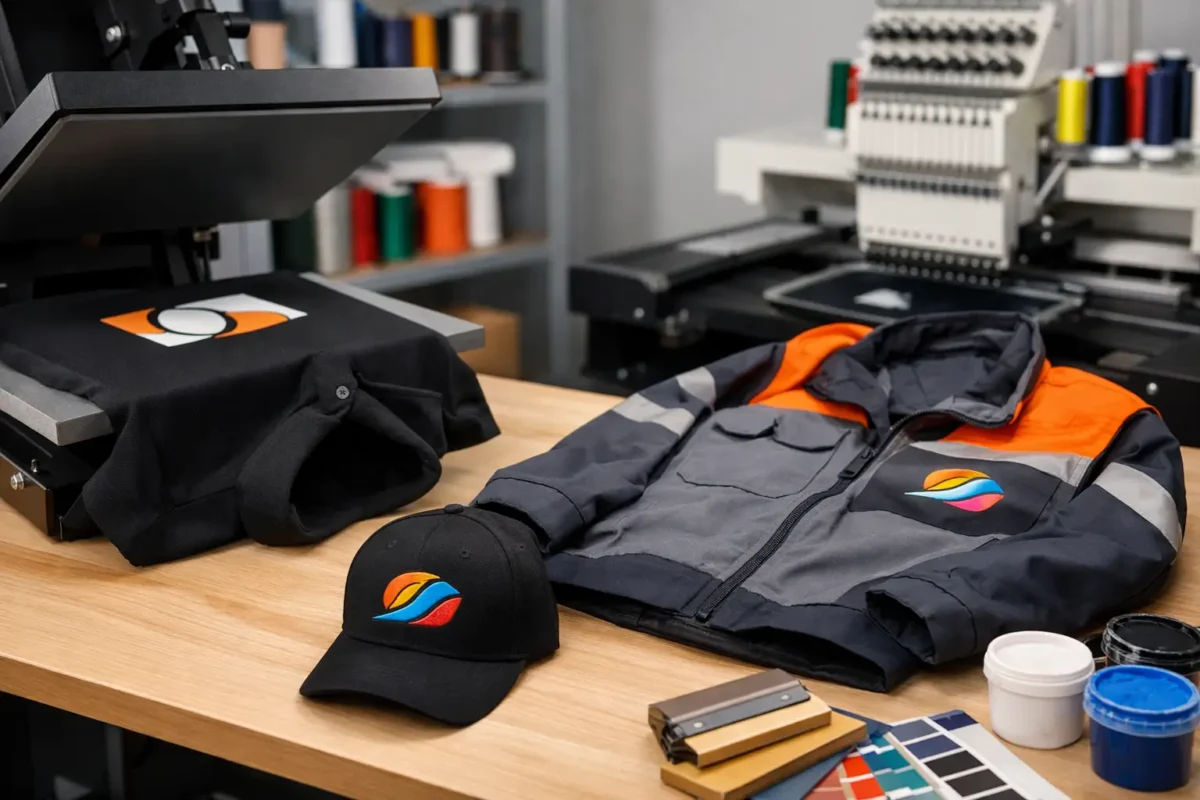
Print is often the right choice where you need clean detail, larger branding or names and numbers added quickly. It is also the practical route for garments where embroidery is a poor fit. Waterproof outerwear is a good example. Stitching through some fabrics can create needle holes, so print can be the safer option if you want to protect the garment’s performance.
That said, print is not automatically better than embroidery. If a polo shirt is worn daily in a front-facing role and the logo is small and simple, embroidery may still be the stronger long-term choice. The key is matching the decoration method to the garment and the job, not forcing one process across every item in the order.
How to use this logo printing on workwear guide
Start with the wearer, not the logo. A warehouse picker, care worker, site supervisor and event team member all put different strain on clothing. Once you know the working environment, the garment choice becomes clearer, and then the print method follows.
For T-shirts, polos, sweatshirts and hoodies, print works well when you want bold branding on the chest, back or sleeve. It handles larger areas better than embroidery and usually keeps the garment lighter and more flexible. This matters for promotional teams, event crews and school leavers ranges where impact is often part of the brief.
For softshells, coats and some technical outerwear, it depends on the fabric face and end use. Some outerwear takes print well and gives a smart result. Some is better with embroidery on specific positions only. If weather resistance or performance matters, the garment construction should lead the decision.
For hi-vis clothing, visibility standards come first. The logo position and size must not undermine reflective tape placement or reduce compliance. This is where experienced garment selection saves time. A good-looking print is no use if it creates issues on site.
Choosing the right print method
Most buyers do not need a lesson in machinery. They need to know what will hold up, look right and fit the budget.
Heat-applied transfer printing is a common choice for workwear because it produces sharp detail and works well for multicolour logos, smaller runs and mixed garment orders. It is useful when you need names, departments or role identifiers added without setting up a large production run. For many businesses, that flexibility is more valuable than chasing the cheapest unit cost.
Vinyl-style applications can suit simple lettering and numbering, particularly for teamwear, temporary campaigns or short-run event use. They are less suited to highly detailed logos with fine gradients or intricate edges.
Screen-based printing comes into its own on larger volumes where the same design is repeated at scale. If you are ordering a substantial quantity of identical T-shirts for a promotion or event, this can be an efficient route. The trade-off is setup. For small mixed orders, it is often less practical.
The artwork itself matters as much as the method. Fine lines, tiny text and low-resolution files cause problems long before the garment reaches production. If your logo was pulled from a website header or an old PDF, it may not be suitable as supplied. Getting the logo converted properly into print-ready artwork avoids fuzzy edges, poor spacing and inconsistent colour across repeat orders.
Garment choice affects print quality more than most buyers expect
A smooth cotton T-shirt and a textured fleece do not behave the same way. Neither does a budget hi-vis vest compared with a heavyweight hoodie. Fabric composition, weight and surface finish all influence how well a print sits and how long it lasts.
Cotton-rich garments generally give a straightforward print surface and are popular for everyday branded basics. Polyester and performance fabrics can also print well, but they need the right process and temperature control. Outerwear and coated fabrics require more care again.
This is why one approval sample should not be treated as proof for every garment in the basket. If you are ordering polos, hoodies and bodywarmers together, expect the finish to vary slightly because the base materials vary. Consistency comes from choosing suitable garments within each category, not assuming one logo file will behave identically on every fabric.
Position matters too. Left chest is standard for a reason – it is visible, easy to issue across mixed departments and generally cost-effective. Large back prints work well for trades, logistics and event teams who need clear identification from a distance. Sleeve branding can be useful, but only if the garment shape and use justify it.
Common mistakes that slow orders down
Most delays come from preventable issues. The first is unclear artwork approval. If nobody has confirmed size, placement, colour and garment selection, production stops while questions are chased.
The second is buying on unit price alone. A cheap sweatshirt with a poor print surface, inconsistent sizing or weak wash performance usually costs more over time because staff stop wearing it, replacements are needed sooner and the brand looks uneven across the team.
The third is treating fulfilment as an afterthought. Large uniform orders often fail at the point of issue, not production. If all garments arrive bulk packed and unsorted, someone in the office or stores team has to break down boxes, match sizes and redistribute everything manually. That creates avoidable admin, especially across multiple sites or departments.
A better process is to think about allocation before the order is placed. If garments can be packed by employee, team or department, rollout is faster and there is less room for error. That matters for new starter packs, healthcare teams, event staffing and any multi-location business.
Buying printed workwear for repeat use
If you expect to reorder, build the order properly from day one. Standardise the garments, lock the logo positions and keep an approved artwork record. That gives you a repeatable setup instead of starting from scratch each time someone needs more polos or another depot comes on board.
It also helps to buy through a supplier that can support different ordering routes without changing the end result. Some buyers shop by garment type, some by profession, some by department or uniform bundle. The important part is that the branding stays consistent across those routes.
For organisations with mixed needs, this matters a lot. You might need printed T-shirts for an event team, embroidered fleeces for supervisors and healthcare tunics packed by department in the same wider programme. The process has to handle complexity without making the buyer manage every detail manually.
That is where an operational supplier is worth more than a basic print shop. Vivid Promotion supports branded workwear across garment categories, hi-vis ranges and uniform types, with fulfilment options that reduce sorting and issue time for employers. For many buyers, that part of the service is what keeps repeat ordering under control.
When print is the right choice and when it is not
Print is a strong option when your logo has multiple colours, fine detail or needs to cover a larger area. It is also useful when you need fast personalisation or want to avoid stitching through certain fabrics.
It may be less suitable where garments face heavy abrasion, high-temperature laundering or constant industrial wear, especially if the chosen print method is not matched properly to the application. In those cases, garment selection and decoration advice need to be handled together.
The best buying decision is rarely about what is cheapest or most popular. It is about what will still look right after regular use, repeated washing and day-to-day handling by the people wearing it.
If you are ordering branded uniforms, ask the simple questions first. What does the team do in the garment, how often is it worn, how is it washed, and who is going to sort and issue it when it arrives? Get those answers straight, and the print decision becomes much easier.
Good workwear branding is not complicated when the basics are handled properly. Choose the right garment, use clean artwork, match the print method to the job and make sure delivery is set up for the way your business actually operates.