No products in the basket.
Branded Workwear
Are Printed Logos Waterproof on Workwear?
29
Sep
Sep
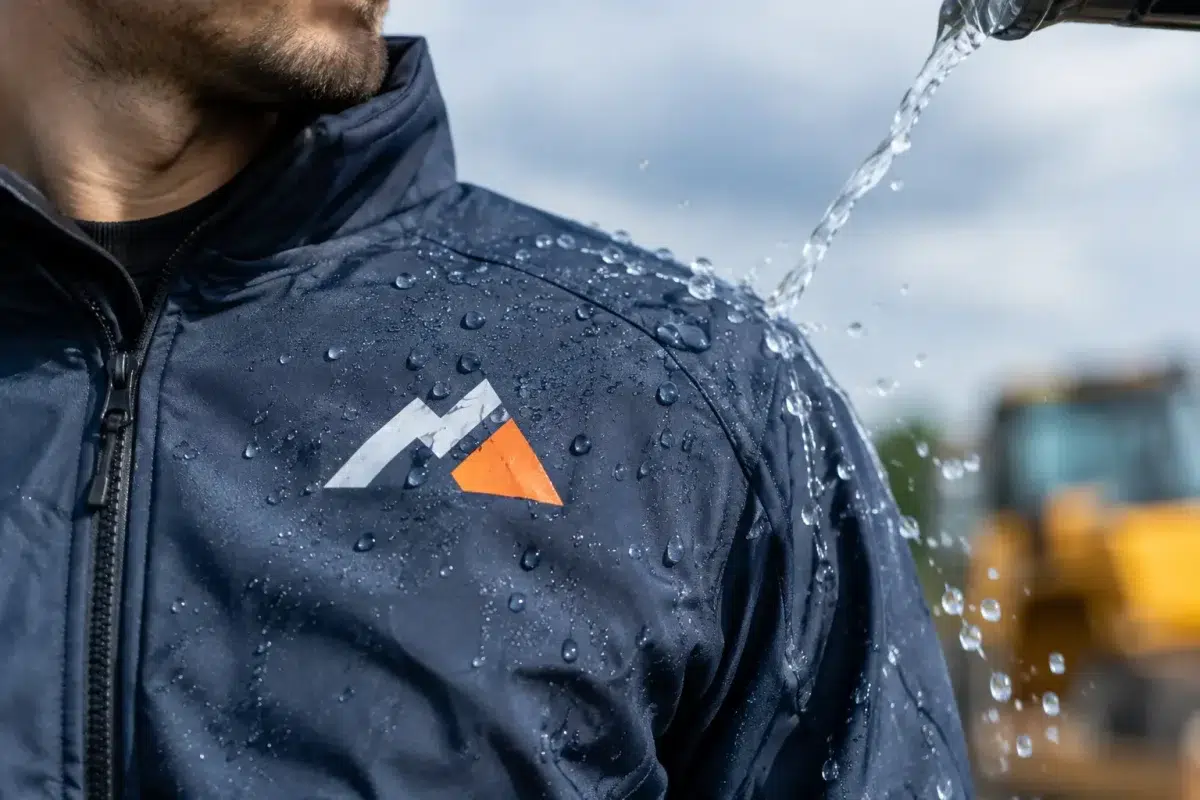
A logo can look sharp on day one and still be the wrong choice for a rain jacket. So, are printed logos waterproof? The print itself is usually highly water-resistant once correctly cured or applied, but that does not automatically mean the finished garment remains fully waterproof. The garment fabric, membrane, seams, decoration method and care routine all matter.
For UK teams working outdoors, this distinction is practical. A site supervisor, delivery crew or events team needs branding that stays legible through rain, washing and regular wear without compromising the protection the garment was bought to provide.
Are Printed Logos Waterproof in Practice?
Most garment prints form a solid layer on the surface of the fabric. Screen print inks, vinyl transfers and many digital transfers do not absorb water in the way an unprinted cotton fabric does. Rain will generally bead or run over the printed logo rather than pass through it.
However, a printed logo is only one small area of a finished garment. Waterproof performance is determined by the outer fabric, waterproof membrane or coating, taped seams, zip construction and garment design. Printing a logo onto a waterproof jacket does not improve its waterproof rating, and a poorly chosen application process can affect the fabric around the print.
The right answer is therefore: printed logos are usually water-resistant, but the full garment is only waterproof if it was designed and maintained as waterproof clothing.
Why Print Is Usually Better Than Embroidery on Waterproof Jackets
Embroidery is an excellent option for polos, fleeces, sweatshirts, hoodies and many corporate uniforms. On waterproof outerwear, it needs more consideration. Every embroidered logo requires needles to pass through the outer fabric. Those needle holes can puncture a waterproof membrane or coating and create a route for water to enter.
A printed logo sits on the surface instead. There are no needle holes, making print the safer default for waterproof coats, rain jackets and some softshells. This is particularly relevant when uniforms are expected to perform in prolonged rain rather than occasional showers.
That does not mean every printed finish suits every jacket. Heat-applied transfers need pressure and temperature to bond properly. Some waterproof fabrics, seam tapes and coated materials have limits on how much heat they can take. A supplier should check the garment manufacturer’s decoration guidance before production, rather than treating all outerwear as the same.
The Garment Fabric Matters as Much as the Print
Workwear labelled as showerproof, water-resistant and waterproof is not interchangeable. Choosing the correct garment first prevents most disappointment later.
A showerproof softshell may be suitable for staff moving between vehicles, entrances and short outdoor jobs. It can carry a printed chest or back logo well, but it is not intended to keep someone dry through sustained rain. A properly waterproof jacket with taped seams and a rated membrane is the better choice for construction, security, roadside work, outdoor events and other exposed roles.
Fabric stretch is another consideration. Stretchy softshells move with the wearer, while a large print moves less. An oversized back print on a highly elastic area can eventually crack, lift at the edges or feel restrictive. Keeping the logo to a sensible size and positioning it on a more stable area, such as the left chest or upper back, gives a better result.
Textured fabrics can also affect detail. A logo with fine lines, small type or closely spaced elements may need simplifying for a clean result on ripstop, heavily textured polyester or padded outerwear. Good logo conversion is not cosmetic admin. It helps ensure that the finished branding remains readable from normal working distance.
Choosing the Right Print Method for Outdoor Uniforms
There is no single best print method for every waterproof garment. The right choice depends on the fabric, logo artwork, quantity, position and how the uniform will be used.
Screen printing can provide a durable, bold result for larger runs on suitable fabrics. It works particularly well for simple designs with solid colours, although it is not always appropriate for every coated outerwear fabric.
Heat transfers are often a practical option for waterproof jackets because they can reproduce detailed logos and small text cleanly without stitching through the fabric. The transfer type, adhesive and application settings must suit the material. A quality transfer properly applied to a compatible garment should withstand normal workplace use and washing.
Digital transfer printing is useful where logos include multiple colours, tonal detail or short-run requirements. It can be ideal for departments, branches or teams that need different names or artwork. As with all transfer applications, the garment must be checked for heat sensitivity and the print should not be placed over seams, zips, reflective tape or areas that need to flex heavily.
For a simple one-colour logo on a non-waterproof fleece or sweatshirt, the decision may be mainly about look and order volume. For a rain jacket, the technical compatibility of the garment comes first.
Will Washing Make a Printed Logo Less Waterproof?
Normal washing does not usually make a correctly applied print porous. A durable print should remain intact through repeated washes when the care label is followed. Problems tend to come from excessive heat, harsh chemicals, abrasion and incorrect washing rather than water itself.
Wash branded outerwear inside out where possible, use the temperature stated on the garment label and avoid aggressive detergents or bleach. Do not tumble dry unless the manufacturer specifically permits it. High heat can damage transfer adhesives, affect print flexibility and reduce the performance of waterproof coatings.
Waterproof garments also need their water-repellent outer finish maintained. Over time, dirt, oil and repeated washing can stop water beading on the face fabric. The membrane may still prevent water getting through, but the outer layer can wet out and feel cold or heavy. Reproofing products designed for technical outerwear can restore water repellency, provided they are suitable for the jacket and used according to the manufacturer’s instructions.
If a logo starts cracking or peeling, it is not usually a sign that rain has damaged it. It is more likely to indicate an unsuitable print method, incorrect application, excessive heat during laundering or wear on a high-flex area.
Hi-Vis and Waterproof Clothing Need Extra Checks
For hi-vis waterproof jackets, branding needs to be planned around visibility requirements. A large print can cover fluorescent background material or reflective tape, which may affect the garment’s certification and its effectiveness on site.
Logo position, size and colour should be considered before ordering. A small chest logo or a controlled upper-back print may be suitable on certain garments, but decoration must not interfere with reflective bands, mandated visibility areas or safety features. This is especially important where staff work near traffic, plant, loading areas or in low-light conditions.
The same applies to PPE and protective workwear more broadly. Branding should never compromise the garment’s intended protection. If compliance is central to the role, select a garment and decoration position designed to accommodate a logo, rather than adding branding as an afterthought.
How to Order Waterproof Workwear That Performs
Start with the working conditions. Consider whether the team needs a lightweight shower layer, an insulated winter coat, a breathable shell or a waterproof hi-vis jacket. Then confirm the logo position and decoration method against that particular garment.
Provide the best available version of your logo, ideally a vector artwork file where available. This gives the production team a clean starting point for print-ready artwork and helps avoid fuzzy edges, lost detail or unsuitable colour reproduction. If uniforms are being issued across several roles, it can be sensible to use print on waterproof outer layers and embroidery on fleeces, polos and sweatshirts underneath for a consistent brand appearance.
For larger orders, think about how the clothing will be issued as well as how it will be decorated. Sorting garments by employee, department or size before delivery can save time when a new contract starts, a school leavers order arrives or a site team is being kitted out quickly. Vivid Promotion can help match the garment, branding method and packing approach to the job rather than supplying a one-size-fits-all answer.
A waterproof jacket is a piece of working equipment first and a branding surface second. Choose a compatible print, keep it clear of critical seams and safety features, and follow the care label. Your logo should remain clear in bad weather without asking the garment to do a job it was never designed to do.