No products in the basket.
Branded Workwear
Exhibition Pop Up Banners That Work
15
Mar
Mar
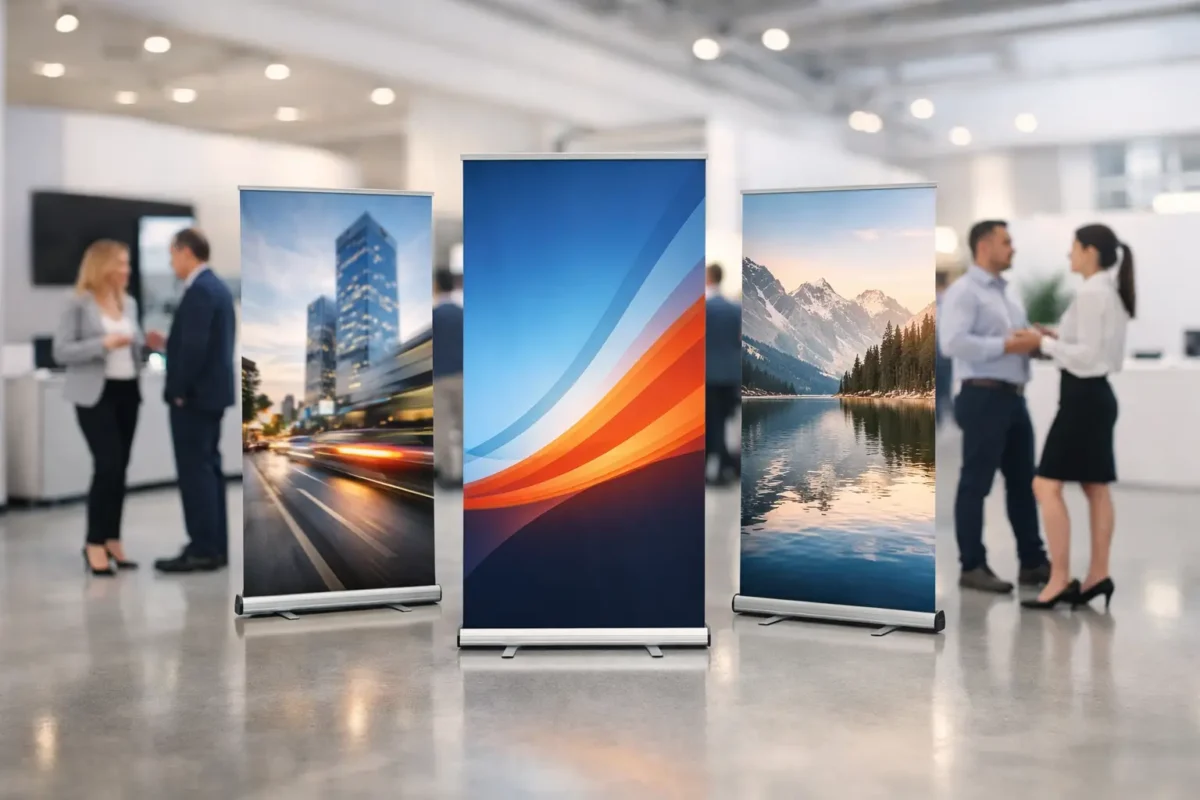
A pop up banner usually gets about three seconds of attention before someone decides whether to stop or keep walking. That makes the print quality, message and setup more important than most buyers expect. If you are ordering for an exhibition, trade stand, school event or recruitment fair, the banner is not a background extra. It is one of the first things people judge.
That is why exhibition pop up banner printing needs a practical approach. The best result is not about cramming every product line, logo variation and phone number onto one panel. It is about making sure the right message is readable at distance, the hardware is reliable, and the finished banner turns up on time and ready to use.
What good exhibition pop up banner printing actually needs to do
At an exhibition, your banner has a job. It should identify who you are, tell people what you do and support the person standing on the stand. If it tries to do too much, it usually fails at all three.
A good banner works from a few metres away. Your company name or offer should be clear before anyone is close enough to read smaller text. That matters in busy halls where visitors scan several stands at once. If your design only makes sense when someone is right in front of it, you have lost part of its value.
Print quality matters as well, but not in isolation. A high-resolution image printed on a poorly designed layout still looks weak. Equally, a sensible design can be let down by artwork supplied at the wrong size, stretched logos or colours that do not reproduce cleanly. Exhibition pop up banner printing is part artwork preparation, part material choice and part logistics.
Start with the stand space, not the artwork
One of the most common mistakes is designing the banner before checking where it will sit. Exhibition venues vary, and so do shell schemes, table setups and aisle widths. A standard pull up banner may work well for a compact stand, while a wider pop up display can suit a larger back wall. The right choice depends on the footprint and how people will move around the space.
If your stand is narrow, a banner that sits behind a table may need to carry the main message on its own. If the stand is wider, you may be better using a larger display as the backdrop and keeping individual banners focused on one service or one audience. There is no point ordering a larger format if half of it will be hidden behind furniture or blocked by stock.
This is also where practical setup matters. Busy event teams do not want complicated hardware, missing poles or graphics that crease in transit. A display that looks impressive in a mock-up but adds pressure on the morning of an event is not always the best buying decision.
The design decisions that make the biggest difference
The strongest exhibition banners tend to be simple. That does not mean plain. It means every element earns its place.
Your headline should be short enough to read in a glance. In most cases, that will be your core service, product category or a direct benefit. A logo on its own is rarely enough unless your brand is already widely recognised. Visitors need context quickly.
Images need to support the message rather than compete with it. If you use people, products or workplace scenes, they should be sharp and relevant. Pixelated photography or generic stock imagery tends to make a stand look rushed. For organisations with a practical, trade-facing audience, clear product or service visuals usually perform better than decorative graphics.
Text lower down the banner is where many layouts become cluttered. Contact details, web addresses, accreditations and secondary messages all have a place, but not at the expense of readability. If someone needs to stop and study the banner to work out what you do, it is carrying too much.
Artwork quality is where many banner jobs go wrong
The print can only be as good as the file supplied. That sounds obvious, but it still causes delays and disappointing results.
For exhibition pop up banner printing, logos should ideally be supplied as vector files. That keeps edges clean and allows scaling without losing quality. If a logo only exists as a low-resolution screenshot or an old image copied from a website, it may look acceptable on a laptop screen but poor once printed at full size.
Fonts, image resolution and bleed areas also need checking before production. A supplier should flag problems early, but buyers can save time by sending the best available files from the outset. If there are brand guidelines covering colour references and logo spacing, those are worth supplying too. They help maintain consistency across banners, printed clothing, promotional items and wider display materials.
That consistency matters more than some buyers think. If your team is turning up in branded workwear and the stand graphics look like they came from a different business, the overall presentation suffers. The strongest event setups feel joined up.
Material and hardware choices are not all equal
Not every banner system is built for the same level of use. If you attend one local event per year, a basic unit may be enough. If your sales team is travelling regularly, using banners across multiple sites and packing them into vans each week, durability becomes a bigger factor.
The print media itself affects finish and longevity. Some materials give a flatter appearance with less curl at the edges. Others may be more budget-friendly but less suitable for repeated use. There is always a trade-off between cost and expected lifespan, so the right option depends on how often the display will be used.
The same applies to hardware. A sturdier base and better mechanism usually cost more, but they can save money over time if the banner is part of a regular events programme. For one-off campaigns, that extra spend may not be necessary. For repeat exhibitions, it often is.
Think about transport, storage and lead times early
A banner is no use if it arrives late, damaged or with no time left to correct artwork. Exhibition deadlines are fixed, and event organisers do not move them because a print job slipped.
That is why lead time should be part of the buying decision from day one. If artwork is still being debated a week before the event, options become more limited. Production slots tighten, delivery windows shorten and there is less room to fix file issues.
Storage and transport matter as well. A display that needs careful handling may not suit teams moving between venues in pooled company vehicles or loading equipment alongside stock and literature. A proper carry case, straightforward assembly and reliable packaging all reduce headaches on event day.
For organisations ordering multiple branded items at once, it also helps to work with a supplier that understands coordinated fulfilment. If banners, event clothing and other display materials are being produced together, the process is easier to manage and less likely to create last-minute gaps.
When one banner is enough, and when it is not
There is a tendency to ask one banner to do everything. Sometimes that is fine. For a reception area, a school open evening or a small networking event, one clear display may be all you need.
At a larger exhibition, it often makes more sense to split the message. One banner can establish who you are. Another can focus on a service line, sector specialism or key product group. This is especially useful if your organisation serves more than one audience. Trying to speak to construction buyers, healthcare teams and education customers on one panel usually creates clutter rather than clarity.
The same principle applies to campaigns. If the event has a specific goal, such as recruitment, product launch or lead generation, the banner should reflect that purpose instead of acting as a generic company poster.
A practical buying approach saves time later
The most efficient banner orders tend to start with a few clear questions. Where will it be used, how often will it travel, what message needs to land first, and what artwork is actually available in print-ready format? Once those points are clear, the specification becomes easier.
For UK organisations buying under time pressure, straightforward advice is usually more useful than endless options. You need to know whether the artwork will print cleanly, whether the hardware suits repeat use, and whether the order can be produced and delivered within the event timeline. That is the real value in working with an experienced print and branding supplier.
If you are already ordering branded clothing, display items or wider event materials, it also makes sense to keep presentation consistent across the full setup. At Vivid Promotion, that joined-up approach matters because event branding does not stop at the banner stand.
A well-printed banner will not rescue a poor event plan, but it will make your stand easier to spot, easier to understand and easier to trust. For most exhibitors, that is exactly what it needs to do.