Branded Workwear
Custom Workwear for Plumbers UK
Apr
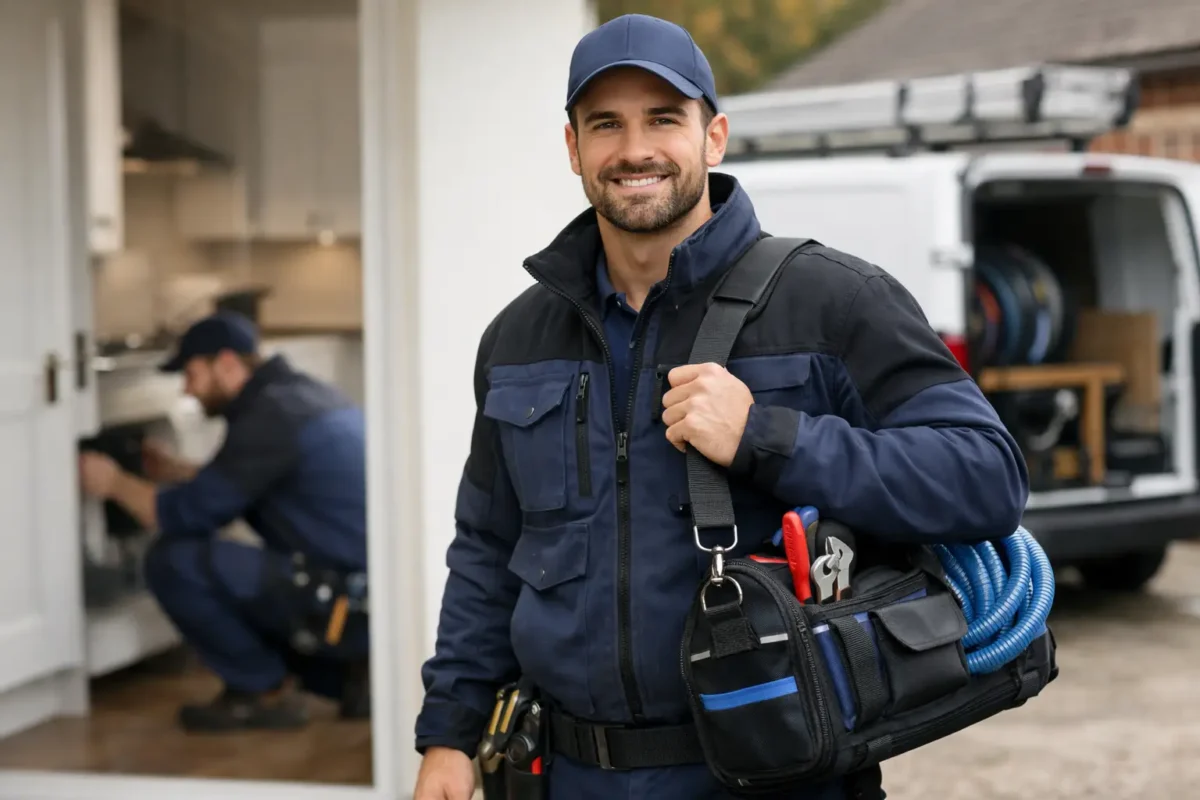
A plumber’s kit gets judged twice – first on site, then after a few hard washes. If your team’s uniform loses shape, holds stains or makes simple jobs more awkward, it stops being workwear and starts being a problem. That is why custom workwear for plumbers UK businesses buy needs to do more than carry a logo. It has to stand up to daily graft, present the business properly and arrive ready for use.
For plumbing firms, facilities teams and larger contractors, the right uniform is usually a mix of practicality, consistency and straightforward ordering. The challenge is that plumbers do not all work in the same conditions. One team might spend the day on domestic callouts, another on first fix in new-build housing, and another in commercial plant rooms where extra visibility or outer layers make more sense. Good buying decisions come from matching garments to the job rather than trying to force one item to cover every situation.
What plumbers actually need from branded workwear
Plumbing work is physical, messy and unpredictable. Uniforms need to cope with kneeling, stretching, lifting, temperature changes and contact with dust, sealants, water and general site dirt. A lightweight branded polo might be fine for quoting, surveys and indoor maintenance, but it will not replace a tougher layer for installation work or cold-weather callouts.
That is where a proper range matters. T-shirts and polos suit warmer conditions and can work well as base branded items across a team. Sweatshirts, hoodies, fleeces and softshells are the usual next step when extra warmth or weather protection is needed. For some businesses, bodywarmers are especially useful because they keep the core warm without restricting arm movement when working under sinks, behind appliances or in service cupboards.
Trousers matter just as much as tops. Plumbers spend a lot of time bending and kneeling, so fit and durability are not minor details. Work trousers with practical pockets help keep tools and small parts close to hand, but there is always a balance. Too many bulky pockets can catch or get in the way in tighter domestic spaces. It depends on the type of work your team does most often.
Choosing custom workwear for plumbers UK jobs
When buyers look at custom workwear for plumbers UK requirements usually come down to three questions. Will it last, will it look consistent, and will it suit the working day?
Durability starts with fabric weight and garment construction. Budget garments can be useful for short-term promotions or occasional wear, but for day-to-day plumbing work they often become a false economy. If staff are replacing faded polos or stretched sweatshirts too often, the cost soon catches up. Better-value buying usually means selecting garments built for repeat wear and repeat washing.
Presentation is the next issue. A plumbing business does not need flashy uniform design, but it does need a clean, consistent look. Customers notice whether engineers turn up looking organised. Site managers notice too. Matching garments across the team, with logos applied clearly and positioned properly, makes the business look established and reliable.
Suitability is where many orders either work well or go wrong. A domestic plumbing and heating company may want smart polos, zipped fleeces and softshell jackets for customer-facing visits. A contractor working mainly on construction sites may need hi-vis tops, tougher outerwear and garments that sit better alongside PPE requirements. Buying should reflect how the team actually works, not just what looks good on a product page.
Embroidery or print for plumbers’ uniforms?
For most plumbing uniforms, embroidery is the standard choice for logos on polos, sweatshirts, hoodies, fleeces and many jackets. It gives a professional finish, holds up well in regular wear and suits trade businesses that want branding to stay sharp over time. A stitched chest logo on a polo or sweatshirt is simple, effective and hard-wearing.
Print also has a clear place. If you need a larger back logo, contact details or higher-detail artwork, print may be the better option. It can also be the more practical route on certain garments where embroidery is less suitable. Waterproof items are the obvious example. Stitching through a fully waterproof layer can create needle holes, so print is often the safer recommendation when you want to preserve the garment’s weather resistance.
This is not a case of one method always being better. It depends on the logo, the garment and the use. A lot of plumbing firms end up with a mixed approach – embroidered polos and fleeces for everyday uniform, printed outerwear where the garment construction makes that the better choice.
The best garment mix for plumbing teams
Most plumbing businesses do not need one uniform. They need a workable set of options that staff can rotate depending on weather, site rules and job type.
A common starting point is a core bundle of T-shirts or polos for daily wear, plus sweatshirts or hoodies for colder conditions. Add a fleece or softshell for engineers who are regularly outdoors or moving between jobs, and the team has a practical base wardrobe. Where staff attend customer homes, a softshell often gives a cleaner, more professional appearance than a heavier work jacket.
For firms covering site-based installation work, hi-vis may need to be built into the order from the start. That could mean hi-vis polos, sweatshirts, vests or jackets depending on the site standard. It makes sense to keep branding consistent across both standard and hi-vis ranges so the team still looks like one business, even when garment types differ.
Trousers and coveralls depend more heavily on role. Some plumbers prefer separate trousers and tops for flexibility. Others, especially in dirtier or more specialised environments, may need coveralls as part of the issue. There is no universal answer here. The better approach is role-based buying rather than forcing the same kit on office visitors, domestic engineers and site installers.
Ordering for one plumber is easy. Ordering for a team is where it gets serious
This is the part buyers often underestimate. Choosing garments is only half the job. The real admin starts when sizes, names, logo versions, departments and delivery requirements all need managing properly.
If you are ordering branded uniforms for multiple engineers, consistency matters. Logos need to be converted cleanly for embroidery or print. Garment colours need to stay uniform across repeat orders. Staff starters and leavers need a process, not a patchwork of one-off purchases. If your business runs several vans, contracts or depots, packing and distribution can become as important as the garments themselves.
That is why fulfilment matters. Per-employee packaging can save internal admin because items arrive sorted and ready to issue rather than as one bulk pile that someone in the office has to break down. For larger contractor orders or event-related requirements, bulk pallet delivery can also make more operational sense. The workwear is only useful when it reaches the right person in the right format without creating extra sorting work.
Common buying mistakes plumbers should avoid
The most common mistake is buying too cheaply and replacing too often. The second is choosing garments based on appearance alone. Plumbing uniforms have to work through movement, dirt, weather and repeated washing. If they fail on any of those points, the branding does not rescue them.
Another mistake is using the wrong decoration method on the wrong garment. Embroidery looks excellent on many items, but not every logo and not every fabric suits it equally well. The right supplier should advise on that early, before production starts.
There is also the issue of under-ordering range. A single polo shirt and one hoodie per person might look efficient on paper, but it rarely works in practice. Staff need enough rotation to stay presentable through the week. That does not mean overbuying. It means planning a realistic issue based on wash cycles, weather and job conditions.
A better way to buy custom workwear for plumbers UK teams need
The strongest uniform orders usually come from a simple process. Start with the roles your team actually performs. Then choose garments by use – everyday branded basics, warmer mid-layers, weather protection, hi-vis if required, and tougher items where site conditions demand them. After that, apply the right branding method to each garment rather than assuming one method fits the whole order.
For businesses ordering at scale, it also pays to think beyond the first delivery. Can the range be repeated easily? Will new starters be able to match the existing team? Can the order be packed in a way that saves time internally? Those questions matter just as much as garment choice.
Vivid Promotion works with organisations that need this process handled properly, from logo setup through to garment customisation and delivery, because for most buyers the real priority is not fashion – it is getting reliable, branded uniform issued without wasted time.
If your plumbers are wearing kit that looks uneven, wears out too quickly or creates extra admin every time you reorder, that is usually the point to tighten the spec and buy with the working day in mind.