Branded Workwear
Electrician Workwear Bundle UK Guide
Apr
An electrician turning up in a faded hoodie, thin trousers and the wrong jacket does not just look unprepared – it usually means someone bought on price alone. For most firms, an electrician workwear bundle UK teams will actually wear needs to cope with site work, van stock, changing weather, client-facing visits and repeat washing without falling apart after a few weeks.
That is where bundles make sense. Instead of ordering one polo here, one pair of trousers there and trying to match colours later, a proper bundle gives you a consistent base kit from the start. It also makes life easier for whoever has to order for new starters, replacements or whole crews at once.
What should an electrician workwear bundle UK include?
The right bundle depends on the type of electrical work being done. A domestic installer, an industrial maintenance team and a facilities contractor may all need different garments, even if the core requirement is the same – practical branded clothing that works hard and presents the business properly.
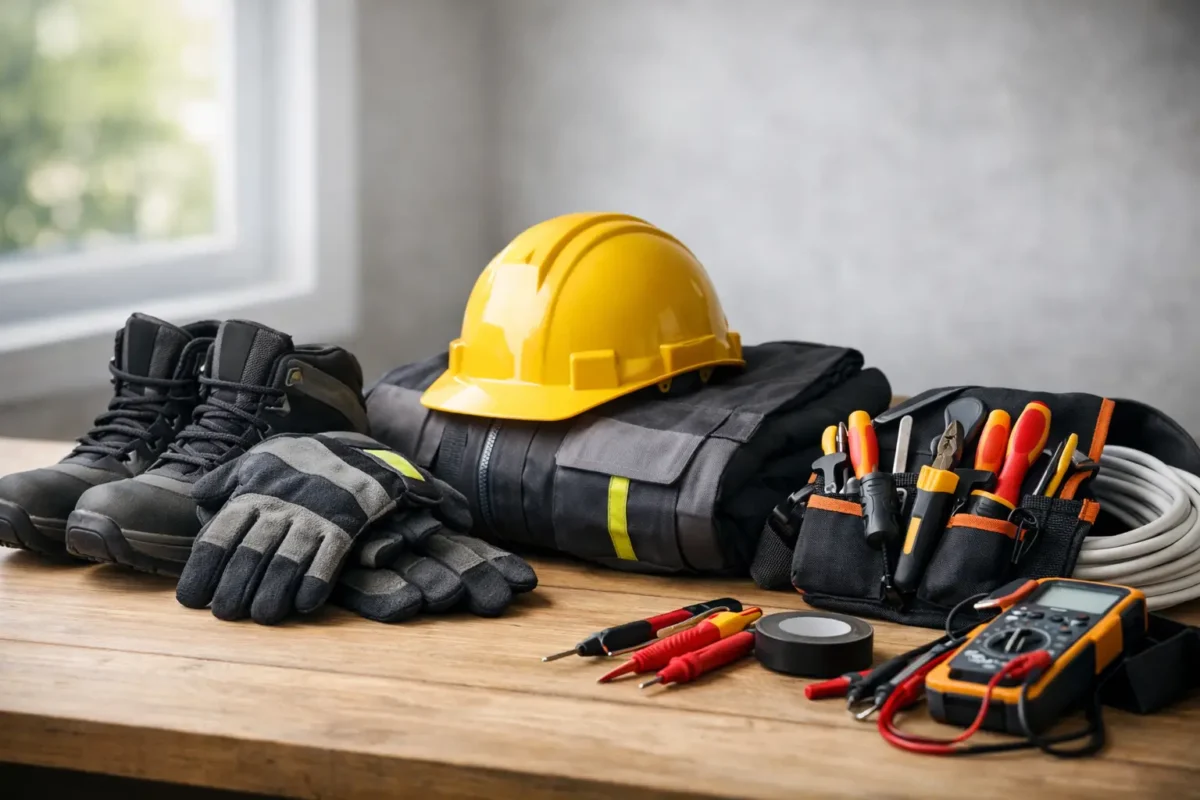
For most UK electrical teams, the foundation is straightforward. You are usually looking at polos or T-shirts for everyday wear, a sweatshirt or hoodie for layering, work trousers with enough pocket space, and an outer layer such as a softshell, fleece or coat depending on the season. If the team works near traffic, on infrastructure projects or on sites with visibility rules, hi-vis garments need building into the bundle rather than treated as an afterthought.
There is no value in adding garments people will leave in the van. A bundle works when each piece has a clear role. Lightweight tops cover warmer indoor work, mid-layers handle cooler mornings and service calls, and outerwear gives protection without restricting movement when lifting, climbing or kneeling.
Core garments that earn their place
Polos are often the safest choice for branded electrical workwear because they look presentable on customer visits and hold shape well. T-shirts can still be useful, particularly for summer work or under sweatshirts, but they do not always give the same smart appearance for front-facing teams.
Trousers matter more than many buyers expect. Electricians spend a lot of time bending, crouching and working in awkward spaces, so fit and reinforcement are not small details. Holster pockets can help some trades, but they are not right for every electrical role. On certain jobs they add bulk, catch in tight spaces or simply carry items the team does not need. Sometimes a cleaner cargo-style trouser with sensible storage is the better buy.
For layering, sweatshirts and hoodies both have a place. Sweatshirts generally suit firms that want a tidier, uniform look. Hoodies can be popular with site teams and younger crews, but they are not accepted everywhere. If your staff move between construction sites and occupied buildings, you may need both options across different teams rather than forcing one choice on everyone.
Durability matters more than headline price
Cheap bundles can look competitive until the first few wash cycles. Logos crack, knees wear through, hems twist and the team starts mixing in their own clothing because the issued garments no longer do the job. That creates an inconsistent appearance and usually leads to reordering sooner than expected.
A better approach is to look at cost over six to twelve months, not just cost on day one. Fabric weight, seam quality, colour retention and trim strength all affect how long the bundle stays in service. For electricians, that is especially important because workwear often moves between site conditions and customer environments. Garments need to look respectable as well as hold up physically.
This is also where decoration method matters. Embroidery is a strong option for polos, sweatshirts, fleeces and many jackets because it gives a durable branded finish. But it is not right for every garment. On waterproof items, for example, embroidery can create needle holes. In those cases, print is often the more practical solution. Getting that detail right at ordering stage avoids problems later.
Branding without making the kit look overdone
Most electrical contractors do not need loud branding. A left chest logo on tops and outerwear is usually enough for a clean, professional look. Larger back prints can make sense on hi-vis garments or when visibility of the company name matters on busy sites, but too much decoration can make workwear look cluttered and drive up costs.
Consistency is the bigger issue. The same logo version, thread colours and print setup should be used across the bundle, especially when ordering over time. If branding changes from one batch to the next, uniforms start to look mismatched. For businesses with multiple crews or departments, keeping branding files and decoration choices standardised saves time and avoids unnecessary back-and-forth.
Matching the bundle to the job
An electrician workwear bundle UK buyers choose should reflect where the staff actually work. That sounds obvious, but it is often missed.
Domestic and commercial installers usually need a smarter presentation because they are regularly in schools, offices, homes and managed buildings. In that case, polos, smart trousers and softshell jackets are often a better fit than heavily pocketed sitewear alone.
Industrial and maintenance teams may place more value on durability, layering and hi-vis compliance. Their bundles may need heavier trousers, more weather protection and garments suitable for tougher plant or site conditions.
For mixed-use teams, one standard bundle may not be enough. It can be more efficient to create a base package for everyone, then add role-specific items by department. That keeps ordering simple without giving all staff the same kit regardless of job requirements.
When hi-vis should be built in from day one
If a team regularly works on construction sites, highways, logistics facilities or anywhere with mandatory visibility rules, hi-vis needs to be part of the bundle as standard. Leaving managers or staff to add it later usually causes delays and inconsistencies.
The exact garment mix depends on the environment. Sometimes a hi-vis waistcoat is enough as a top layer. In other cases, hi-vis polos, sweatshirts and jackets make more sense because they give compliance without relying on one item being worn over the top. The decision comes down to site rules, seasonality and whether staff move between controlled and uncontrolled environments during the week.
Why bundles help with repeat ordering
A bundle is not only about the first order. It is about making reordering easier when a new starter joins, a team expands or worn items need replacing. If the original bundle has been planned properly, there is a clear shopping path for the next order rather than starting from scratch every time.
That matters for office staff and operations managers as much as it does for the workforce. Standardised bundles reduce admin, make approvals simpler and help keep spend under control. They also reduce the risk of one depot ordering different garments to another and ending up with uneven branding across the business.
For larger employers, packing matters too. Sending garments sorted per employee rather than in mixed cartons can save hours of internal handling. That becomes even more useful when multiple starters are being issued clothing across different depots or contracts.
Common mistakes when buying electrician bundles
The biggest mistake is buying a generic trade pack without checking how suitable it is for electrical work. Not every builder’s bundle is right for electricians. Too many extras in the wrong place can be as unhelpful as too few.
Another issue is choosing garments based purely on catalogue appearance. A jacket can look the part online but prove awkward in real use if it restricts reach or layers badly over sweatshirts. The same goes for trousers that appear durable but are too stiff for daily movement.
Sizing is another area where costs creep in. If sizing is not managed carefully, employers end up reordering replacements or holding spare stock that nobody uses. That is one reason many businesses benefit from working with a supplier that can keep the ordering process structured and consistent.
What a good supplier should help you decide
A decent supplier should do more than take a logo and process an order. They should help narrow the garment mix, flag decoration issues, and make sure the bundle suits the environment your team works in.
That includes practical advice on print versus embroidery, whether a softshell will be enough or if a heavier coat is needed, and how to build a bundle that works across seasons. It may also include fulfilment options that reduce internal sorting, particularly for firms ordering at scale or across multiple locations.
For buyers who want a dependable process rather than a one-off order, this is where an experienced workwear partner earns its place. Companies such as Vivid Promotion support businesses that need branded uniforms organised properly, with garment choice, decoration and packing handled in a way that fits real operational pressures.
A good bundle should make mornings easier for the team wearing it and ordering easier for the people managing it. If you get that balance right, you are not just buying clothing – you are reducing hassle every time the next order needs placing.