Branded Workwear
How to Choose Embroidered Polo Shirts
Mar
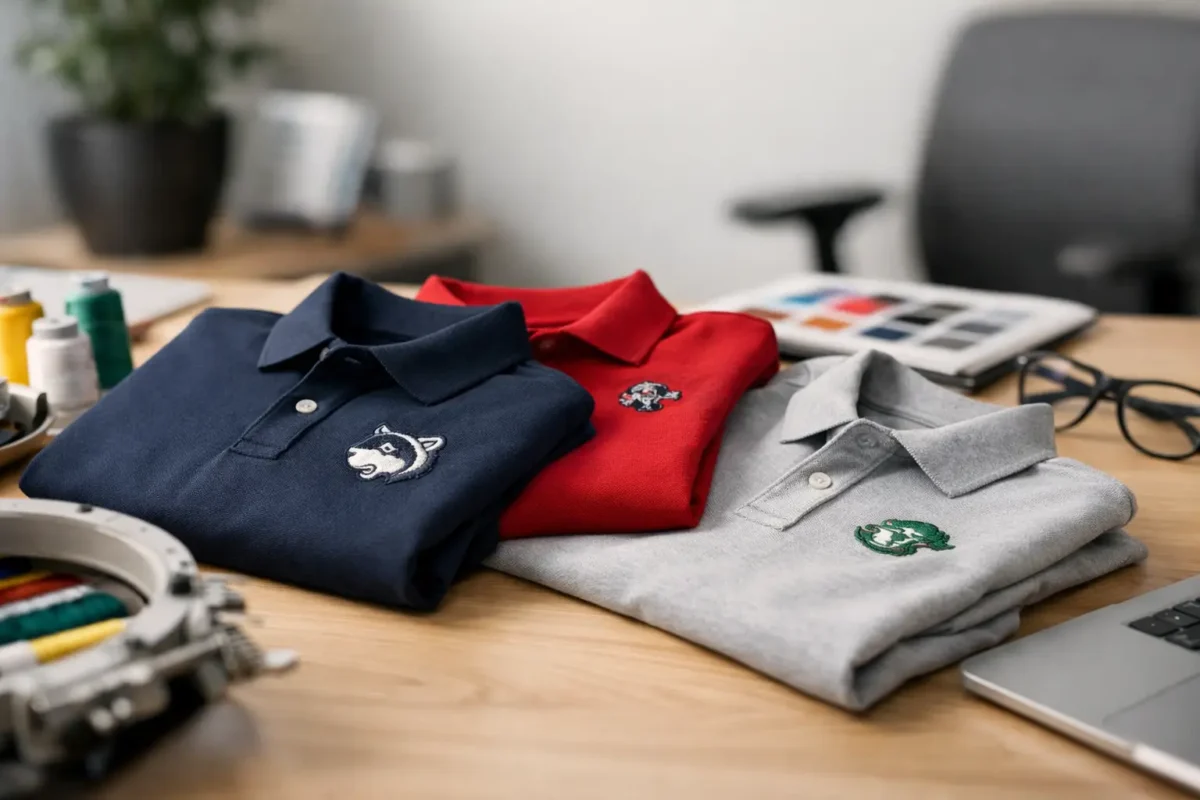
A polo shirt usually gets judged in the first ten seconds. Does it look smart on the job, does the logo sit properly, and will it still hold its shape after repeated washing? For many businesses, that makes embroidered polo shirts the default choice for day-to-day uniform. They are practical, presentable and hard-wearing enough for regular use.
That said, not every polo is right for every team. The shirt, the logo, the work environment and the ordering process all need to line up. If you are buying for a handful of staff or rolling out uniforms across multiple departments, getting those details right saves reorders, complaints and wasted stock.
Why embroidered polo shirts work so well
There is a reason polos are one of the most requested items in branded workwear. They sit between casual and formal, which makes them useful across trades, customer-facing roles, warehousing, schools, healthcare support settings and event teams. A good polo looks tidy without being restrictive, and embroidery gives the branding a durable finish that stands up well to repeated wear.
For logos, embroidery is often the stronger option where you want a professional, stitched appearance rather than a flat printed finish. It suits company names, simple crests and standard left chest branding particularly well. On darker garments, embroidery also tends to hold its definition better over time than cheaper print methods.
The trade-off is that embroidery is not always the best answer for every design. Very fine detail, tonal gradients or oversized artwork can be better handled with print. That is why the garment and the branding method should be considered together rather than as separate decisions.
What to check before ordering embroidered polo shirts
The first decision is fabric weight and composition. A lighter polo can be more comfortable for indoor teams or warm environments, but it may not hold up as well in tougher working conditions. A heavier weight polo often gives a better drape and longer service life, especially where staff are washing uniforms frequently.
Cotton-rich polos are generally comfortable and breathable, while polyester blends can offer better colour retention and easier care. For hands-on industries, a polycotton blend is often the practical middle ground. It gives enough comfort for daily wear but tends to cope better with repeated laundering and regular movement on site.
Fit matters as well, especially if you are ordering across mixed roles or departments. A fashion-led slim fit might look sharp in a showroom, but it is not always suitable for engineers, warehouse teams or staff who need room to move. In most uniform buying, a regular fit is the safer choice because it works across a broader size range and reduces returns.
Collar construction is another detail worth checking. If the collar loses shape after a few washes, the whole garment starts to look tired. The same goes for plackets, hem finish and stitching quality. A polo does not need to be premium for the sake of it, but it does need to last long enough to justify the order.
Logo setup matters more than most buyers expect
With embroidered polo shirts, the logo file is not a minor detail. It affects stitch clarity, size, cost and the final appearance on the garment. A logo that looks fine on screen may need adjustment before it is suitable for embroidery.
Text that is too small, very thin lines and complex shading can all create problems when translated into stitches. In some cases, parts of the artwork need simplifying so the logo remains legible on fabric. This is normal. Good embroidery depends on converting the artwork properly rather than forcing a design to run exactly as supplied.
Placement should also be practical. Left chest is still the standard because it is smart, consistent and suitable for most sectors. Larger back embroidery is possible, but it increases stitch count and cost, and it is not always necessary for everyday uniform. If visibility at distance is the main aim, print may be more cost-effective for larger branding.
There is also the question of logo size. Bigger is not always better. A chest logo that is too large can distort the shirt and look out of proportion, particularly on smaller sizes. Keeping branding clean and consistent across the size range usually gives the better result.
Choosing the right polo for the job
A reception team and a groundworks crew do not need the same polo, even if they wear the same logo. This is where many uniform orders go wrong. Buyers focus on price first and only later find the garment is too lightweight, too warm, too fitted or simply not suitable for the working day.
For office-adjacent roles, front-of-house staff and sales teams, appearance often leads the decision. A smoother fabric, cleaner fit and stronger colour consistency usually matter most. For trades and site-based teams, durability tends to come first. Reinforced seams, practical sizing and reliable wash performance are more important than a softer hand feel.
In care, cleaning and support roles, ease of laundering can be a deciding factor. Shirts may need frequent washing, and colours need to remain consistent across repeat orders. In event settings, the priority may shift again towards high-volume ordering, clear branding and straightforward issue to staff over a short timescale.
This is why there is no single best embroidered polo shirt. The right choice depends on who is wearing it, how often it is washed and what the working environment demands.
Embroidery versus print on polos
For polos specifically, embroidery is usually the safer default for chest branding. It looks established, wears well and gives a smarter finish for company uniforms. If your logo is relatively simple and you want a dependable long-term result, embroidery is hard to fault.
Print still has its place. If the design includes gradients, very fine detail or larger back graphics, print may be more suitable. It can also be the better option where cost control is critical on high-volume, short-life orders such as temporary event staffing.
Some businesses use both methods on the same garment – embroidered chest logo with printed back text, for example. That can work well where you need a polished front-facing appearance but stronger visibility from the rear. The right answer depends on the artwork, the garment and how the uniform is being used.
Ordering at scale without creating extra admin
Once the garment is chosen, the next issue is usually fulfilment. This matters far more than most first-time buyers expect. A uniform order is not finished when the polos are embroidered. It is finished when the right sizes reach the right people, on time, without creating a sorting job in your office or stores.
For a growing business, that can mean size breakdowns by department, named allocation for new starters, or split packing for different sites. For schools, healthcare settings and event teams, it may mean bulk ordering with clear separation by role or location. These are operational details, but they are the difference between a smooth rollout and a pile of boxes nobody has time to sort.
This is one reason many organisations buy through a supplier that can handle the full process rather than just the decoration. Vivid Promotion supports businesses across the Midlands and nationwide with branded uniform supply, embroidery and distribution, including orders packed in ways that make issue easier for employers.
Cost, repeatability and stock planning
The cheapest polo is rarely the cheapest option over a year. If collars twist, colours fade or sizes become inconsistent between batches, replacement costs soon overtake any saving on the initial order. For repeat uniform programmes, consistency is worth paying for.
It also helps to think beyond the first order. Can the same polo be reordered next quarter? Is the brand stable? Are the colours and size range likely to remain available? If staff turnover is steady or departments expand seasonally, you need a product line that can support repeat buying rather than a one-off deal.
Planning for a small stock buffer usually makes sense as well. Holding a few common sizes can save a rush order when a new starter joins or a garment is damaged. The right stock approach depends on your headcount and turnover, but waiting until you are completely out is rarely efficient.
Getting better results from your next order
If you want embroidered polo shirts that actually work as a uniform, treat the decision as practical procurement rather than simple garment buying. Match the polo to the job, check that the logo is suitable for embroidery, and think through how the order will be packed, distributed and repeated. Those are the points that affect cost, appearance and day-to-day usability.
A smart-looking polo is useful. A smart-looking polo that arrives correctly branded, correctly sized and ready to issue is what saves time. If you are ordering for real workplaces rather than a photoshoot, that is the detail that counts.