Branded Workwear
Welder Flame Resistant Workwear Options
Mar
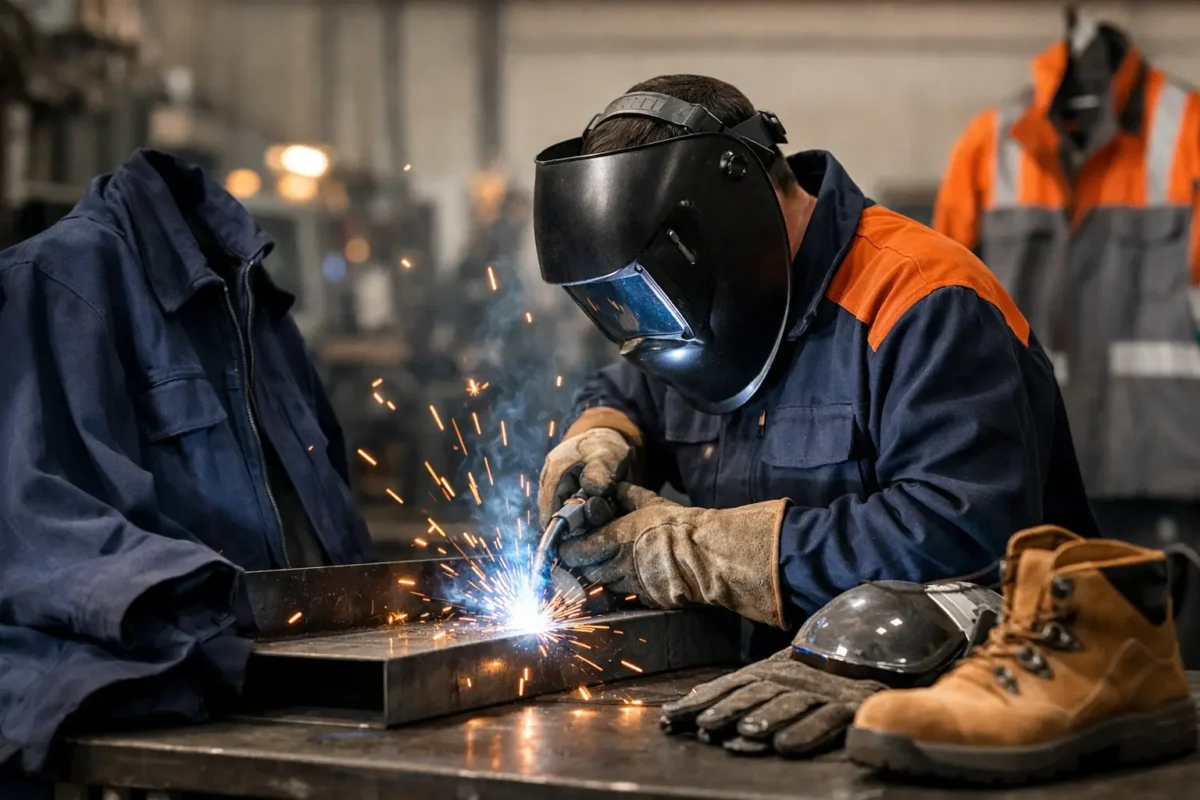
A welding jacket that rides up at the wrist or a pair of trousers that catch sparks in the turn-up is not a small issue on site. When you are buying for welders, fabric weight, garment cut and the type of welding being done all matter. That is why welder flame resistant workwear options need to be chosen as a working system, not as a single item picked from a catalogue because it looks the part.
Choosing welder flame resistant workwear options properly
The first thing to get right is the job itself. MIG, TIG and arc welding do not all throw off the same level of spatter, heat and exposure. A fabric that suits light fabrication indoors may not be the right choice for heavy structural work, overhead welding or hot environments where layers quickly become uncomfortable.
For most buyers, the decision starts with three questions. How much spark and molten splash is the wearer exposed to, how long is the garment on for each shift, and does the welder need other protection built into the same kit, such as hi-vis or antistatic properties. If you are buying for a mixed team, one standard issue is not always the most practical route. It can be better to separate workshop welders from mobile engineers or site teams and build the clothing issue around the actual risk.
Standards matter here, but so does wearability. A compliant garment that is too hot, stiff or bulky often ends up worn incorrectly. Open cuffs, rolled sleeves and half-fastened jackets usually start with discomfort.
The core garment types welders usually need
Most welding teams are covered by a small number of proven garment types. The right mix depends on whether the work is fixed-site, workshop-based or spread across customer locations.
Flame resistant coveralls
Coveralls are often the simplest option where full-body protection is needed and there is a risk of sparks getting between separate garments. They reduce exposed gaps at the waist and are practical for production environments where consistency matters.
The trade-off is flexibility. Coveralls can be warmer over a full shift, slower to change, and less adaptable if the wearer moves between hot work and general duties. Fit is especially important. Too tight and movement becomes restricted. Too loose and there is more chance of snagging or collecting debris.
Welding jackets and trousers
A two-piece set gives more flexibility and is often easier for teams who need different waist and chest sizing. It also makes replacement simpler. If one pair of trousers wears out before the jacket, you are not replacing the full set.
Jackets for welding need secure front fastenings, dependable cuffs and enough length to stay in place during bending and overhead work. Trousers should sit properly over work boots without excessive fabric bunching. Avoid unnecessary pockets, exposed metal details and features that create places for sparks to lodge.
Flame resistant sweatshirts, base layers and mid-layers
Not every welder works in the same temperature range all year. In colder conditions, layering matters, but only if the layers are suitable. Throwing a standard hoodie under a compliant jacket is the sort of shortcut that causes problems.
Flame resistant base layers and mid-layers help keep protection consistent without adding the wrong fabrics underneath. This is particularly useful for outdoor maintenance teams, rail contractors and engineers working across seasons.
Fabric choices and what they change in practice
Buyers often focus on price first, but fabric specification affects comfort, life span and suitability far more than many expect. There is no single best fabric for every welding role.
Heavier flame resistant fabrics usually give better durability and can feel more reassuring in high-exposure jobs. They also tend to be warmer and less forgiving during long shifts. Lighter options improve comfort and mobility, but they may not suit harsher conditions or repeated heavy wear.
You will also see a difference between inherently flame resistant fabrics and treated flame resistant fabrics. Inherent protection is built into the fibre itself, while treated garments rely on a finish applied to the fabric. Both have their place, but buyers should think about wash life, replacement cycles and how hard the garments will be worked. For teams with frequent industrial laundering or high garment turnover, that choice has cost implications over time.
Cotton-rich options can be more comfortable for many wearers, while blended fabrics may improve strength and help with shape retention. The right answer depends on the workshop, the climate and how often the garments are being laundered.
Compliance is not just a box to tick
When reviewing welder flame resistant workwear options, UK buyers should check the garment meets the relevant standard for welding and allied processes, alongside any other protection needed for the role. That can include standards for heat and flame, antistatic performance or hi-vis where welders are also working around moving vehicles or on active sites.
This is where procurement can become messy if the team does more than one type of job. A workshop welder may only need one specification, while a site engineer could need flame resistance plus high visibility and weather protection. It is better to map the clothing issue to actual working conditions than assume one garment can cover every task well.
Care instructions are part of compliance too. If the garment is washed incorrectly, repaired with unsuitable materials or heavily contaminated, performance can be affected. For employers, that means the buying decision should include a realistic view of how the kit will be maintained.
Branded welding workwear needs care
Many companies want welding garments to carry a logo, especially for field engineers, contractors and site teams. That is reasonable, but decoration should never compromise the garment.
Placement matters more than buyers sometimes realise. Logos need to avoid high-wear areas and should not interfere with pockets, fastenings or reflective tape. The decoration method also needs to suit the garment construction and end use. On specialist protective clothing, the safest approach is usually to confirm what can be added without affecting performance or practicality.
For employers issuing kit across multiple staff, consistency also matters. The logo should be converted properly for embroidery or print so it remains clear and legible across repeat orders. That is the kind of detail that saves time later, particularly when you are reordering for growing teams or replacing garments individually.
Buying for teams instead of individuals
A single welder can often choose kit by trial and preference. A business buying for ten, fifty or two hundred staff has a different problem. The challenge is creating a range that is compliant, comfortable enough to be worn properly and straightforward to reorder.
That usually means narrowing the issue down to approved garments by role. For example, workshop welders may be issued flame resistant jackets and trousers, while mobile fabrication teams receive coveralls and weather-ready outer layers. Once that structure is in place, repeat ordering becomes easier and sizing errors are reduced.
It also helps to think about packaging and distribution at the point of purchase. Bulk deliveries are fine for some businesses, but many operations teams lose time sorting garments by employee after they arrive. Where uniforms are being issued across departments, sites or new starters, individual packing by wearer can remove a lot of internal admin.
That is one reason organisations buying branded PPE and protective clothing often work with a supplier that can manage decoration, stock continuity and fulfilment in one place. For businesses that want welding wear alongside general trade clothing, hi-vis and other staff uniform, using one partner such as Vivid Promotion can make repeat ordering more manageable.
What buyers often get wrong
The most common mistake is buying on headline price without looking at replacement rates. Cheap garments that wear through quickly, shrink badly or are unpopular with staff do not stay cheap for long.
The second mistake is assuming all welders need the same issue. A coded welder in a fabrication shop, a maintenance engineer doing occasional hot work and a site team handling multiple hazards may all need different garments.
The third is overlooking fit. Protective clothing still has to function as workwear. If people cannot kneel, reach, climb or work overhead comfortably, they will fight the garment all day.
Making the shortlist simpler
If you are comparing options, start with the risk level, then check standards, then look at garment format. After that, review fabric weight, comfort and wash expectations. Branding, sizing structure and distribution should come after the protection decision, not before it.
For most UK employers, the sensible shortlist is not huge. It is usually a question of whether the team needs coveralls or separates, whether additional hi-vis or weather protection is required, and whether the fabric choice matches the realities of the workshop or site. Get those points right and the rest of the buying process becomes much more straightforward.
The best welding workwear does not need selling once it is on the wearer. It fits properly, stands up to the job and arrives ready to issue without creating extra work for your team.