Branded Workwear
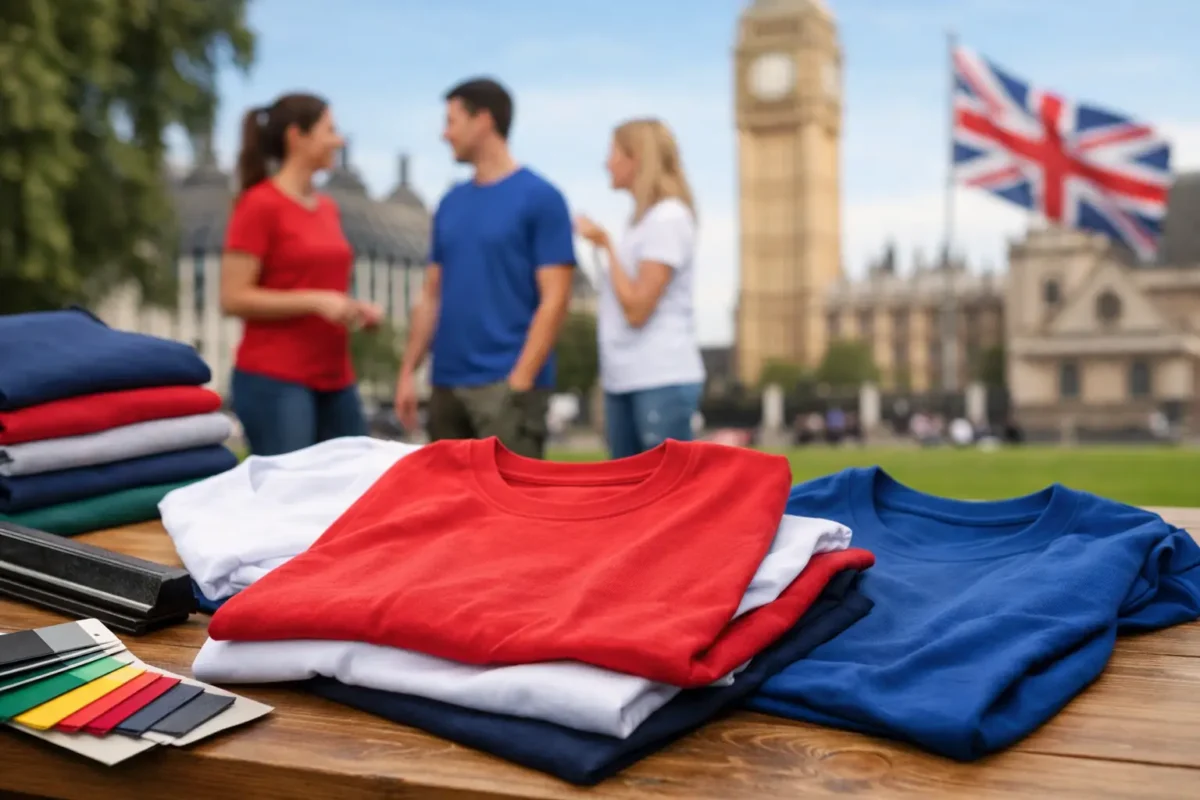
Choosing Custom T Shirts for UK Events
Mar
When an event order goes wrong, it usually is not because the logo looked poor on screen. It is because boxes arrived unsorted, sizes were missing, the print cracked after one wear, or the shirts were wrong for the job in the first place. If you are buying for a team, a promotion, a fundraiser or a one-off live event, the real challenge is not simply branding a T-shirt. It is getting the right garment, the right decoration method and the right fulfilment plan without creating extra work for your staff.
That is what matters when sourcing custom T-shirts for events UK organisations can actually use on the day.
What event T-shirt buying looks like in practice
Most event buyers are not starting with fabric weights or print terminology. They are starting with a deadline, a headcount and a practical question: who is wearing these, and what do they need to do in them?
A registration team indoors at a charity event has very different requirements from a roadshow crew unloading kit at 6am, or a summer festival team working outside for ten hours. In one case, you may want a lightweight promotional tee focused on cost and visibility. In another, you need something more durable that holds shape, washes well and still looks presentable across a multi-day event schedule.
That is why the best buying decision usually comes from working backwards from use. Budget matters, but so do comfort, garment consistency and how the shirts will be packed and issued. A cheaper tee that causes sorting problems or needs replacing mid-campaign can cost more overall.
How to choose custom T-shirts for events UK teams will wear
Start with the role of the garment. If the T-shirt is there to identify staff clearly, your priority is visibility of branding, consistent colour and reliable sizing. If it is for merchandise or giveaway use, unit cost and broad appeal may matter more. If it is for brand representatives or exhibition staff, presentation tends to take priority over rock-bottom pricing.
Fabric weight makes a difference here. Lightweight shirts can be ideal for mass giveaways, short-duration wear and warmer venues. Heavier shirts tend to feel better quality, keep their shape more effectively and suit repeat wear. Neither is automatically better. It depends on whether your order is built around reach, durability or presentation.
Fit matters as well. Unisex styles simplify ordering, especially for mixed teams and large runs, but they are not always the best answer if wearer comfort is a concern. For front-of-house staff who need to look consistent over several days, it may be worth considering a broader size range or complementary styles.
Colour choice is often treated as a branding decision only, but event use changes that. White can be effective for vibrant print, though less practical in dirty or outdoor settings. Darker colours can hide wear during setup and pack-down, but not every logo reproduces equally well on them. High-contrast branding is usually the safer route if teams need to be recognised quickly in busy environments.
Print or embroidery for event T-shirts?
For most event T-shirts, print is the practical choice. It handles larger graphics well, works across chest, back and sleeve placements, and usually keeps unit pricing sensible on volume orders. It is especially useful where you need staff names, sponsor logos, campaign artwork or bold back prints that can be read from a distance.
Embroidery has its place, but usually on polos, sweatshirts, hoodies, fleeces and other uniform garments rather than standard event tees. On T-shirts, embroidery can feel heavier, especially on lighter fabrics, and is less suitable for large designs. If the shirt is for smart exhibition use and you want a small left chest logo only, embroidery may still be considered, but print is more common for event applications.
The garment itself also affects the decision. A smooth cotton or cotton-rich tee gives good print results. Technical performance fabrics may need a different print approach depending on heat sensitivity and intended wash use. This is where supplier guidance matters. A decoration method should be chosen around the garment and the job, not forced because it is familiar.
Getting the artwork right before production starts
A surprising amount of event stress comes from poor artwork handling. Low-resolution files, inconsistent logo versions and last-minute edits can all slow approvals and affect print quality.
If you are ordering at scale, the logo should be set up properly from the start. That means using the correct file format, checking proportions, confirming print size and being realistic about how fine detail will reproduce on fabric. A design that looks sharp on a laptop screen may not translate well to a chest print on a small-size shirt.
The same goes for sponsor-heavy event shirts. It is tempting to fit in every logo at the largest possible size, but crowded artwork can reduce legibility. A clean front and a more detailed back print often works better than trying to force everything into one area.
Sizing, quantities and the problem with rough estimates
Ordering custom T-shirts for events UK teams need often comes down to imperfect numbers. Headcounts change. Temporary staff are added. Volunteers drop out. Merch allocations shift by location.
That does not mean you should guess. It means you should plan for variance. The best approach is to confirm who needs what, separate staff wear from promotional stock, and allow sensible extras in core sizes rather than over-ordering every size evenly. In most event runs, medium, large and extra-large sizes move fastest, but that should never replace actual team data where it is available.
It also helps to think about issue method early. If all garments are arriving in one mixed bulk shipment to be sorted internally, your team needs time and space to break that down. If they are packed by person, department or site, handout becomes far easier. That is not a minor admin detail. For large events, it can remove hours of internal handling.
Delivery is part of the order, not an afterthought
This is where many suppliers fall short. They can print the shirts, but the logistics around the order are left vague until it becomes urgent.
For event buyers, delivery needs to be discussed at the same stage as garment choice. Do you need bulk pallet delivery to a venue, office or warehouse? Do items need to be split by team or location? Are there separate dispatch dates for different event phases? If the event has a fixed build schedule, the delivery window is not flexible, so lead time needs to be treated properly from day one.
Nationwide supply is common enough. Consistent fulfilment is the harder part. A supplier that can handle volume and package orders in a way that reduces sorting effort gives you a more reliable operation overall. That is particularly useful for organisations managing multiple staff groups or rolling event programmes across Great Britain.
When a cheap event tee is the wrong choice
There is a place for entry-level shirts. For one-day giveaways, charity runs or high-volume promotional use, they can make complete sense. But they are not always suitable for staffed events.
If your team is customer-facing, handling equipment, travelling between sites or wearing the garment repeatedly, a bargain-basement shirt can create problems. Thin fabric, poor shape retention and inconsistent sizing all show up quickly. So does low print durability.
That does not mean you need premium fashion retail stock. It means you need a garment matched to the actual wear conditions. There is a middle ground where the shirt still works on cost, but performs properly in use. For many organisations, that is the better buying decision.
Using one supplier for more than just T-shirts
Events rarely stop at T-shirts. Once the staff wear is sorted, there is often a need for hoodies, outerwear, hi-vis, caps, banners or display material as well. Managing those through different suppliers can create unnecessary admin, especially when branding and delivery dates need to stay aligned.
For buyers who need a broader event package, it makes sense to work with a supplier that can handle garment branding alongside related outputs and structured fulfilment. That keeps artwork control tighter and reduces chasing across multiple orders. For organisations looking for that kind of support, Vivid Promotion works as a practical UK supply partner rather than just a print source.
What to ask before you place the order
Before approving an event T-shirt order, you should be clear on five things: the exact garment being used, the decoration method, the approved artwork, the packing format and the delivery schedule. If any of those points are still vague, the order is not really ready.
It is also worth checking whether your chosen garment is likely to be repeatable for future events. If this is the start of a seasonal programme or annual campaign, consistency matters. Reordering the same shirt with the same branding setup is easier than starting again each time with a different blank garment.
A good event T-shirt order should reduce pressure, not create it. If the shirts fit the job, the branding is handled properly and the fulfilment is planned around how your team actually works, you get more than branded clothing. You get one less problem to manage when the event date gets close.
The useful question is not simply, “How much are the shirts?” It is, “Will this order arrive ready to issue, ready to wear and right for the event?” That is usually where the best buying decision starts.