Branded Workwear
Hi-Vis PPE With Your Logo: What to Get Right
Feb
If you are ordering hi-vis for a team, you are usually juggling two pressures at once: you need it compliant and hard-wearing on site, and you need it to arrive in a way that does not create another week of sorting and chasing sizes.
That is exactly where hi vis ppe with company logo can go right or wrong. The garment choice affects compliance and comfort. The decoration choice affects waterproofing, durability and lead times. And the way the order is packed and delivered affects how quickly your team actually ends up wearing it.
Start with the job, not the catalogue
Hi-vis PPE is not one product. A rail worker, a scaffold crew, a highways team, a warehouse picker and an event build crew can all legitimately need different combinations of visibility, weather protection and abrasion resistance.
If the work is mostly road-facing or in higher-risk environments, you will typically be driven by higher visibility class requirements and the need for consistent colour across layers. If the work is indoors with vehicle movement, you might prioritise comfort, breathability and freedom of movement, with lighter garments that still meet the right standard.
Also be honest about how your team actually wears kit. Some sites are strict on zipped-up, taped-up, fully compliant layers. Others see hoodies worn under open bodywarmers and jackets thrown on only when the weather turns. That behaviour matters because your logo placement, garment type, and even whether you choose a vest or a jacket can affect whether the branding is visible and whether the wearer stays compliant.
Compliance: keep the reflective and fluorescent areas working
For branded hi-vis, the biggest practical risk is decoration that interferes with what makes the garment high visibility in the first place.
Most hi-vis garments are designed with a certain amount of fluorescent background fabric and a certain layout of reflective tape. If you put a large logo across the chest or back, you can reduce the visible fluorescent area or cover reflective elements. Sometimes it is fine, sometimes it is not. It depends on the garment design, the size of the logo, and where it sits.
A sensible approach is to keep branding in locations that are designed to accept it, such as a left chest area on a waistcoat, or a back panel space that sits clear of tape. If you need a larger mark for identification at distance, consider a back print that is sized and positioned to avoid reflective bands. You want the site manager to recognise the company, but you do not want to compromise what the PPE is supposed to do.
If your teams work under a client’s PPE policy, it is worth checking whether they require specific garment colours (yellow vs orange), specific class, or additional markings. That small check can save you from reordering when the first delivery hits the site gate.
Choosing garments: vest, sweatshirt, softshell or waterproof?
This is where operational reality matters more than preference.
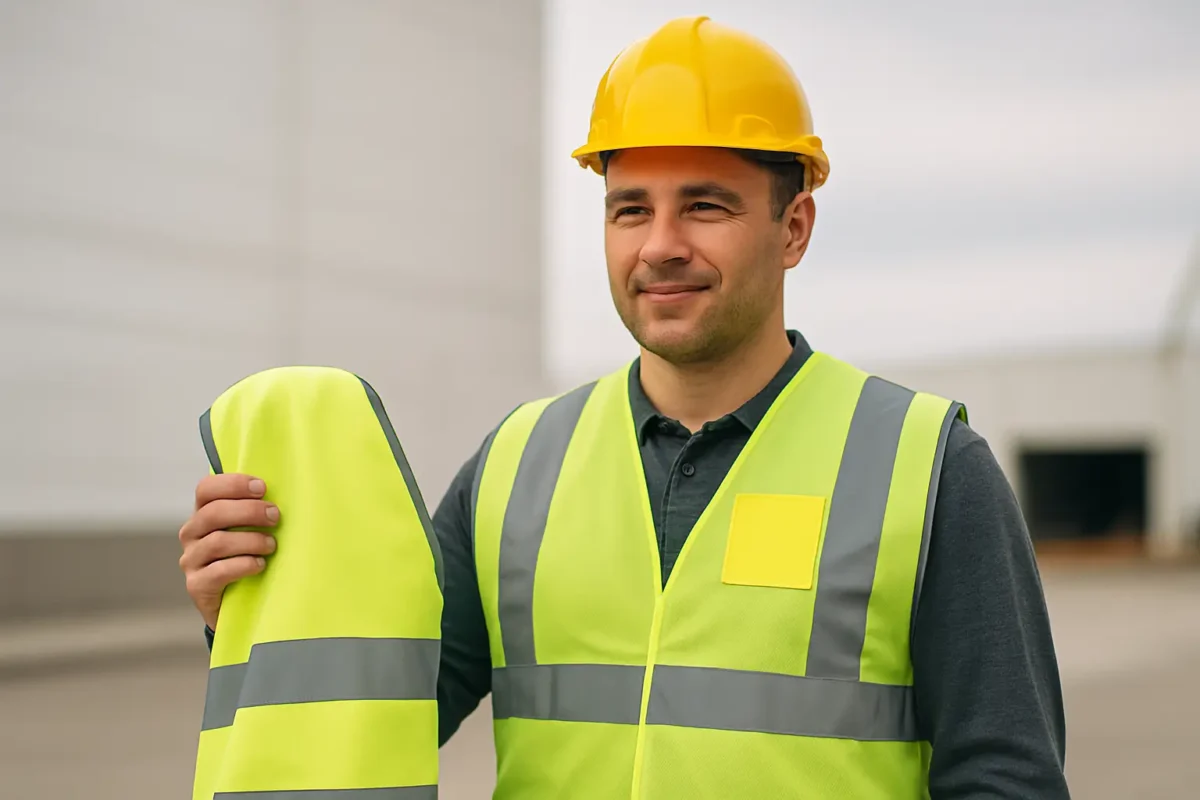
Hi-vis vests are cost-effective and quick to issue, and they work well for visitors, events crews, warehouses and light trade use. The trade-off is that they are often the first thing to be left in a van once the weather changes, and they can snag or tear if used as the only outer layer on rough work.
Hi-vis sweatshirts and hoodies are popular because people actually wear them. They are warm, familiar, and easy to layer. The trade-off is that you need to manage consistent colour and reflectivity across layers, and you will want to think carefully about how the logo is applied so it stays sharp after repeated washing.
Hi-vis softshells give a more structured uniform look and can be a good middle ground for mobile engineers, supervisors and logistics teams. They are comfortable and present well. The trade-off is that softshell fabrics can vary, so decoration method and placement needs checking to avoid cracking or poor adhesion.
Hi-vis waterproof jackets and coats are where the wrong branding choice causes the most headaches. Waterproofing and breathability are built into the fabric and seams. If you add needle holes in the wrong place, you can reduce water resistance. If you place a large print across a stretch panel or a seam, you can impact performance.
If your team is outdoors year-round, you will often end up issuing at least two layers: a lighter hi-vis garment for milder days and a waterproof for winter. Planning those together helps keep the branding consistent and avoids a patchwork of different colours and logo sizes.
Print vs embroidery: the decision that affects everything
Branding is not just about appearance. It affects durability, waterproof performance, lead time, and how consistent your logo looks across different garments.
Embroidery is hard-wearing and looks sharp on many garments, particularly fleeces, polos, sweatshirts and some softshells. It also gives a premium, uniformed feel that suits supervisors and customer-facing teams. The trade-off is that embroidery adds stitch weight and can feel heavier on lighter garments. On waterproof jackets, embroidery can create needle holes that may compromise water resistance unless it is carefully managed with backing and placement.
Print is often the better choice for hi-vis outerwear, especially waterproofs, because it avoids needle holes. It is also well suited to larger logos, back prints, and multi-colour marks where you want clean edges and good visibility. The trade-off is that print durability depends on the method, the fabric, and washing conditions. A properly specified print will last, but it needs to be matched to the garment.
There is no universal rule that “embroidery is best” or “print is best”. A practical rule is to choose the method that suits the fabric and the job. For mixed orders, some organisations use embroidery on mid-layers and print on waterproof outer layers to keep performance and consistency.
Logo setup: small details that stop rework
Most delays and disappointments come from the same few issues: low-quality artwork, inconsistent brand colours, and unclear placement.
If your logo is only available as a small screenshot, it may not reproduce cleanly when scaled for a back print or digitised for embroidery. That can lead to thicker text, lost detail, or a logo that looks different across garments.
It also pays to be realistic about fine lines and small text. A detailed crest can look excellent on a fleece with embroidery, but the same detail may not read well on a hi-vis vest at a distance. Sometimes simplifying the mark for PPE is the right call – not because you are watering down the brand, but because you are optimising it for the job.
Placement decisions should be consistent across your core garments. Left chest plus back is common because it balances identification and professionalism. If you add names, department labels, or role identifiers, keep them standardised, otherwise you end up with one-off variations that are hard to repeat.
Sizing and fit: where the admin time disappears
Hi-vis ordering goes wrong when you treat it like a normal clothing buy. PPE is worn over layers. People have different preferences for movement and fit. And some garments fit differently across brands.
If you can, standardise your range so you are not mixing multiple fits and fabrics for the same role. It makes reorders easier and helps you hold a small buffer stock without guessing.
Also think about who is wearing the kit. A warehouse with high staff turnover needs quick repeatability and easy reissue. A specialist engineering team may need a more tailored range, but will wear the garments for longer.
When sizing is uncertain, it is often cheaper in the long run to do a short sizing run or order a small set of samples than to absorb the cost of returns, replacements and idle time.
Fulfilment: the unglamorous part that buyers care about
The most useful branded hi-vis order is the one that arrives ready to issue.
If you are kitting out 30, 50 or 200 people, bulk delivery is only half the story. The real time sink is sorting by person, matching sizes, and checking who has received what. That is where per-employee packing can save hours, especially when you are distributing across multiple sites or shifts.
For events and trade customers, pallet delivery can make a big difference too. It reduces handling and makes receiving straightforward when you are working to a fixed date. For construction and facilities teams, reliable lead times matter because new starters and site mobilisation do not wait for the perfect delivery window.
If you want a supplier that handles the whole process – garment selection across a wide catalogue, embroidery and print under one roof, and fulfilment that reduces internal admin – Vivid Promotion is set up for exactly that type of repeat business ordering.
When it depends: common scenarios and the right compromise
If you need maximum waterproof performance, print often wins on jackets, but embroidery may still be fine on mid-layers. If you need the logo to be seen at distance, a back print may be more effective than a small chest embroidery, but you need to keep clear of reflective tape and maintain compliant background area.
If you have multiple client sites with different rules, you may need two hi-vis colours in circulation. That is manageable, but only if you lock down the logo sizing and placement so your team still looks consistent. If you have agency staff or visitors, it can make sense to keep a stock of unbranded hi-vis vests for short-term use and reserve branded garments for employees.
If budget is tight, start with the garments people will wear most often. A well-chosen hi-vis sweatshirt or softshell that stays on backs will do more for safety and identification than a cheap vest that lives in the cab.
A practical way to spec your next order
Before you place the next order, decide what the work actually requires, then spec the branding around it. Confirm the required hi-vis class and colour for your sites, pick garments that suit how your team works and layers, then choose print or embroidery based on fabric and performance. Finally, set one standard for logo size and placement that you can repeat on reorders.
If you get those choices right upfront, the whole thing becomes simple: the kit turns up, it goes straight to the right people, and it gets worn – which is the only outcome that matters.