Branded Workwear
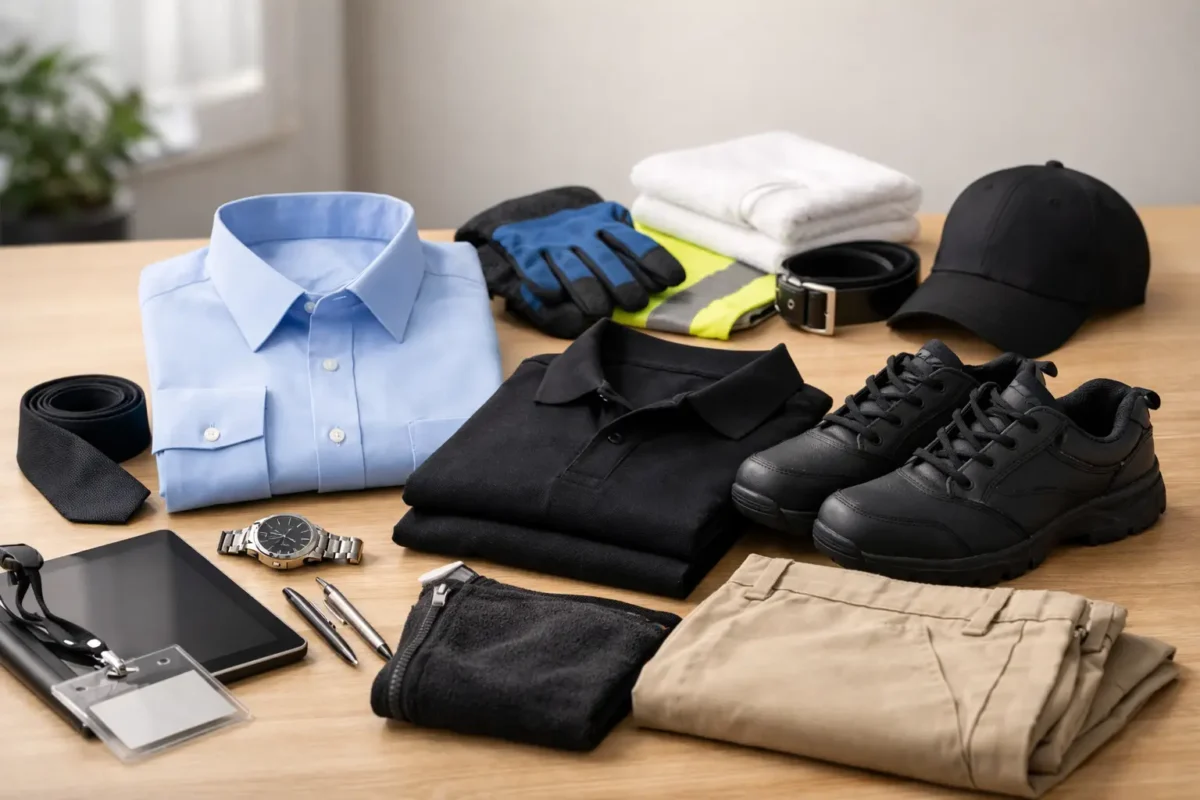
What to Include in Staff Uniform Packs
Apr
A new starter turns up on Monday, and half the shift is spent finding the right polo, chasing a missing fleece, and checking whether anyone ordered hi-vis in the correct class. That is usually when businesses start asking what to include in staff uniform packs. Get the pack right from the start, and you reduce admin, avoid gaps on site, and give staff a consistent standard from day one.
The right uniform pack is not the same for every team. A warehouse operative, a care worker, an events steward and a school site team all need different garments, different branding methods and different quantities. What matters is building each pack around the job, the working environment and how often the garments will actually be worn and washed.
What to include in staff uniform packs first
Start with the garments your team will wear most often, not the ones that look good in a brochure. For many businesses, that means a core set of branded tops, suitable trousers or workwear bottoms, and one practical outer layer. If staff work five days a week, one branded polo and one sweatshirt is rarely enough. You are setting people up either to wash items every night or to turn up in unbranded substitutes.
A sensible pack often includes two to five tops depending on role, shift pattern and laundering demands. Front-of-house teams may need cleaner presentation and more frequent changes. Trade and site teams may need harder-wearing garments and more layering options. Healthcare settings usually need enough stock rotation to support hygiene standards and regular washing.
The key point is simple. Build the pack around usage, not minimum spend.
Core garments most businesses need
For general workplace use, polos and T-shirts are usually the foundation because they cover everyday wear and carry embroidery or print well. Sweatshirts and hoodies work where warmth and durability matter, while fleeces and softshells are more suitable for staff moving between indoor and outdoor settings. Jackets, bodywarmers or waterproof outerwear make sense for teams exposed to the weather.
Trousers are easy to overlook if you focus only on branded tops, but in many sectors they are just as important. Trades, warehousing and facilities teams often need specific work trousers with practical pockets and reinforced areas. In healthcare, tunics, scrubs or department-specific garments may be the real core of the pack rather than the extras.
If the role requires PPE or hi-vis, those items should never be treated as optional add-ons. They need to be part of the standard issue where the job demands them.
Match the pack to the job, not just the logo
One of the most common mistakes in deciding what to include in staff uniform packs is making every department wear the same thing for the sake of consistency. Consistency matters, but not at the expense of practicality.
A sales counter team may need embroidered polos and smart softshells. A highways or logistics team may need compliant hi-vis outerwear, durable trousers and weather protection. A care team may need lightweight, easy-care tunics or scrubs that can handle frequent laundering. Events staff often need branded layers that can be issued fast, worn for long shifts and packed in bulk or by individual crew member.
This is where bundle planning pays off. Keep branding consistent across departments, but vary the garment type and quantity by role. That gives you a better standard of presentation and avoids spending money on items staff will not use.
Consider the working environment
Think about temperature, movement and exposure. Staff working outdoors through autumn and winter usually need layering built into the pack, not just one heavy coat. A polo, sweatshirt and softshell combination is often more flexible than relying on a single outer garment. For physically demanding jobs, breathable fabrics and easier movement matter more than a smarter but less practical option.
Also think about how dirty the job gets. Light-coloured garments can look sharp at issue stage but may be a poor choice for workshops, engineering and maintenance teams. Darker colours often hold up better in everyday use, while still presenting a professional image once branded properly.
Branding and decoration should be planned early
Uniform packs are not just about garment choice. You also need to decide how each item will be branded, because decoration affects cost, durability and suitability.
Embroidery is a strong option for polos, sweatshirts, fleeces and many heavier garments where you want a durable, professional finish. Printed logos often suit T-shirts, hoodies and promotional wear, especially where larger artwork or multiple print positions are needed. For waterproof garments, print can be the better choice if you want to avoid needle holes that may affect performance.
That decision should be made before you finalise the pack. The same logo does not have to be applied in the same way to every garment. In practical terms, the best pack is usually one where the branding method matches the fabric and the use of the item.
Get quantities right for wear and wash cycles
Under-ordering is one of the fastest ways to create repeat admin. Staff either ask for replacements almost immediately or start wearing non-standard alternatives. Over-ordering, on the other hand, ties up budget in stock that sits on a shelf.
A good rule is to look at how often items are worn, how heavily they are soiled, and who is responsible for laundering. If garments are washed frequently at home, issue enough to make that realistic. If outer layers are worn over other branded garments, you may need fewer of those. If the job involves regular exposure to dirt, weather or healthcare environments, increase the core quantity rather than treating replacements as an afterthought.
For many organisations, that means issuing more tops than outerwear and planning replacement cycles from the start. You are not just buying uniforms. You are setting a workable standard for the next few months.
Sizing, fit and stock control matter more than people think
A uniform pack fails quickly if the sizing process is poor. Staff in the wrong fit are less comfortable, less presentable and more likely to request swaps, which adds cost and delays. That is particularly relevant when ordering at scale across multiple departments or sites.
Where possible, gather sizing in a structured way and use clear garment specifications rather than assumptions. A unisex hoodie, a ladies’ healthcare tunic and a work trouser with knee pad pockets all fit differently. Treat each product as its own item, not just a size label.
It also helps to decide which items are standard stock and which are role-specific. Standardisation keeps repeat ordering simpler. Too many one-off garment choices make reordering harder and increase the chance of mismatch later.
Don’t forget the smaller items
Not every pack needs accessories, but some do. Headwear, beanies, caps, aprons, tabards, belts, gloves and bags can all be legitimate parts of a uniform issue depending on the role. The test is whether the item is regularly needed to do the job or maintain presentation standards.
For example, catering, hospitality and events teams may need aprons or caps as standard. Outdoor staff may need hats or extra weather protection. School leavers’ packs have a different logic again, where the garment itself may be the main item and packaging or named sorting becomes more important.
If an accessory is essential, include it in the standard pack. If it is occasional, it may be better held as site stock rather than issued to every employee.
Packing and delivery can remove a lot of internal admin
This is the part many buyers only notice once orders get larger. Even if you have chosen the right garments, branding and quantities, the process still becomes messy if every box arrives mixed by item and size. Someone in-house then has to sort everything, check names and issue packs manually.
For growing teams, multi-site businesses and seasonal recruitment, per-employee packing can make a big difference. Named packs or clearly sorted issues reduce mistakes and speed up distribution. Bulk pallet delivery may be right for event stock or trade orders, while individual employee packs suit onboarding and repeat issue.
When reviewing what to include in staff uniform packs, include the packing method in that decision. It is part of the operational solution, not just a delivery detail.
A practical pack structure that works
Most businesses are better off thinking in three layers. First, the everyday core – the tops and trousers staff wear most. Second, the working layer – sweatshirts, fleeces or hoodies that add warmth and durability. Third, the outer or compliance layer – softshells, waterproofs, hi-vis or PPE where required.
That structure works because it is easy to scale. A warehouse team and a care team may have very different garments, but the planning logic is the same. Decide what is worn daily, what supports the job in changing conditions, and what is required for safety or role compliance.
Vivid Promotion sees the strongest results when businesses take that practical approach rather than buying garment by garment without a wider issue plan.
A good uniform pack should make life easier for the employer and the wearer. If a pack supports the job, carries the brand properly, and arrives ready to issue, it has done what it needs to do.