Branded Workwear
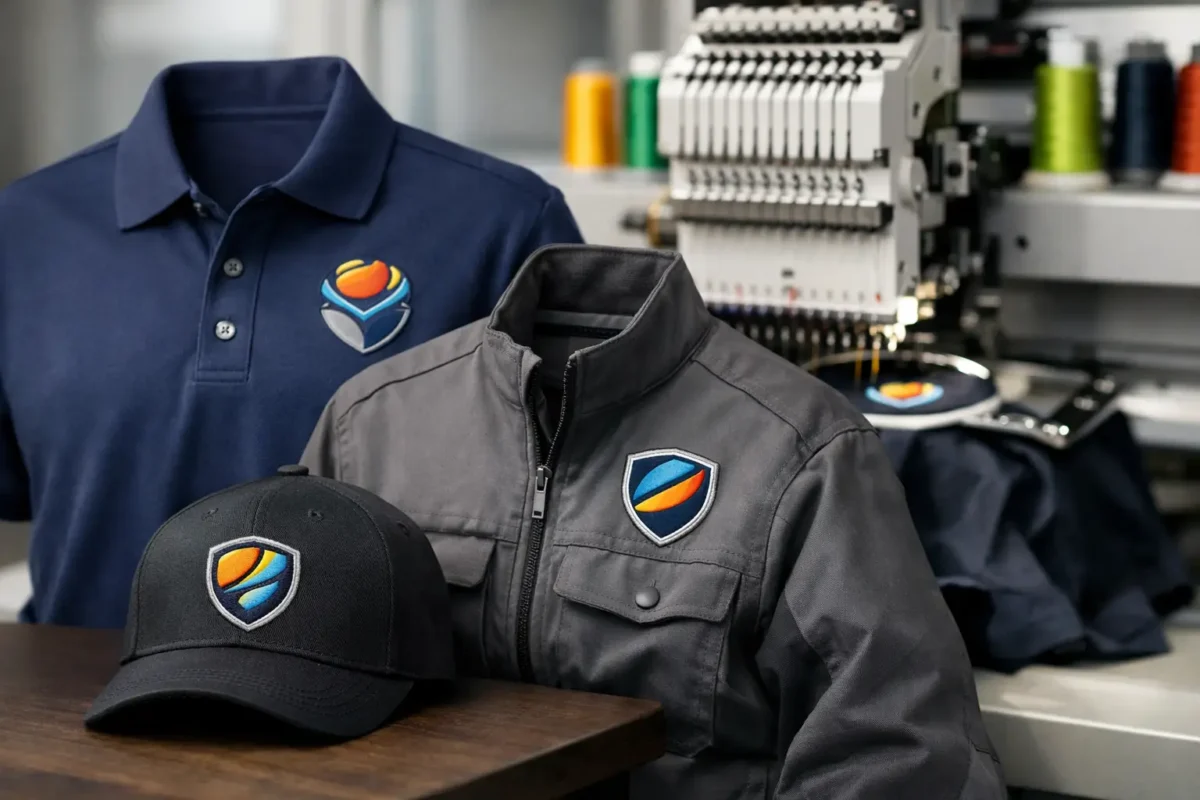
Custom Embroidered Workwear for Companies
Mar
When a new starter turns up on site in the wrong size polo, without a fleece, and with a logo that does not match the rest of the team, it is not just untidy – it slows the day down. Custom embroidered workwear for companies works best when it solves that operational problem as well as the branding one.
For most organisations, embroidered uniform is not a marketing extra. It is a practical purchase. It helps customers identify staff, gives teams a consistent appearance, and stands up to regular washing better than many other branding methods when it is used on the right garments. The part that often gets missed is that the garment, the logo setup and the delivery process all matter just as much as the stitch count.
Why companies choose embroidered workwear
Embroidery remains a strong option for businesses because it looks established and tends to wear well on everyday uniform items such as polos, sweatshirts, fleeces, softshells and bodywarmers. On garments used day after day, a stitched logo usually gives a neater, longer-lasting finish than a budget print.
That said, embroidery is not automatically the right answer for every order. If your teams work outdoors in waterproof outerwear, stitching through the fabric can create needle holes. In that case, print may be the better route. The same applies to very lightweight garments, where a dense embroidered logo can pull the fabric and make the item sit poorly.
For companies buying at scale, the main value of embroidery is consistency. A properly digitised logo can be applied across different garment types and repeat orders with a stable result. That matters whether you are ordering ten polos for an office move or hundreds of hi-vis garments for multiple crews.
Choosing custom embroidered workwear for companies by job role
The quickest way to get an order right is to start with how the uniform will actually be used. Buyers often begin with the logo, but garment suitability should come first.
For construction and trade teams, durability and layering matter more than having every item in the same fabric. A common setup is embroidered polos or sweatshirts for everyday wear, plus fleeces, softshells or bodywarmers for changing conditions. If hi-vis is required, compliance comes first, then logo placement needs to work around reflective striping and garment construction.
For healthcare and care settings, the priorities shift. Tunics, scrubs and department-specific colours need to be practical to wash, easy to identify and straightforward to issue. Embroidery can work well for names, roles or company logos, but placement should not interfere with comfort or infection-control routines.
For events and promotional teams, presentation matters, but so does speed. If you are dressing a large crew for a short-term event, the fulfilment side becomes just as important as the garment choice. Bulk pallet delivery may suit one organiser. Individually packed staff sets may suit another, especially where uniforms are being distributed across departments or venues.
The garments matter as much as the logo
A good embroidered logo on the wrong garment still creates problems. That is why companies should look at the full range, not just one hero item.
Polos are often the starting point because they suit a wide spread of industries and sit between casual and professional. Sweatshirts and hoodies are practical where warmth matters, especially for warehouse, school and logistics use. Fleeces and softshells are popular for field-based teams because they add weather protection without the bulk of a coat.
For tougher environments, trousers, coveralls and outerwear need a different conversation. Not every fabric takes embroidery equally well, and not every garment should be decorated in the same way. If the logo position affects wear, waterproofing or comfort, the decoration method needs reviewing before production starts.
This is where buyers benefit from dealing with a supplier that understands both garment categories and decoration methods. It saves time, but more importantly it avoids the expensive mistake of branding the wrong product just because it looked fine on a screen.
Logo setup is where quality is won or lost
One of the biggest differences between average and reliable custom embroidered workwear for companies is the logo conversion stage. Businesses often supply artwork that was created for a website, van graphic or printed leaflet. That file may not be ready for embroidery.
Embroidery needs a logo to be translated into stitch paths that work on fabric, not just copied from an image. Fine outlines, small text and colour gradients usually need adjustment. If that step is handled badly, the result is obvious – text closes up, shapes distort and the branding looks inconsistent across garments.
Good setup work is not about making the logo look clever. It is about making sure it stays legible and repeatable on real uniform. For procurement teams and managers placing repeat orders, that reliability matters more than any one-off sample.
Fulfilment is what makes large uniform orders manageable
Most uniform issues happen after production, not before. The garments may be correct, but if everything arrives loose in mixed cartons, somebody in your business has to sort sizes, departments and names by hand. That is where admin time disappears.
For many companies, especially those with multiple starters, multiple sites or seasonal staffing peaks, fulfilment should be part of the buying decision. Per-employee packing can remove a lot of internal handling. Bulk pallet delivery can make event or trade orders easier to receive and distribute. Clear labelling reduces errors when items are being handed out quickly.
This is often the difference between a supplier and a workwear partner. The embroidery itself may be similar on paper, but the operational impact is not. Businesses ordering regularly need a process that can be repeated without creating extra work every time.
When embroidery is right – and when it is not
Embroidery is a strong choice for many uniform programmes, but practical buying means recognising the limits.
It is usually well suited to polos, sweatshirts, hoodies, fleeces, softshells, bodywarmers and many healthcare garments where you want a professional, durable branded finish. It is less suitable where fabric is extremely lightweight, where logos are too large and dense, or where waterproof performance could be compromised.
Printed workwear may be the better option for oversized logos, back prints, lightweight performance garments or waterproof outer layers. Many companies end up using both methods across the same uniform range. That is not a compromise. It is often the most sensible way to get the right result across different garments and roles.
Ordering custom embroidered workwear for companies without delays
The smoothest orders usually follow a simple pattern. Start with job role, working environment and compliance needs. Then choose garment categories. Then confirm logo placement and decoration method. After that, sort the delivery format.
Problems tend to come from reversing that order. If a business picks garments purely on price or tries to force the same branding method onto every item, delays and revisions are more likely. The same goes for leaving size collection and staff allocation until the end.
A better approach is to think in uniform bundles. For example, one department may need polos, sweatshirts and hi-vis outerwear. Another may need tunics and fleeces. Another may need event T-shirts packed in staff sets. Buying in structured groups makes repeat ordering easier and keeps the issue process under control.
That is especially useful for growing companies, schools and frontline teams where staff turnover, seasonal demand or departmental variation means uniform orders are rarely one-off purchases.
A practical standard for branded uniform
Good embroidered workwear should do three things. It should look consistent, hold up in use and arrive in a way that makes issue straightforward. If one of those parts is missing, the order creates work instead of removing it.
At Vivid Promotion, the focus is on getting those details right – suitable garments, the correct decoration method, dependable lead times and fulfilment that helps employers issue uniform faster. That matters whether you are ordering for a trade team, a care setting, a school leavers programme or a national event crew.
If you are reviewing uniform for the next quarter, start with the day-to-day reality rather than the catalogue image. The right branded workwear should be easy to wear, easy to reorder and easy to hand out when the pressure is on.